



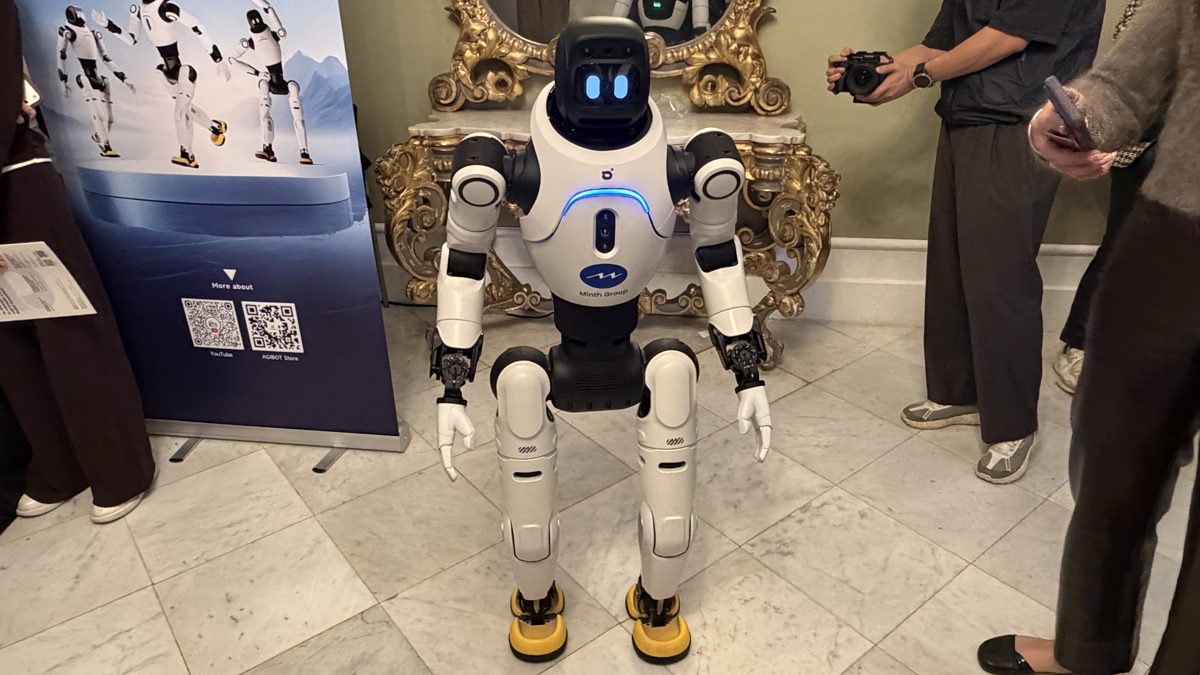

BARCELONA—In a dazzling display of technological prowess, a humanoid robot named X2 captivated audiences at a Showstoppers event ahead of the Mobile World Congress. Designed by Shanghai-based AI robotics company AgiBot, the X2 robot demonstrated dance moves that might rival those of the legendary Michael Jackson.
The robot’s human-like joints allowed it to perform a variety of dance routines, leaving onlookers in awe. The event took place at the Palacio Real de Pedralbes, where X2 began its performance with a martial arts-inspired dance, gracefully crouching and waving its arms in sync with soothing music. Despite a moment of suspense when the robot kicked up a foot, it maintained its balance, showcasing its advanced engineering.
The initial routine lasted about 45 seconds, sparking some complaints about its brevity. However, this was merely a prelude to a more extensive performance. In its second act, X2 switched to an upbeat instrumental track, demonstrating its hip-hop skills. The robot executed a heel-toe move and waved its arms with precision, even performing the iconic “robot” dance move to the delight of the audience.
Robotic Dance: A New Frontier in AI
The X2’s performance is a testament to the rapid advancements in robotics and artificial intelligence. AgiBot’s creation is not just a novelty; it represents a significant leap in the development of humanoid robots capable of complex, coordinated movements.
According to AgiBot’s lead engineer, Dr. Li Wei, the X2 was designed with a focus on mimicking human motion as closely as possible. “Our goal was to create a robot that could seamlessly integrate into human activities, and dance is a perfect medium to showcase this capability,” Dr. Wei explained.
“Our goal was to create a robot that could seamlessly integrate into human activities, and dance is a perfect medium to showcase this capability.” — Dr. Li Wei, AgiBot
The robot’s ability to perform intricate dance routines is made possible by its advanced joint mechanisms and AI-driven motion algorithms. These technologies allow X2 to adjust its movements in real-time, maintaining balance and fluidity.
The Evolution of Humanoid Robots
The development of humanoid robots has come a long way since the early days of simple, programmed movements. Today, robots like X2 are equipped with sophisticated sensors and AI systems that enable them to interact with their environment in ways that were previously unimaginable.
Historically, robots were confined to industrial applications, performing repetitive tasks with precision. However, the integration of AI has expanded their capabilities, allowing them to engage in activities traditionally reserved for humans, such as dance and entertainment.
Experts believe that this trend will continue, with humanoid robots becoming more prevalent in various sectors, including healthcare, education, and customer service. As robots become more lifelike and capable, they may soon become an integral part of daily life.
Implications for the Future
The demonstration of X2’s dance abilities raises intriguing questions about the future of robotics and AI. As these technologies advance, they have the potential to revolutionize the way we interact with machines.
For now, X2’s performance serves as a reminder of the incredible potential of robotics. It also highlights the importance of continued research and development in this field, as companies like AgiBot push the boundaries of what is possible.
Looking ahead, the integration of humanoid robots into society will require careful consideration of ethical and practical implications. As robots become more autonomous, questions about their role in society and their impact on human labor and culture will need to be addressed.
Meanwhile, at the Mobile World Congress, the X2 robot continues to captivate audiences, offering a glimpse into a future where robots and humans dance in harmony.