

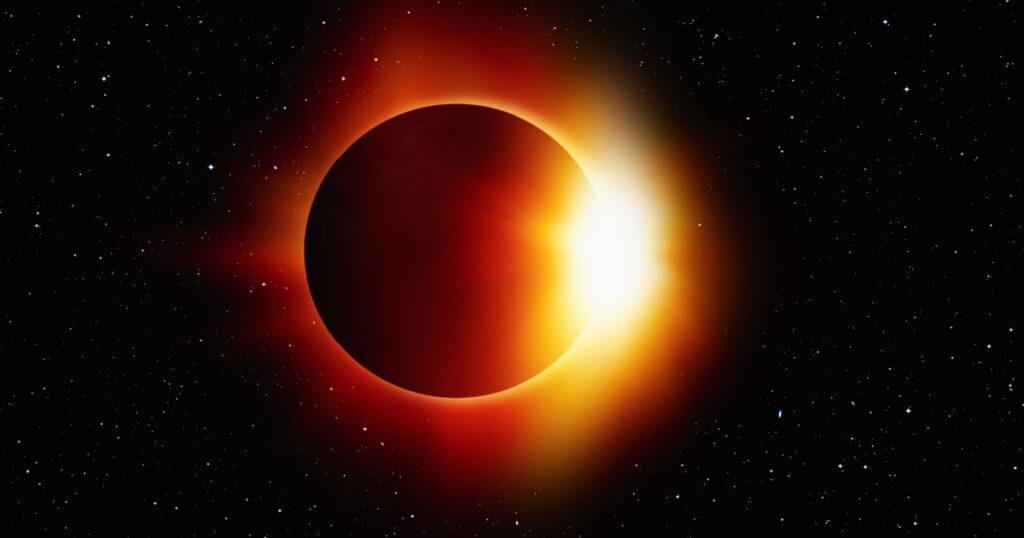
Solar eclipses have long fascinated humanity, drawing millions to witness the celestial event. However, their impact extends beyond human spectators, potentially affecting animal behavior as well. A recent study, leveraging data from the 2024 Great American Eclipse, offers a comprehensive look at how bird behavior is influenced by these rare occurrences.
Historically, anecdotal evidence suggested that solar eclipses dramatically alter animal behavior, but scientific confirmation has been elusive due to the rarity and brief duration of total eclipses. In a bid to gather substantial data, researchers developed an innovative approach using a mobile application named SolarBird. This app enabled citizen scientists to contribute observations of avian behavior during the eclipse, significantly expanding the data pool.
Harnessing Citizen Science for Data Collection
The SolarBird app was instrumental in the study, with 1,700 users submitting nearly 11,000 observations from both within and outside the path of totality. This method allowed researchers to overcome the logistical challenge of monitoring numerous locations simultaneously. Liz Aguilar, a PhD student at Indiana University, highlighted the app’s success:
“Scientists can’t be in a thousand places at once. The app gets around this problem by leveraging the public as scientists. It also encourages people to look around and listen, adding to the show in the sky.”
Participants were tasked with observing a specific bird species before, during, and after the eclipse, answering ten questions about their observations. This citizen science initiative provided a rich dataset for analysis, culminating in a study published in the journal Science.
Diverse Reactions Among Bird Species
The findings revealed a spectrum of responses among bird species. Out of the 52 species analyzed, 23 showed no change in behavior. However, 29 species exhibited significant alterations in their vocalizations. Notably, 10 species increased their singing as the eclipse approached, while one species sang less. Interestingly, 19 species sang their morning songs as the sun reemerged.
“During the approximately 4 minutes of the total eclipse, only 12 species behaved unusually,” the study notes, highlighting the varied reactions among different species.
These behaviors suggest that birds, despite rarely encountering total eclipses, are highly attuned to changes in light. The study posits that these responses are linked to the birds’ physiological reactions to light variations, which occur daily at dawn and dusk, and occasionally during overcast conditions.
Implications for Urbanization and Light Pollution
The study’s insights extend beyond eclipses, offering implications for understanding bird behavior in response to urbanization and artificial light. The authors emphasize the importance of these findings:
“It’s crazy that you can turn off the Sun, even briefly, and birds’ physiology is so tuned to those changes that they act like it’s morning. This has important implications on the impact of urbanization or artificial light at night, which are much more widespread.”
As urban areas expand and artificial lighting becomes more prevalent, understanding how these factors affect wildlife is crucial. The researchers hope to continue using the SolarBird app in future eclipses to gather more data, particularly from different geographic regions with diverse bird populations.
Looking Ahead: Future Research and Conservation
The study sets the stage for ongoing research into avian responses to environmental changes. By expanding the scope of observations to include different species and regions, scientists aim to deepen their understanding of how birds adapt to both natural and human-induced changes in their environment.
Ultimately, this research could inform conservation efforts, helping to mitigate the impacts of light pollution and urban expansion on bird populations. As the authors plan to leverage future eclipses for further study, the SolarBird app remains a valuable tool in unraveling the mysteries of avian behavior during these extraordinary celestial events.