




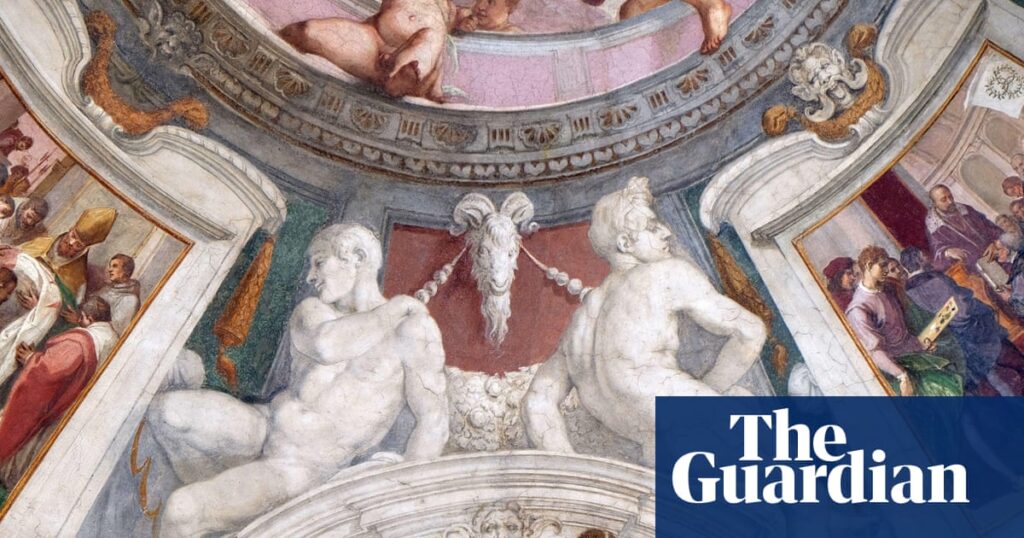
Joseph Luzzi, a renowned Dante scholar and professor at Bard College in New York, delves into the fascinating history of Florence’s Hospital of the Innocents in his latest book. This institution, known as the Innocenti, was Europe’s first dedicated to the care of abandoned children. Luzzi’s work explores how this remarkable establishment not only transformed the lives of countless children but also left an indelible mark on Renaissance art and society.
The story begins in Florence, where Luzzi’s fascination with the Innocenti was sparked during a college year abroad in 1987. The hospital, established in the early 15th century, became a sanctuary for unwanted children, the first of whom was left at its gates on Saint Agata’s Day in 1445. This child, named Agata, had been left to fend for herself, a stark reminder of the harsh realities faced by many children of the time.
The Social Context of Renaissance Florence
During this period, children constituted half of Florence’s population, yet many were abandoned due to societal pressures and the church’s stance against contraception. The church’s directive to “be fruitful and multiply” clashed with the realities of poverty and unwanted pregnancies, often resulting from sexual exploitation, particularly of servants by their masters. As a result, numerous children, particularly girls, were left at the Innocenti, with mothers hoping for eventual reunification by breaking a coin and leaving half with their child.
The Innocenti was constructed by the Silk Weavers Guild, reflecting the era’s expectations for wealthy Florentines to contribute to civic life. The building itself, with arches designed by Filippo Brunelleschi, housed artworks by Renaissance masters such as Ghirlandaio, Botticelli, and Andrea della Robbia. By offering care and education, the Innocenti saved many children from poverty and exploitation, challenging the stigma of illegitimacy prevalent in Renaissance Italy.
The Artistic and Cultural Impact
While the Innocenti’s subtitle suggests it “discovered” the modern concept of childhood, its true contribution lies in promoting the notion that every child’s fate is significant. This idea inspired similar institutions worldwide, including London’s Foundling Hospital, established in 1739. Luzzi’s narrative, though primarily straightforward, occasionally touches on personal experiences, such as his own journey of fatherhood and loss, offering a poignant backdrop to his exploration of caregiving.
Florence, in Luzzi’s depiction, emerges as a city of contrasts, where high-minded ideals coexisted with utilitarian and often cruel practices. The Innocenti, for instance, outsourced babies to wet nurses who sometimes neglected them, and while the hospital invested in expensive art, its charges subsisted on meager diets of bread and water.
The Dual Nature of Renaissance Achievements
The Innocenti serves as a compelling case study of how the grandeur of Renaissance art often masked the underlying societal injustices. Luzzi’s work echoes the sentiments of German critic Walter Benjamin, who famously stated, “There is no document of civilisation which is not at the same time a document of barbarism.”
“There is no document of civilisation which is not at the same time a document of barbarism.” – Walter Benjamin
Through Luzzi’s lens, the Innocenti becomes a microcosm of Renaissance Florence, revealing the complex interplay between art, society, and the human condition. The hospital’s legacy, both as a haven for abandoned children and a patron of the arts, underscores the enduring impact of Renaissance ideals on contemporary notions of childhood and social responsibility.
As Luzzi’s book illustrates, the Innocenti’s story is not merely a historical account but a reflection on the timeless relevance of art and humanities in shaping societal values. The lessons drawn from this institution continue to resonate, reminding us of the power of compassion and creativity in addressing the challenges of our times.