



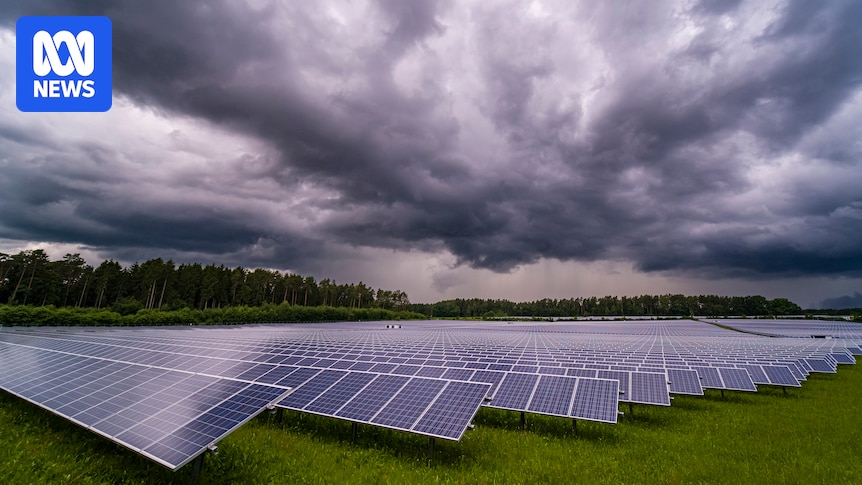
On a seemingly typical Wednesday in November last year, Sydney experienced a dramatic shift in the wholesale electricity market within just an hour. The day began with energy demand in New South Wales (NSW) following the usual “duck curve” pattern, characterized by a morning dip due to rooftop solar panels reducing the need for grid electricity. However, at around 11 a.m., unexpected cloud cover disrupted this pattern, leading to significant fluctuations in energy prices.
This sudden change was a stark reminder of the critical role solar forecasting plays in maintaining grid stability and influencing energy prices. As solar energy becomes more integral to electricity supply, accurately predicting cloud formation and sunlight availability has evolved into a multi-billion-dollar industry. This technology, developed in Australia, is now being adopted worldwide, underscoring its importance in the global energy landscape.
The Impact of Clouds on Energy Prices
On that particular Wednesday, a spring thunderstorm with thick, fast-moving clouds obscured the sky, drastically reducing rooftop solar generation and causing a spike in household energy demand. “Suddenly there was way less [rooftop] generation than expected,” noted Julian de Hoog, CEO of Solstice AI, a solar forecasting company.
The wholesale cost of electricity in NSW surged to over $20,000 per megawatt-hour, a stark contrast to the monthly average of about $75/MWh.
The spot prices, updated every five minutes, are determined by immediate supply and demand dynamics within the energy grid. For a brief 20-minute period, energy traders with available supply capitalized on the spike, only for prices to plummet to nearly negative $1,000 once the storm passed and solar generation resumed. This volatility underscores the importance of solar forecasting in preventing such drastic price swings.
The Evolution of Solar Forecasting
Solar forecasting’s journey began over a decade ago when a PhD student at the Australian National University foresaw the challenges of integrating more solar energy into the grid. In 2011, solar power accounted for a mere 3% of Australia’s generation capacity, but Nick Engerer predicted its potential to meet most of the country’s electricity needs on sunny days.
Engerer co-founded Solcast, a Sydney-based company that pioneered “nowcasting,” which forecasts sunlight availability in five-minute intervals. This granular approach allows for precise predictions of solar irradiance, essential for managing energy supply in markets where solar contributes significantly to the energy mix.
Solcast’s data is now a vital resource for the Australian Energy Market Operator and numerous network operators and generator-retailers. The company’s influence extends globally, with its data supporting over 300 gigawatts of solar projects worldwide, highlighting the technology’s critical role in the reliable operation of electricity grids.
Challenges and Innovations in Forecasting
Despite technological advancements, forecasting remains challenging, particularly with unpredictable weather events like thunderstorms. “Convective clouds like thunderstorms represent a challenge for solar forecasting,” explained Alex Zadnik, business manager for MetraWeather Australia.
“They can form very rapidly, making it difficult to predict their impact.”
To address these challenges, the industry is exploring artificial intelligence (AI) as a potential solution. AI models, which use machine learning to identify patterns in historical data, offer a cost-effective alternative to traditional physics-based models, which are computationally intensive. “AI models can get really close to or even beat the performance of the physics models,” noted Ben King of Solcast.
Looking ahead, the solar forecasting industry is considering innovative approaches, such as using solar panels themselves to detect cloud cover, providing high-resolution data to enhance forecast accuracy. “That’s definitely on the road map,” said Dr. de Hoog, indicating the continuous evolution of this crucial technology.
Australia’s Role in Global Solar Forecasting
Australia’s leadership in solar forecasting is partly attributed to the fortuitous launch of Japan’s Himawari-8 satellite in 2014. Positioned over Australia, this satellite offers high-resolution images every 10 minutes, enabling more precise cloud tracking. The Australian Renewable Energy Agency supported the development of algorithms to process this data, further cementing Australia’s position as a global leader in solar forecasting.
As more solar capacity is added to grids worldwide, the importance of accurate solar forecasting will only grow. By mitigating price volatility and ensuring grid stability, this technology not only impacts energy markets but also shapes the future of sustainable energy globally.