
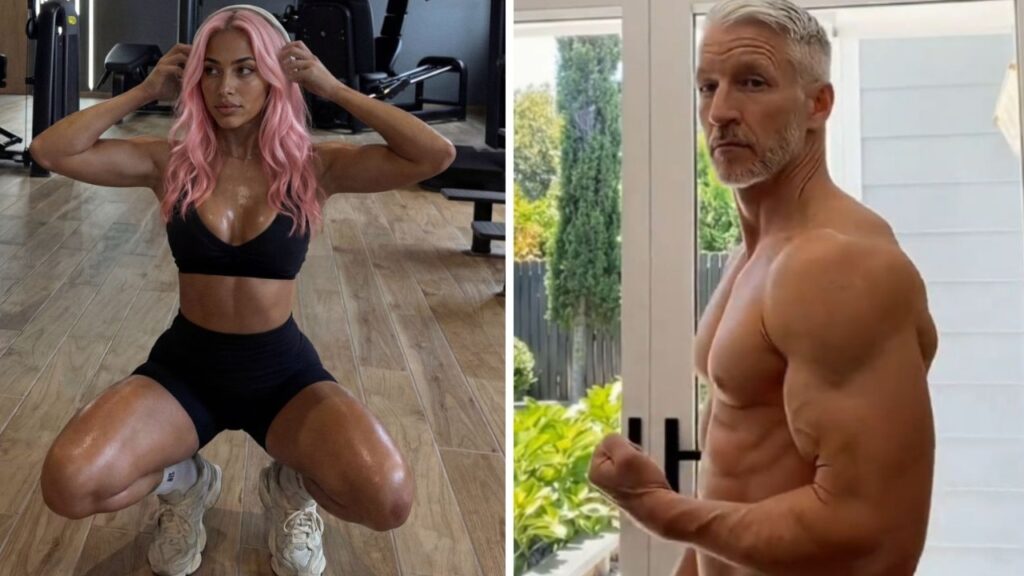
The digital world is rife with influencers offering health advice, but the reality behind the screen may be far more sinister. The person giving you fitness tips might be a total digital fabrication, and millions are unknowingly falling for the trap. One such account, boasting a staggering 4.2 million likes, features a video with over 25 million views. The account, under the name Anderson Rhoe, depicts a 67-year-old man undergoing a dramatic fitness transformation. However, experts believe this transformation is entirely AI-generated.
According to Armin Alimardani, an AI expert from Western Sydney University, “It is becoming much harder for the average person to tell what is real online.” Alimardani explained to news.com.au that he had to scrutinize the account’s videos multiple times to detect any signs of AI, highlighting how convincing such content has become.
The Rise of AI-Generated Influencers
The Anderson Rhoe account claims the transformation results from using a fitness program called the 75Me App. However, a spokesperson for the app denied any association with the fake account, stating, “It’s not our account. We just pay influencers to promote our app.” An analysis by news.com.au, utilizing computer vision techniques like texture analysis and contextual logic, confirmed the account’s inauthenticity. The analysis detected a SynthID watermark, suggesting Google’s AI involvement in the video’s creation or modification.
Alimardani warns that the threat extends beyond a single viral TikTok page. “The danger is not just that people may be tricked by a fake account,” he explained. “It is that hyper-realistic AI can industrialize deception in the health and fitness space, promoting unattainable standards and manipulating vulnerable consumers.”
Historical Context and Industry Impact
Fake photos or heavily edited content is nothing new, but the scale and speed of AI content are concerning. Alimardani points out that the new era of AI-generated ads is unsettling due to its low production cost and ease. “With generative AI, it is possible to create highly realistic videos in hours or days at very low cost,” he said, noting that the technology is only advancing.
In recent years, AI-generated accounts have proliferated across industries. Late last year, a controversial “AI actress” named Tilly Norwood emerged, amassing a massive following and sparking backlash from the entertainment community. Similarly, in 2023, a Barcelona-based agency created a ‘fake’ fitness model, Aitana Lopez, designed entirely by AI. Despite public backlash, the agency now discloses that the account is a “digital soul” in its bio.
Deciphering Reality from AI
So, how can the average social media user discern between reality and AI? Alimardani suggests looking for visual clues, such as overly polished skin or bizarre glitches. “The account showcases some good-quality AI-generated content, and by adding some ‘imperfect’ features like lighting and camera angles, they made it even more difficult to figure it out,” he noted.
Other telltale signs include distortions on hands and fingers, strange backgrounds, nonsensical text, or lack of direct camera interaction. “Just remember, if it looks too perfect, it’s probably AI-generated and should be treated like a scam,” Alimardani advised. However, he warns that these clues may not last as technology rapidly improves.
The Legal Grey Zone
Using a fake account to sell a real product complicates matters significantly. Under Australian Consumer Law, it’s illegal for businesses to engage in misleading or deceptive conduct. Yet, Anderson Rhoe’s account operates internationally, placing it in a legal grey area outside Australian jurisdiction.
With technology outpacing legislation, Alimardani believes Australia urgently needs a stronger legal framework to protect consumers. “By the end of 2026, society will realize that nothing they see on the internet is trustworthy unless it is directly from a reliable source,” he warned.
He advocates for strict new laws requiring clear disclosure on AI ads, ensuring accountability from creators, host platforms, and tech giants. “Social media platforms should be more vigilant about what can be posted, and what report mechanisms are available to flag AI-generated content,” he said. Ultimately, Alimardani urges the government to educate the public about the evolving digital landscape.
News.com.au reached out to TikTok for comment on this issue.