



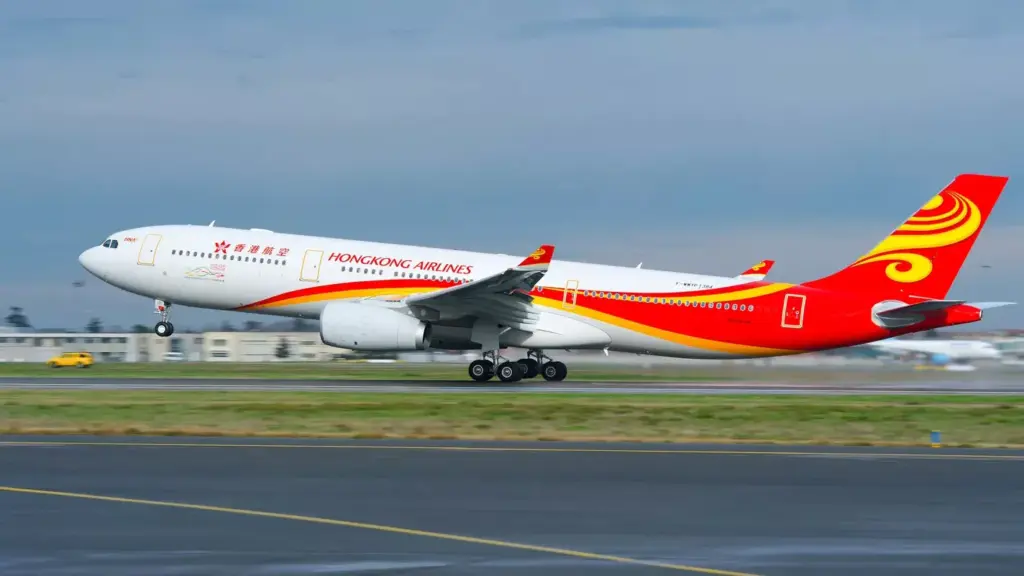
HONG KONG — Melbourne has embraced a significant enhancement to its international connectivity as Hong Kong Airlines (HX) inaugurated its new service to Melbourne Airport (MEL). This development marks the airport’s 41st airline partnership and signifies a strengthening of air links between Australia and East Asia, particularly the Greater Bay Area.
The new route connects Melbourne with Hong Kong (HKG), a major financial and aviation hub in Asia. The launch underscores the increasing demand for international travel into Australia, as airlines adapt to expanded market access and rising passenger volumes.
Hong Kong Airlines Melbourne Flights
The inaugural flight, HK013, landed in Melbourne with a ceremonial water cannon salute, symbolizing the airline’s formal entry into Australia’s largest 24-hour international gateway. This marks Hong Kong Airlines’ first operation to the city, utilizing an Airbus A330 widebody aircraft to provide a full-service long-haul product.
Flights are scheduled to operate three times weekly on Tuesdays, Thursdays, and Saturdays, contributing over 93,000 seats annually to the Melbourne–Hong Kong market. This capacity increase strengthens one of Melbourne Airport’s busiest international corridors, with Hong Kong already ranking as the fourth-busiest international route by passenger volume, following Singapore, Auckland, and Denpasar.
Bilateral Rights Expansion
Hong Kong Airlines’ decision to commence Melbourne flights follows the recent expansion of bilateral air traffic rights between Hong Kong and Australia. The updated agreement provides airlines with greater flexibility to add capacity and introduce new services between the two markets. Airport officials have highlighted the direct link between liberalized air service agreements and improved consumer choice.
Expanded rights have intensified competition on the Melbourne–Hong Kong sector, benefiting travelers and exporters while supporting tourism and trade. The new route is anticipated to contribute millions of dollars annually to the local economy by enhancing inbound tourism, freight movement, and business travel between Australia and the broader Asian region.
Passenger Growth Momentum
The launch of this service comes amid robust international travel growth at Melbourne Airport. November was recorded as the busiest month for international passengers in the airport’s history, with over one million travelers passing through the terminals.
International passenger numbers rose 6.9 percent year-on-year in November, while domestic traffic increased by 3.6 percent. Total passenger movements excluding transits grew 4.7 percent compared with the same period last year.
For the financial year to November, international traffic exceeded five million passengers, reflecting a 4.5 percent increase year-on-year. This sustained growth provides a supportive environment for airlines entering or expanding within the Melbourne market.
Melbourne: One of the Most Liveable Cities
Melbourne has secured fourth place in the 2025 Global Liveability Index, reinforcing its long-standing position among the world’s best cities. This ranking reflects steady progress after pandemic-era setbacks and highlights strengths across multiple urban metrics.
The city has remained in the global top five for three consecutive years, underscoring consistent performance in healthcare, education, stability, and infrastructure.
Melbourne’s Position in the Global Rankings
The latest results from the Economist Intelligence Unit’s Global Liveability Index place Melbourne among the most competitive cities worldwide. The index evaluates 173 locations across stability, healthcare, culture and environment, education, and infrastructure. Melbourne achieved an overall score of 97, well above the global average of 76.1.
Copenhagen took the top spot this year, ending Vienna’s three-year lead. Zürich ranked third. Melbourne followed closely with perfect scores in healthcare and education, strong results in stability and infrastructure, and one of the highest culture and environment scores in the dataset.
Melbourne’s culture and environment rating of 95.8 edged past Sydney’s 94.4, contributing to its higher overall placement.
The city’s strong infrastructure score of 96.4 also supported its return to pre-pandemic performance levels. These results suggest that ongoing investments in urban planning, public services, and cultural assets have helped Melbourne maintain its competitive advantage.
The Global Top Ten
- Copenhagen
- Vienna
- Zürich
- Melbourne
- Geneva
- Sydney
- Osaka
- Auckland
- Adelaide
- Vancouver
Why the Ranking Matters
The index serves as a benchmark for urban quality of life, guiding decision-making for governments, businesses, and residents. Melbourne’s top five placement signals continued stability, strong public systems, and a resilient cultural landscape. Although city leaders and residents may aspire to reclaim the number one position, the current ranking illustrates sustained global relevance.
Hong Kong Airlines’ arrival in Melbourne highlights how expanded air service agreements and rising demand continue to reshape Australia’s international aviation landscape. With strong passenger growth and increased competition, the new route strengthens Melbourne’s position as a major Asia-Pacific gateway.
Stay tuned with us for further updates, and follow us on social media for the latest news.