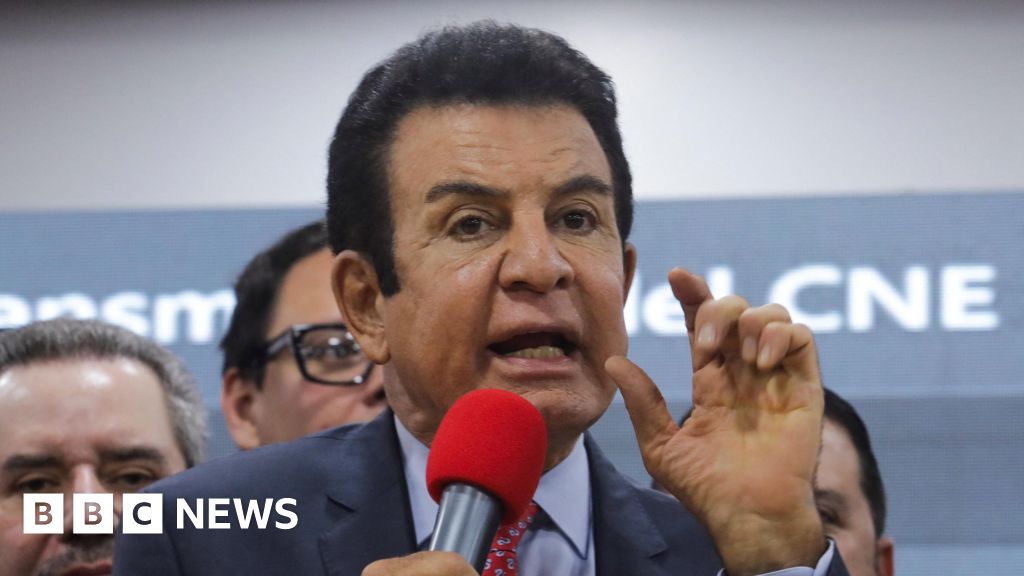
With over two-thirds of the ballots counted in the Honduran election, the political landscape remains volatile as former vice-president Salvador Nasralla holds a narrow lead over Nasry Asfura, the conservative former mayor of Tegucigalpa. Despite Nasralla’s slight advantage, Asfura’s National Party continues to assert confidence in their eventual victory.
The election has drawn international attention, particularly from Washington, where President Donald Trump has openly supported Asfura. Trump’s involvement has been marked by threats to withhold funds from Honduras and unsubstantiated claims of electoral fraud, actions that many Hondurans view as undue interference.
U.S. Influence and Historical Parallels
Honduran political analyst Josue Murillo likens the current U.S. involvement to Cold War-era tactics, criticizing Trump’s attempts to sway the election. “No government should come here and treat us as a banana republic. That is a lack of respect,” Murillo stated, emphasizing the importance of national autonomy.
Trump’s influence extends beyond mere rhetoric. On Monday, former Honduran President Juan Orlando Hernandez was released from a Virginia jail after serving just one year of a 45-year sentence for drug-smuggling and weapons charges. His release followed Trump’s public endorsement of Asfura, raising questions about the motivations behind the pardon.
The Controversial Pardon of Juan Orlando Hernandez
Hernandez’s unexpected release has sparked controversy, given his conviction last year by a New York court for orchestrating a drug conspiracy that smuggled over 400 tonnes of cocaine into the United States. His presidency was also marred by allegations of human rights abuses, particularly against government critics.
For many Hondurans, Hernandez’s arrest and extradition in 2022 represented a rare triumph of justice in a country plagued by impunity. However, Trump has portrayed Hernandez as a victim, claiming that “the people of Honduras really thought (Juan Orlando Hernandez) was set up and it was a terrible thing.”
“Donald Trump saying who we should elect violates our autonomy as a nation, and it affects our elections as well.” – Josue Murillo
Reactions and Future Implications
Despite widespread condemnation, Hernandez retains a base of support within the National Party. His wife, Ana Garcia Carias, has been a vocal advocate for his innocence and pardon. In an interview, she described his release as “like being in a dream, a dream made reality,” and expressed concerns about his potential return to Honduras.
“It depends on the security guarantees they give him in this country,” Garcia Carias stated, highlighting the dangers posed by the current government’s rhetoric against her husband. She accused the Biden administration of orchestrating a “politically motivated witch-hunt,” dismissing the fact that the case against Hernandez was built during Trump’s first term.
“There was a political campaign (against him) involving figures in the Biden administration,” she insisted, “and I think there was manipulation of the facts after the event.”
Looking Ahead
As the election results remain uncertain, the implications of U.S. involvement and the controversial pardon of Hernandez continue to reverberate throughout Honduras. The outcome of this election could significantly impact the nation’s political landscape and its relationship with the United States.
For now, the focus remains on the final vote count and the potential political ramifications of the decisions made by both Honduran and U.S. leaders. As the situation develops, the eyes of the international community remain fixed on Honduras, eager to see how this pivotal moment will unfold.