




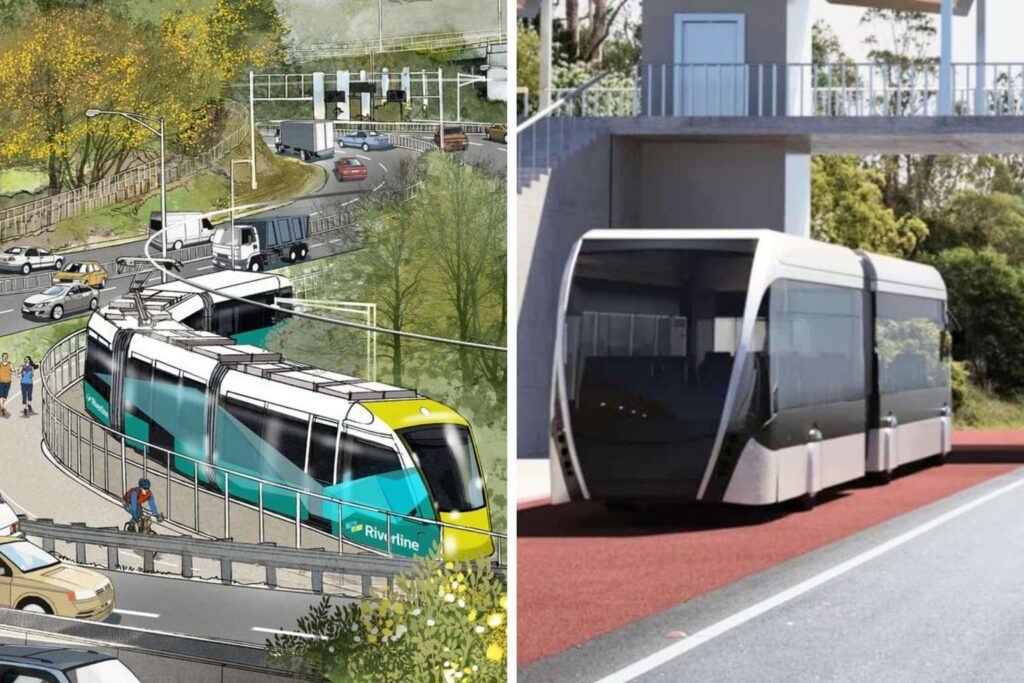
An independent MP and a Hobart councillor have voiced strong opposition to a newly released state government report that endorses a rapid bus network as the optimal solution for Hobart’s public transport needs. The Greater Hobart Rapid Bus Network Strategic Business Case, unveiled today, advocates for rapid buses across the city’s three main transport corridors, promising enhanced speed and reliability for thousands of daily commuters.
Transport Minister Kerry Vincent emphasized the flexibility and cost-effectiveness of rapid buses for the city’s suburbs. “The report makes it clear greater Hobart needs a transport solution and rapid buses provide a flexible and scalable option,” Vincent stated. “This proposal is also the most cost-effective and fastest option to deliver, meaning Tasmanians will get the benefits sooner rather than later.”
Criticism and Counterarguments
The announcement has ignited criticism from MP Kristie Johnston, who contends that rail would offer superior benefits for Hobart’s northern suburbs. Johnston referenced the government’s own 2020 Northern Suburbs Transit Corridor report, which concluded that rail could deliver “four to five times more social and economic benefit than a rapid bus service.”
“Minister Vincent thinks one size fits all when it comes to Hobart’s three public transport corridors but a rapid bus service does not fit the north,” Johnston argued. “He’s ignoring the unique opportunities in each corridor.”
Hobart councillor Ryan Posselt also criticized the proposal, highlighting that the council has formally supported light rail for the northern suburbs. “There is strong evidence that rail-based transit results in urban renewal and investment in housing along the rail corridor that does not apply to bus investment,” Posselt told Pulse.
Concerns Over Implementation Timeline
Posselt further questioned the government’s projected 2037 delivery timeline, labeling it “unacceptable” for a bus network. “Buses generally go on roads … it should not take 10 years to deliver a bus network,” he said. “If we’re going to have that sort of timeframe, then we might as well build light rail.”
The Hobart Northern Suburbs Rail Action Group (HNSRAG) has also urged the government to reconsider their stance on the suitability of Bus Rapid over rail. HNSRAG President Toby Rowallan expressed support for Bus Rapid to the Eastern Shore and Kingston but insisted that a new commuter rail service is the optimal plan.
“This plan is a rapid route to failure, and it won’t even be delivered before the stadium is supposed to be completed,” Rowallan said. “It isn’t even close to being the cheaper or affordable option that the government claimed that it would.”
Government’s Position and Future Implications
Despite the opposition, the government’s business case maintains that the rapid bus network would be “easier, faster and cheaper to implement than an equivalent light rail network.” The debate over Hobart’s public transport future comes at a critical time as the city grapples with increasing congestion and the need for sustainable transport solutions.
As the discussion unfolds, the implications for Hobart’s urban development and environmental goals remain significant. The decision between rapid bus and light rail will not only shape the city’s transport infrastructure but also influence economic growth and community connectivity in the coming decades.
Looking ahead, the government is expected to engage with stakeholders and the public to further refine its transport strategy. The outcome of this debate will likely set a precedent for other cities facing similar challenges, as they strive to balance efficiency, cost, and long-term benefits in their public transport planning.