



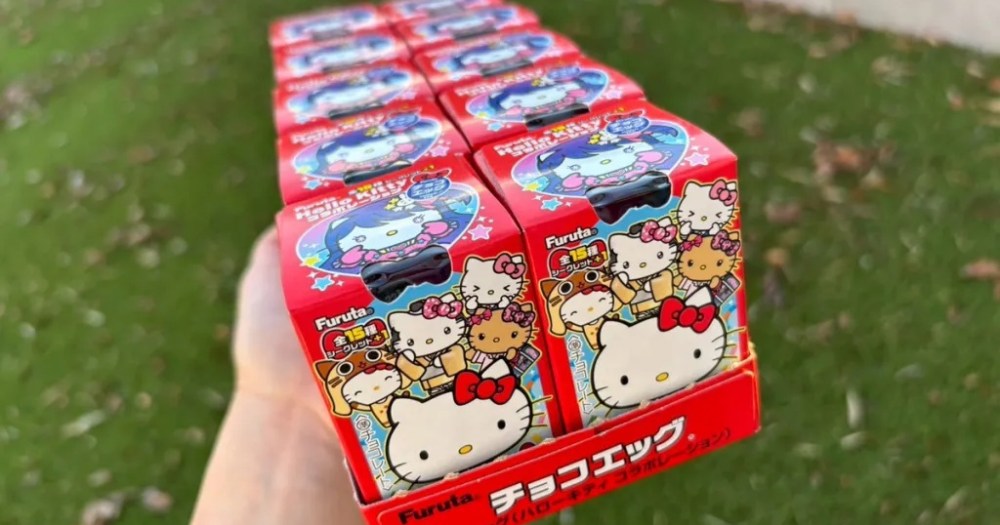
In a delightful fusion of confectionery and nostalgia, Japanese candymaker Furuta has unveiled its latest Choco Egg collection, featuring the iconic Hello Kitty. These sweet treats offer more than just a sugary indulgence; they encapsulate three significant periods of Japanese pop culture: the Showa, Heisei, and Reiwa eras.
The Choco Egg, which resembles a chocolate egg you might find at a supermarket, holds a surprise within—a collectible toy. Furuta has a history of partnering with beloved Japanese characters, having previously collaborated with Nintendo for figures from the Kirby, Super Mario, and Animal Crossing series. Now, they’ve teamed up with Hello Kitty, a cultural icon with a career spanning decades.
Exploring the Eras Through Hello Kitty
The collection features 15 distinct designs, each representing a different era of Japanese history. The Showa era, technically from 1926 to 1989 but often associated with the ’60s, ’70s, and ’80s in pop culture, is celebrated alongside the Heisei era (1989-2019) and the current Reiwa era (2019-present).
Among the first figures revealed was a Monster Hunter Hello Kitty, paying homage to the popular Capcom video game that debuted on the PlayStation 2 in 2004. This nod to the Heisei era highlights the cultural impact of video games during this time.
A Trip Through Time with Hello Kitty
Continuing the journey, the Reiwa era is represented by a Hello Kitty flashing “finger hearts,” a trendy social media pose among Japan’s youth. This gesture captures the contemporary spirit of the Reiwa period.
The collection also takes us back to Hello Kitty’s origins in the Showa era, with a figure styled after her debut illustration from 1974. This nostalgic piece is a reminder of Hello Kitty’s enduring appeal across generations.
Pop Culture Icons and Hello Kitty
Further exploring the Showa era, a Hello Kitty figure cosplays as Chibi Maruko-chan, a beloved anime/manga character from 1986. This figure is a testament to the lasting influence of anime in Japanese family entertainment.
The collection also includes idol singer Hello Kitties, each reflecting the fashion trends of their respective eras. The Showa idol sports a hairstyle reminiscent of Seiko Matsuda’s iconic ’80s look, while the Heisei idol features the frills and patterns popularized by AKB48. The Reiwa idol embodies a modern “it girl” style, blending contemporary fashion with retro influences.
Historical Parallels and Cultural Impact
Among the figures are Matsuken Hello Kitties, dressed in the distinctive gold kimono and top knot of Ken Matsudaira, known for his “Matsuken Samba” performances in 2004. This figure highlights the intersection of traditional and modern entertainment in Japanese culture.
Another standout is the Honda Hello Kitty, celebrating Honda’s legacy from its beginnings with scooters and motorcycles to its global recognition. The Super Cub, launched in 1958, symbolizes Honda’s breakthrough in the international market and the positive image shift of motorcycles.
Completing the Collection
With 10 out of 15 figures collected, the journey to complete the set continues. Missing pieces include the Showa era’s rotary phone Hello Kitty, the Heisei era’s Suntanned Gyaru Kitty, and the Reiwa period’s Solo Camping Kitty, among others.
For collectors and fans, the thrill of the hunt is part of the appeal, and trading duplicates like the spare Matsuken Kitty offers a chance to complete the collection. As the Choco Eggs continue to delight, they also serve as a unique lens through which to view Japan’s rich cultural history.
Whether as a nostalgic trip or a cultural exploration, the Hello Kitty Choco Egg collection is a testament to the enduring charm and adaptability of Hello Kitty, a true icon of Japanese pop culture.