




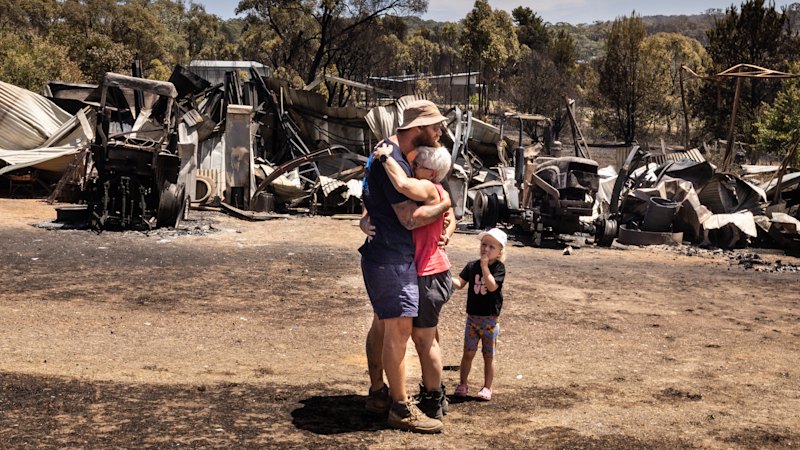
On January 10, 2026, the small town of Harcourt, Victoria, is coming to terms with the devastation left by a fierce bushfire that swept through the area on Friday evening. The fire, which moved rapidly after a cool change, has left residents like Tyrone Rice, a 48-year veteran of the Harcourt CFA, facing the loss of their homes and community landmarks.
Tyrone Rice, his wife Raewyn, and their son Nathan were all actively fighting the flames when their own home, built on land owned by Tyrone’s father, was consumed by the fire. “It’s a bit like a kick in the guts,” Tyrone admits, as he surveys the remains of his 40-year-old home. The fire left only the brickwork standing, while Raewyn mourns the loss of her thriving garden.
The Fire’s Path of Destruction
The bushfire that tore through Harcourt was particularly aggressive, jumping from ridge to valley, crossing the Calder Freeway, and making the Bendigo railway line impassable. Witnesses reported burning debris falling from the overpass on Victoria Road. Among the most significant losses was the destruction of the Coolstore, a vital economic hub established in 1917 that served as a cooperative for local farmers.
Paul Taylor, a local winemaker, describes the Coolstore as a community meeting place where farmers and business owners would regularly convene. Now, it lies in ruins, with twisted metal and broken wine bottles scattered across the site. “Literally everything is gone,” Taylor whispers, as he surveys the damage.
Community Impact and Resilience
Stephen and Sam Upton, who ran a furniture hire business for real estate staging, have seen their entire stock vaporized. “Holy shit. Holy shit. Holy shit,” Stephen exclaims, peering through a half-melted door. Despite their personal loss, the Uptons’ home remains intact, a small consolation amid the ashes of their business.
Elsewhere in Harcourt, the Victorian Miniature Railway, the local school, and the town swimming pool were spared, thanks to the efforts of the CFA. However, the fire has put a halt to the plans of residents like David Foley, who was building a new home and planning a mixed farming and tourism business. His land is now blackened, and his shed, once filled with furniture and fittings, lies in ruins.
“I’m not processing it. It’s just happened. I’m just in practical mode,” says David Foley, reflecting the resilience and determination of the Harcourt community.
Looking Forward
As Harcourt begins the long process of recovery, the community’s spirit remains unbroken. Residents like Tyrone Rice are already contemplating rebuilding, both their homes and the town. The fire has reminded many of the inherent risks of living in bushfire-prone areas, but it has also highlighted the strength and solidarity of the Harcourt community.
While the immediate focus is on recovery and rebuilding, there is also a growing awareness of the need for improved fire preparedness and community support systems. As Harcourt rebuilds, the lessons learned from this devastating event will undoubtedly shape the town’s future resilience strategies.
For now, the people of Harcourt are united in their determination to restore their town and support one another through the challenging times ahead.