




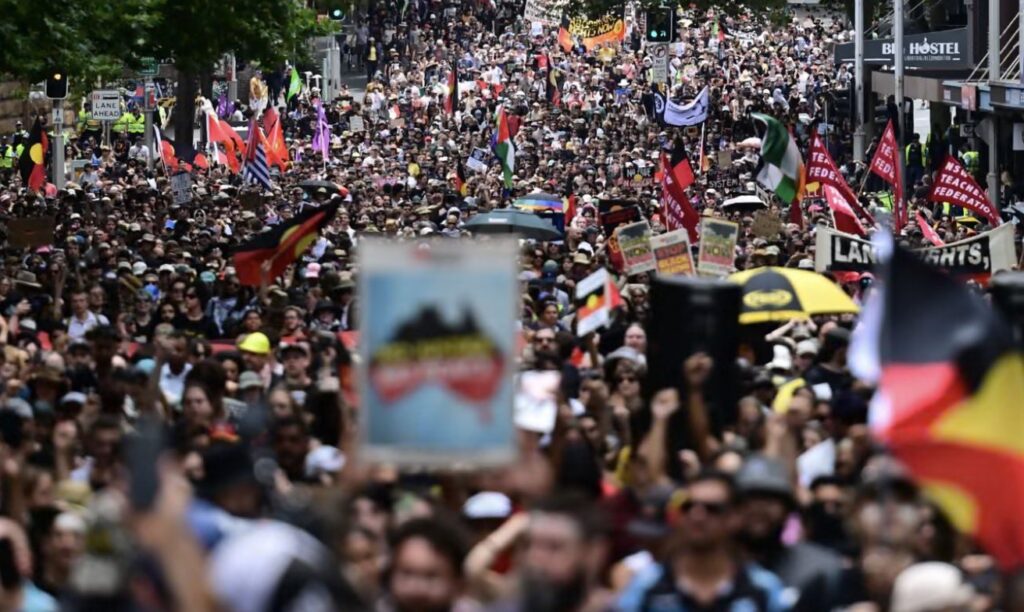
Australia’s national identity is under scrutiny as recent polls indicate a shift towards a more insular and less welcoming society. This trend was highlighted over the Australia Day weekend, revealing a growing support for maintaining January 26 as the national holiday. The Resolve poll, reported by the Sydney Morning Herald, found that 68% of Australians now favor this date, a significant increase from previous years.
The rise in support for January 26 comes in the wake of the failed Voice referendum, which sought to recognize Indigenous Australians in the constitution. This shift marks a reversal from the declining trend in support for the date, traditionally associated with the landing of the First Fleet and viewed by many as “Invasion Day.”
Understanding the Polls
The poll’s findings suggest a weariness among Australians, possibly driven by a desire to move beyond the annual cultural debate. The phrasing of the poll question—”If we are to have a national day, what is your preference for the date of Australia Day?”—may have influenced responses, as it did not offer alternatives that could separate the public holiday from the contentious date.
Critics argue that a more nuanced question might have yielded different results, such as whether Australians would accept a different date for Australia Day if the public holiday remained on the last Monday of January.
The Rise of Populism
Adding to the complexity of Australia’s cultural landscape is the increasing support for One Nation, a right-wing populist party. Recent polls suggest that around 20% of Australians would prefer One Nation as their first choice, reflecting a broader trend of populism akin to the rise of Trumpism in the United States.
One Nation’s platform includes anti-immigrant rhetoric and climate change denial, echoing the divisive politics seen in other parts of the world. This shift in political allegiance is concerning to many, as it suggests a growing acceptance of simplistic solutions to complex issues.
“The underlying sentiment of One Nation is a meanness of spirit, a closed-mindedness, a lack of confidence in Australia’s ability to welcome, to learn and grow,” noted political commentator Michael Pascoe.
Implications for Australia’s Future
The increasing division over cultural and political issues raises questions about Australia’s future direction. The support for maintaining January 26 as Australia Day, despite its contentious history, suggests a reluctance to confront the nation’s colonial past. Meanwhile, the rise of populism indicates a shift towards more exclusionary policies.
Experts warn that these trends could exacerbate social tensions and hinder efforts to create a more inclusive society. The challenge for Australia’s political leaders is to provide viable alternatives that address the concerns of a diverse population while fostering unity.
A Call for Reflection and Change
As Australia grapples with these cultural and political shifts, there is a growing call for reflection and change. Some suggest that the nation should consider celebrating its identity on January 1, marking the birth of the Commonwealth of Australia in 1901. This date, proponents argue, would offer a more inclusive and unifying celebration of the nation’s history.
Ultimately, the debate over Australia Day and the rise of populism reflect broader global trends of polarization and identity politics. As Australia navigates these challenges, the hope remains that the nation can find a path forward that honors its diverse heritage while embracing a more inclusive future.