



The University of Queensland has embarked on a pioneering study aimed at developing a screening test for ovarian cancer, a disease notoriously difficult to detect in its early stages. The EARLY study, as it is known, will focus on the stability of ovarian cancer biomarkers by collecting and analyzing blood samples. This research could potentially revolutionize how ovarian cancer is diagnosed, offering hope for earlier detection and improved survival rates.
Professor Carlos Salomon Gallo, Director of the UQ Centre for Extracellular Vesicle Nanomedicine, explained that the study will concentrate on extracellular vesicles (EVs). These microscopic bubbles, naturally released by cells, carry crucial protein and genetic information that can indicate the presence of cancer. “Our aim is to systematically evaluate the impact of blood collection protocols, storage temperatures, transport conditions and time-to-processing on EV biomarker stability,” Professor Salomon Gallo stated.
Revolutionizing Cancer Detection
The research is significant given that ovarian cancer remains one of the most serious cancers affecting Australian women. Currently, about two-thirds of cases are diagnosed at an advanced stage, making treatment more complex and reducing survival rates. Professor Salomon Gallo emphasized, “Rapid and accurate identification of asymptomatic ovarian cancer will dramatically improve survival rates.”
The study is not just theoretical; it has practical applications. UQ’s commercialisation company, UniQuest, has exclusively licensed the technology to INOVIQ Ltd, an ASX-listed biotechnology company, to develop and commercialize this EV-based ovarian cancer screening test. Remarkably, the test has already been evaluated on over 500 blood samples, demonstrating a 100% detection rate for early-stage ovarian cancer.
The Promise of Low False Positives
One of the standout features of this test is its extremely low false positive rate of 0.4%, making it a promising candidate for widespread screening. Professor Andreas Obermair from the UQ Centre for Clinical Research highlighted the urgency of early detection, noting that fewer than half of women diagnosed with ovarian cancer survive five years post-diagnosis. “As a surgeon, I look after women with ovarian cancer every week and, too often, I meet them for the first time when the cancer is already advanced, something we urgently need to change,” he remarked.
Community Involvement and Eligibility
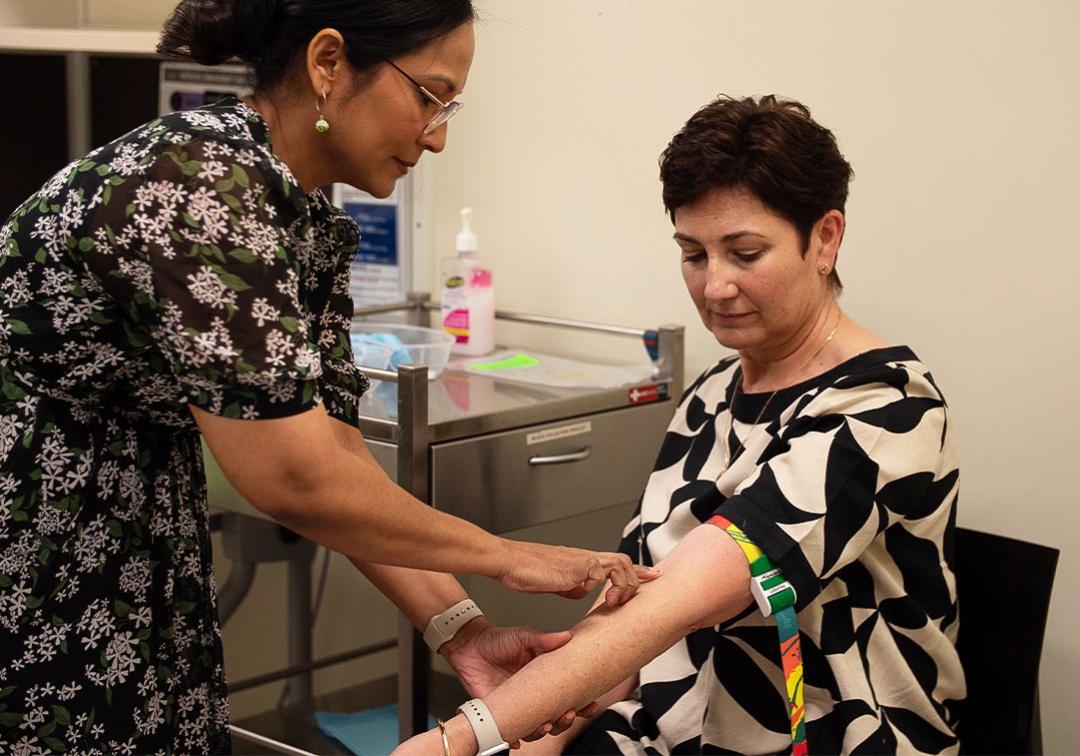
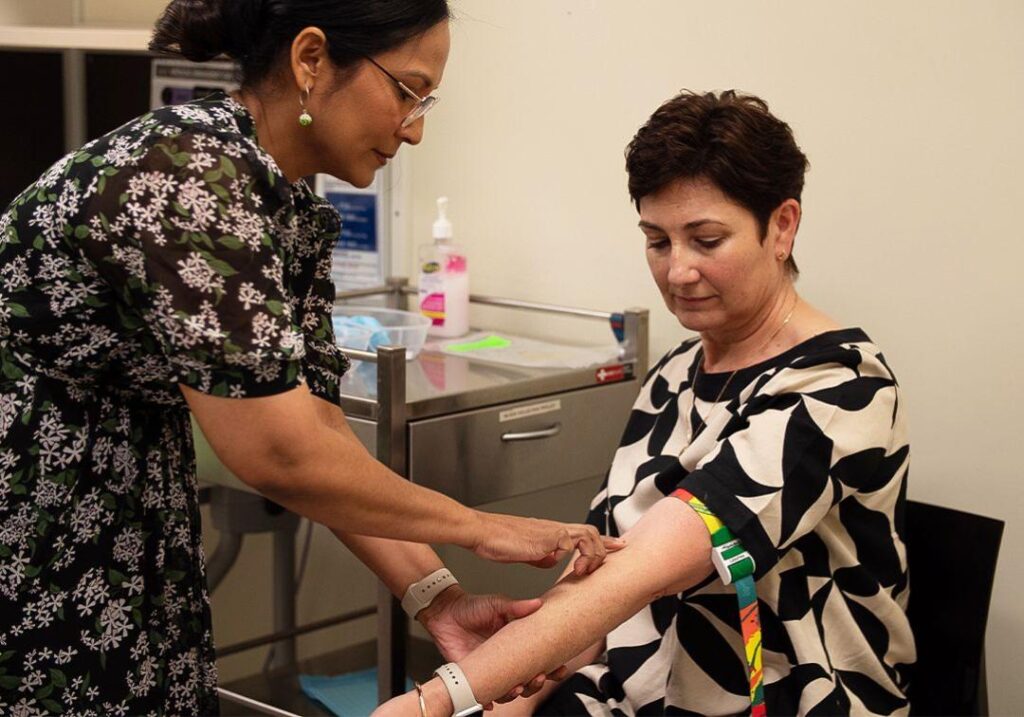
The success of the EARLY study hinges on community involvement. Women are encouraged to volunteer by donating a small blood sample and providing basic health information. The process is described as quick, safe, and free. Eligibility is open to postmenopausal women aged 50 to 74 with intact ovaries and no prior history of ovarian cancer. Participants can have their blood test done at a convenient collection center or at the UQ Centre for Clinical Research.
Robin Penty, Chief Executive Officer of the Ovarian Cancer Foundation, hailed the study as a significant milestone towards early detection and screening. “This milestone also highlights the integral role of philanthropy in medical research, with more than $1.7 million donated by the OCRF to fund Professor Salomon Gallo’s program,” Penty stated.
Personal Stories and Future Implications
The study’s potential impact is underscored by personal stories, such as that of Tom Braes OAM, Chair of the Queensland and Northern NSW Lions Medical Research Foundation. Braes shared the story of his wife, who was diagnosed with stage four ovarian cancer and underwent five years of treatment before her passing. “Too often a diagnosis comes late, so this is a real step forward in giving women a better chance,” he said.
As the study progresses, it represents a beacon of hope for those affected by ovarian cancer. The research not only aims to improve early detection but also to set a precedent for how medical research can translate from the laboratory to the clinic, potentially changing lives.
Looking ahead, the EARLY study could pave the way for a standardized screening protocol, offering a new frontier in the fight against ovarian cancer. The implications of such advancements are profound, promising a future where early detection becomes the norm, not the exception.