

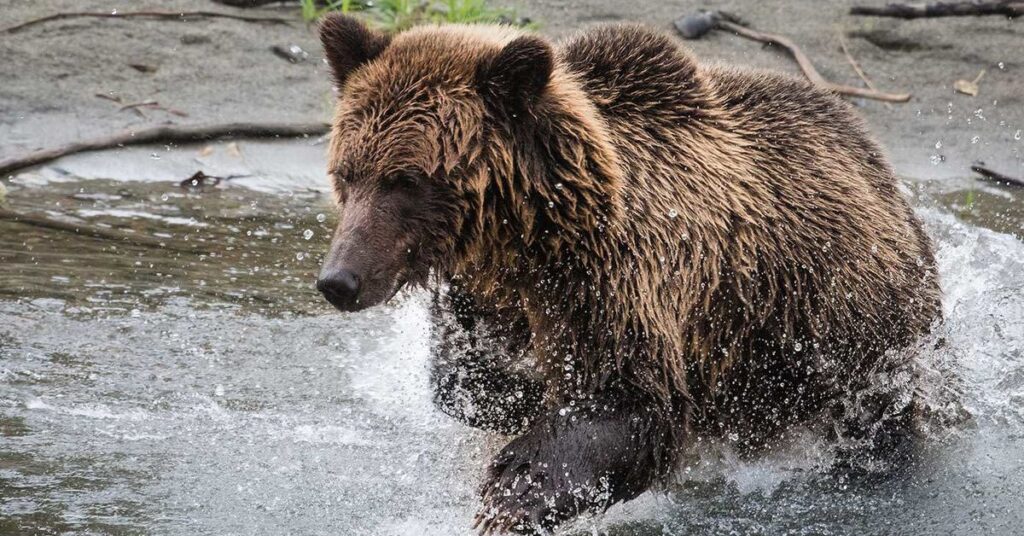
A grizzly bear attacked a group of schoolchildren and teachers on a walking trail in British Columbia, Canada, leaving 11 people injured, including two critically. The incident occurred Thursday afternoon in Bella Coola, approximately 700 kilometers northwest of Vancouver.
The Nuxalk Nation reported that the “aggressive bear” remained on the loose as of Thursday evening, prompting a response from police and conservation officers. The community was advised to stay indoors and avoid the highway. “Officers are armed. Remain indoors and off the highway,” the First Nation communicated through a social media post.
Details of the Attack
Emergency Health Services spokesman Brian Twaites confirmed that two individuals sustained critical injuries, while another two were seriously hurt. The remaining victims received treatment at the scene. Parent Veronica Schooner recounted the harrowing experience, noting that many attempted to intervene during the attack. A male teacher, who bore the brunt of the assault, was among those airlifted from the scene.
Schooner’s 10-year-old son, Alvarez, was part of the fourth- and fifth-grade class targeted by the bear. He was so close to the animal that he could feel its fur. “He said that bear ran so close to him, but it was going after somebody else,” Schooner shared. Despite his own injuries, Alvarez’s primary concern was for his classmates. “He keeps crying for his friends, and oh my goodness, right away he started praying for his friends,” his mother added.
Community Reaction and Safety Measures
Acwsalcta School, an independent institution managed by the Nuxalk First Nation in Bella Coola, announced its closure on Friday. The school also stated that counseling services would be available to those affected. “It’s hard to know what to say during this very difficult time. We are so grateful for our team and our students,” the school expressed in a Facebook post.
The attack has sparked a broader conversation about wildlife safety in the region. While bear encounters are not uncommon in British Columbia, such aggressive behavior is rare. Authorities are working to locate the bear to prevent further incidents.
Expert Insights and Historical Context
Wildlife experts emphasize the importance of understanding bear behavior to prevent future attacks. According to conservationist Dr. Emily Carter, “Bears typically avoid human contact. When they do attack, it’s often because they feel threatened or are protecting their young.”
“Bears typically avoid human contact. When they do attack, it’s often because they feel threatened or are protecting their young.” – Dr. Emily Carter
Historically, bear attacks in Canada have been infrequent but can be severe when they occur. The last significant bear attack in the region was over a decade ago, underscoring the unusual nature of this incident.
Looking Ahead
As the search for the bear continues, the community remains on high alert. Authorities have increased patrols and are employing various strategies to track the animal. Meanwhile, the focus is on recovery and support for the victims and their families.
The incident serves as a stark reminder of the delicate balance between human habitation and wildlife in regions like British Columbia. As investigations proceed, there will likely be discussions on enhancing safety protocols and education to prevent future encounters.