



Your grip strength reveals more about you than you might realize. For those who train regularly, it’s essential for exercises like pull-ups, farmers’ carries, bent-over rows, and the king of all compound moves: the deadlift. But did you know that both how long you can hold a grip and the force you can generate are not just measures of strength? They are also key indicators of your overall health and longevity.
This insight emerged from a study involving 140,000 people, which found that grip strength was a more accurate predictor of lifespan than many traditional biomarkers, including blood pressure. Further research reinforced this link, showing that stronger grip strength significantly increased the likelihood of living past 100. In the study, centenarians were found to be more than twice as likely to have had higher grip strength.
If you want to add life to your years while also helping shave crucial minutes off your HYROX and Red Bull Gym Clash times, it pays to spend more time gripping it than just ripping it. Test your grip strength and more this year at Red Bull Gym Clash.
Understanding Grip Strength and Its Importance
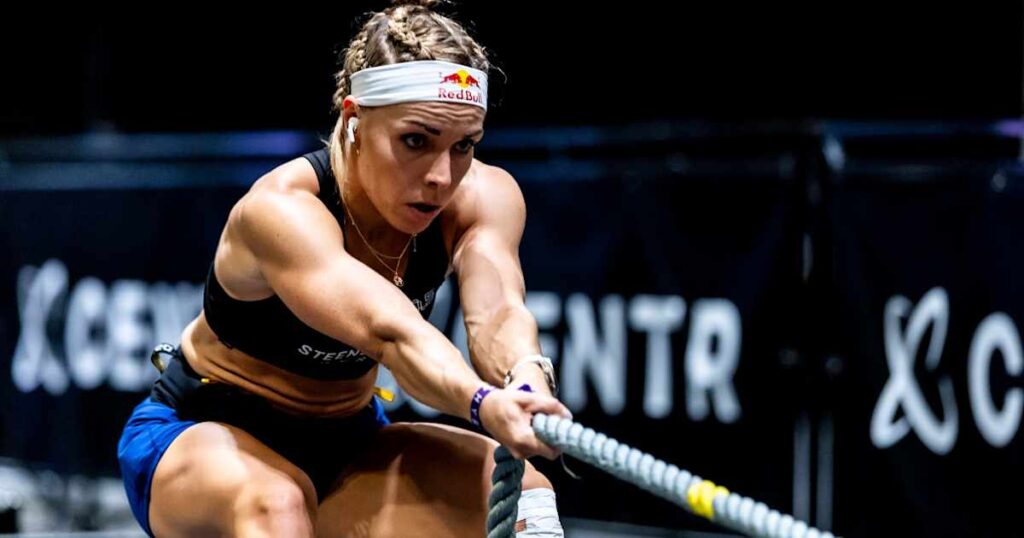
According to Danish HYROX and OCR athlete Ida Mathilde Steensgaard, “Grip strength is your ability to hold, control, and generate force through your hands and forearms.” Steensgaard, who has stood on over 100 podiums in her career, emphasizes its importance for exercises like carrying, hanging, pulling, and lifting under fatigue.
Grip strength involves the force generated by the muscles of the hand and forearm, including the flexor digitorum superficialis and profundus, flexor pollicis longus, thenar and hypothenar muscles, as well as wrist flexors and extensors. It is crucial for movements that involve holding and squeezing, like pull-ups, chin-ups, and farmer’s carries.
Despite common misconceptions, having functional grip strength isn’t just about crushing a dynamometer or giving a firm handshake. Research has found links between lower grip strength and lower bone mineral density, malnutrition, cognitive impairment, and depression. A simple at-home way to check your grip strength is to squeeze a tennis ball, stress ball, or water bottle as hard as you can for a few seconds. Generally, aiming for a maximal squeeze for 30 seconds is a good benchmark of grip strength.
Ida Mathilde Steensgaard: A Champion’s Perspective
Ida Mathilde Steensgaard is a Danish fitness athlete and multiple-time obstacle course racing (OCR) world champion, now making waves in HYROX races across the world in the Elite 15 grouping. For Steensgaard, who also masterminded an extreme obstacle course now known as the World’s Toughest Playground, grip strength is a vital part of her training for HYROX and OCR events. The Elite 15 racer’s success relies heavily on grip strength and forearm endurance, which power her through technical obstacles, heavy carries, and complex lifts—skills she highlights as essential for both performance and longevity.
Grip Strength Across Different Sports and Workouts
For Steensgaard, a mix of “loaded carries, dead hangs, rope pulls, dead hangs in different grips, and heavy pulls” help her to train her grip for demands in OCR and HYROX. These, she says, “transfer directly to obstacles, sleds, and functional lifts.”
As Steensgaard explains, how you build your grip strength comes down to what you’re actually training for. “For OCR, I focus more on hanging endurance and awkward grips on ropes or rigs, which often require more technique and specific hand or finger strength,” she explains. “For HYROX, it’s more about sustained farmers’ carries and endurance grip under high heart rate.”
Steensgaard also incorporates specific grip work after upper-body days and “cycles intensity, so my forearms stay strong both in power and endurance.”
Tips for Safe and Effective Grip Training
Inevitably, not all grip strength is created equally. “Most people generally only train their grip passively from lifting, but it’s good to vary the different kinds of grip training by incorporating hand and forearm strength, endurance, and progressive work that builds resilient forearms and hands,” says Steensgaard.
For those not competing at an elite level, you can still build resilient hands and forearms with simple, practical exercises: farmers’ carries for 30–60 seconds, wrist curls or reverse curls for 12–15 reps, and finger squeezes with a stress ball for 15–20 reps. These moves not only boost grip strength and endurance but also help prevent injury, reduce overtraining, and make warm-ups more effective before lifting or sports.
Ida Mathilde Steensgaard’s Top Exercises for Grip Strength
- Dead Hangs: 30–60 seconds
- Find a sturdy overhead bar and grip it with an overhand, shoulder-width grip.
- Lift your feet off the floor, hanging freely with straight arms.
- Keep your shoulders ‘active’ by pulling them down and away from your ears, rather than letting your head sink into your shoulders.
- Farmers’ Carries: 30–60 seconds
- Hold a heavy dumbbell or kettlebell in each hand while standing tall, with your chest out and shoulders back.
- Take short, controlled steps and walk in a straight line, keeping your core braced to prevent the weights from swinging.
- Maintain a neutral spine and a firm grip until the time is up, then hinge at the hips to safely place the weights down.
- Towel Pull-ups: 8–12 reps or 20–30 second hang
- Drape two towels over a pull-up bar, grabbing one in each hand with a vertical crush grip.
- Squeeze the fabric as hard as possible and pull your chest toward the bar, keeping your elbows tucked in.
- If a full pull-up is too difficult, simply perform a dead hang while holding the towels to build hand-specific strength.
As the importance of grip strength becomes more widely recognized, athletes and fitness enthusiasts alike are incorporating these exercises into their routines. Whether you’re preparing for a competition or simply aiming to improve your overall health, enhancing your grip strength can be a game-changer.