



The first study from GreenDrill, a groundbreaking project co-led by the University at Buffalo (UB), has unveiled that the Prudhoe Dome ice cap in Greenland vanished approximately 7,000 years ago. This revelation, published on January 5 in Nature Geoscience and reported by The Washington Post, indicates that this section of the ice sheet is highly sensitive to the relatively mild temperatures experienced during the Holocene, the interglacial period that began 11,000 years ago and persists today.
Jason Briner, a professor and associate chair of the Department of Earth Sciences at UB, who co-led GreenDrill with Joerg Schaefer of Columbia University, emphasized the significance of these findings. “This is a time known for climate stability, when humans first began developing farming practices and taking steps toward civilization. So for natural, mild climate change of that era to have melted Prudhoe Dome and kept it retreated for potentially thousands of years, it may only be a matter of time before it begins peeling back again from today’s human-induced climate change,” Briner stated.
Understanding the GreenDrill Project
GreenDrill is a pioneering initiative funded by the U.S. National Science Foundation, dedicated to exploring the mysteries beneath the Greenland Ice Sheet. The project aims to retrieve rocks and sediment buried under the ice, which hold invaluable chemical signatures. These signatures reveal when the material was last exposed to open sky, providing crucial data on past ice sheet melt events. Remarkably, scientists possess more rock and soil material from the moon than from beneath Greenland’s ice.
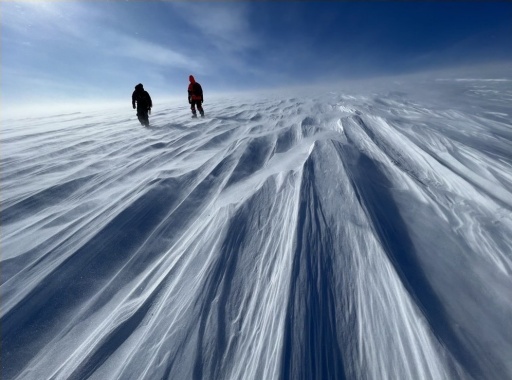
The first GreenDrill study focused on core samples extracted from 1,669 feet below the surface during a weekslong encampment at the summit of Prudhoe Dome in 2023. Researchers employed luminescence dating, a technique that measures the glow produced by electrons trapped inside mineral grains when exposed to light. The intensity of this glow indicated that the Prudhoe Dome sediment last saw daylight between 6,000 and 8,200 years ago.
Implications for Climate and Sea Level Rise
Caleb Walcott-George, the study’s lead author and a former UB graduate student, now an assistant professor at the University of Kentucky, highlighted the broader climate implications. “This means Prudhoe Dome melted sometime before this period, likely during the early Holocene, when temperatures were around 3 to 5 degrees Celsius warmer than they are today. Some projections indicate we could reach those levels of warming at Prudhoe Dome by the year 2100,” Walcott-George explained.
The study’s findings also have significant implications for sea level rise. By analyzing vulnerable areas along the ice sheet’s edge, like Prudhoe Dome, scientists can identify which coastal communities are at the most immediate risk. Joerg Schaefer noted, “Rock and sediment from below the ice sheet tell us directly which of the ice sheet’s margins are the most vulnerable, which is critical for accurate local sea level predictions. This new science field delivers this information via direct observations and is a game-changer in terms of predicting ice-melt.”
The Challenges of Drilling in Greenland
GreenDrill established two drilling sites on Prudhoe Dome—one at the summit and another near the edge where the ice is thinner. This study focused on the summit sample. The sites were located near the Cold War-era base Camp Century, where U.S. Army scientists once attempted to drill into the ice to hide nuclear missiles, inadvertently discovering sediment that later helped scientists determine the ice sheet was much smaller around 400,000 years ago.
The 2023 expedition was not without its challenges. A fracture in the ice at the summit site nearly jeopardized the project at its final stage. However, a last-minute solution involving a drill bit typically used for rocks enabled the team to complete drilling the last 390 feet of ice just before their equipment was retrieved by plane. “It was like watching a Buffalo Bills game,” Briner remarked. “Just stressful until the final minute.”
Teamwork and Future Prospects
Briner credited the success of the mission to the teamwork and camaraderie of the scientists and drillers on the ice, as well as the support crew managing logistics. Collaborators included Nicolás Young, associate research professor at Lamont and GreenDrill co-principal investigator; Allie Balter-Kennedy, a former postdoc at Lamont and now assistant professor at Tufts University; and Nathan Brown, assistant professor at the University of Texas at Arlington.
Walcott-George, who played a pivotal role in setting up the camps and based his dissertation on the project, described his time on the ice as “humbling.” He reflected, “When all you see is ice in all directions, to think of that ice being gone in the recent geological past and again in the future is just really humbling.”
The GreenDrill project represents a significant step forward in understanding the dynamics of ice sheets and their response to climate change. As the team continues to analyze their findings, the implications for future climate predictions and sea level rise remain profound.