




The Great Barrier Reef, one of the world’s most remarkable natural wonders, witnessed its annual spawning event on Tuesday night. This spectacular phenomenon, often described as the world’s largest sex act, sees corals release billions of eggs and sperm into the ocean off the coast of Queensland, Australia. This natural marvel aims to seed the next generation of the reef, a vital process for an ecosystem under significant threat from climate change.
Every year, the reef fights back against the fragility imposed by rising ocean temperatures and bleaching events with this massive reproductive display. However, the event is not without its peculiarities. “It’s a bit funky,” noted Dr. Jen Matthews, a coral ecologist at the University of Technology Sydney.
The sperm degrades quite quickly, and bacteria sets in. And so within a few hours, what you start to smell is decaying sperm. That has, as you can imagine, a very horrible smell.
The Spectacle Underwater
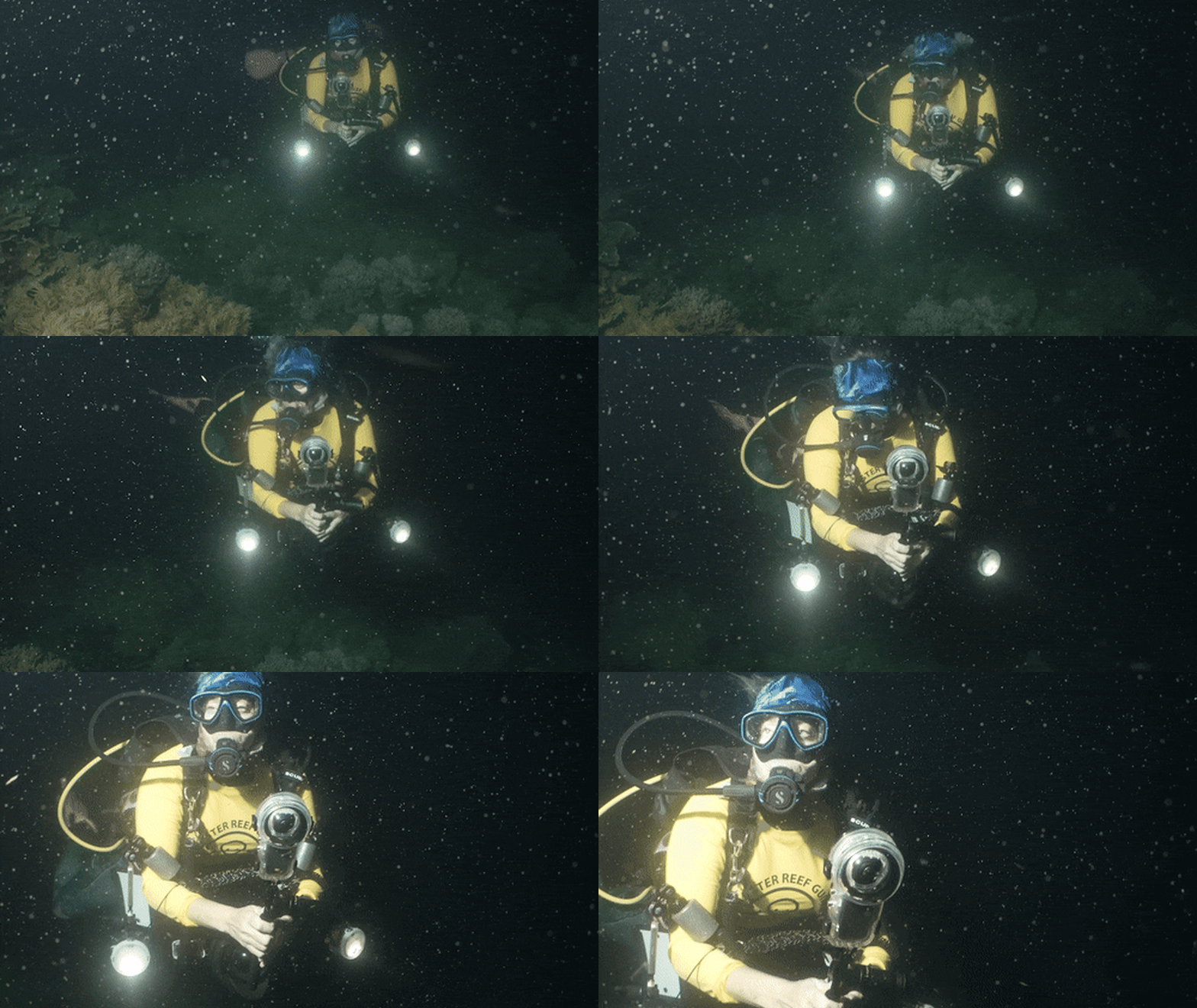
While the odor may be less than pleasant, the underwater scene is nothing short of awe-inspiring. Divers find themselves enveloped in a dense flurry of eggs, so thick that visibility is reduced to almost zero. “You’re diving underwater and everything is black, and looking at these corals, they look very calm. Then all of a sudden, within 15 minutes, the whole water is filled with these little pink balls,” Matthews described.
It looks like it’s snowing upside down. It’s really quite spectacular.
This synchronous spawning occurs in large batches, typically a few days after a full moon in November and December. Corals closer to shore, which are in warmer waters, usually spawn in November, while those further out at sea, like the ones on Tuesday night, follow in December. The precision of this event is remarkable, with corals taken from their natural habitats and reared in labs still spawning in sync with their wild counterparts.
The Science Behind the Synchrony
The corals’ internal timing is dictated by a combination of natural cues, as explained by Dr. Carly Randall, a coral restoration scientist at the Australian Institute of Marine Science (AIMS).
It’s dictated by the lunar cycle, sunset times, day length, the rate of ocean warming that precedes the heat of the summer, plus tides. Those things coalesce, the coral sense them, and synchronise their spawning down to the minute on a given night.
As the reef faces rapid coral decline due to climate change, the spawning event also triggers a frenzy of scientific activity. Researchers work tirelessly to enhance the chances of new coral growth by capturing coral gametes in floating pools, significantly improving fertilization rates. Others focus on breeding larvae from corals that have survived previous bleaching events, hoping their offspring will be more resilient to future heatwaves.
Innovations in Coral Restoration
Dr. Jen Matthews’ research is partly inspired by her personal experiences. While pregnant with her daughter, Cora, she pondered the importance of nutrition in early life stages. “What if we could feed coral babies?” she wondered. Her research revealed that coral larvae, once thought to be almost inanimate, can indeed move and eat.
Matthews tested various fats, including Omega-3-rich fish oils, as potential coral baby food. The results were promising: well-nourished coral larvae swam faster, traveled further, and exhibited greater heat resistance.
We found that we could double their survival, and that’s under both normal and heat stress conditions.
Matthews hopes that nourishing young coral could significantly impact large-scale reef restoration efforts.
Meanwhile, Randall and her team at AIMS are preparing to rear larvae from their coral brood stock. “It takes them about a week to develop before they’re ready to settle,” Randall explained. Once ready, the larvae swim down to the substrate to begin growing as fixed coral. They are then paired with symbiotic algae, which provide color and energy, before being reintroduced to the reef.
Debate Over Restoration Efforts
Despite the innovative restoration efforts, prominent coral scientists debate their efficacy given the slow pace of climate action. Some argue that resources should focus more on reducing fossil fuel consumption, the primary threat to the Great Barrier Reef.
As the scientific community continues to explore ways to preserve this natural wonder, the Great Barrier Reef’s annual spawning event remains a powerful reminder of nature’s resilience and the urgent need for environmental stewardship.