




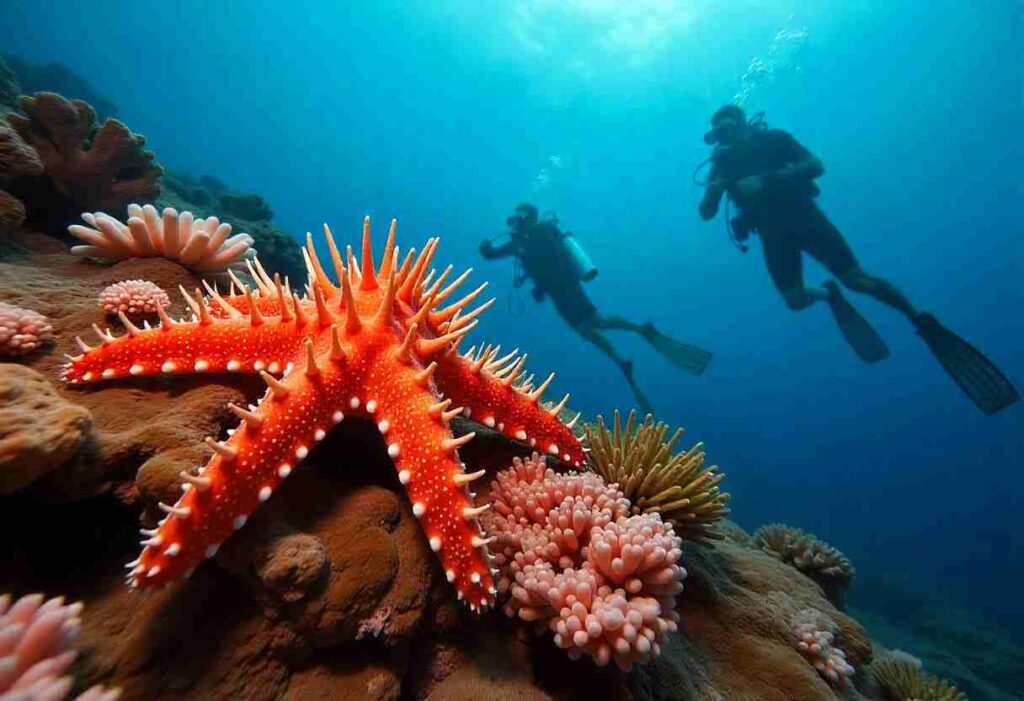
The Great Barrier Reef, one of the world’s most remarkable natural wonders, is under significant threat from an outbreak of crown-of-thorns starfish (COTS), a coral-devouring predator. These starfish, notorious for their venomous spines, are causing widespread coral destruction, particularly in the northern regions of the reef, including areas around Cairns and Lizard Island. As the reef’s health is crucial to Australia’s tourism sector, which contributes billions to the economy annually, urgent measures are being implemented to protect this fragile ecosystem and sustain its allure as a premier tourist destination.
The Growing Threat: Crown-of-Thorns Starfish Outbreaks
Crown-of-thorns starfish outbreaks are among the most destructive factors impacting the health of the Great Barrier Reef’s coral. These outbreaks can annihilate entire sections of the reef, with a single adult starfish capable of consuming a dinner plate-sized piece of coral every day or two. In response, the Australian Government has initiated the Crown-of-Thorns Starfish (COTS) Control Program to address these outbreaks directly.
The COTS Control Program prioritizes high-value reefs, especially between Cairns and Lizard Island, where outbreaks have been most severe. With COTS densities projected to increase more than tenfold in some northern reef areas, efforts are concentrated on preventing a broader “domino effect” of secondary outbreaks that could further damage the reef’s delicate ecosystem.
Collaborative Efforts to Protect the Reef
The success of the COTS Control Program is largely attributed to the collaboration between the Reef Authority, the tourism industry, and the scientific community. Supported by the Australian Government, six vessels and teams of divers are deployed to proactively suppress COTS outbreaks. These divers use a single-shot injection of household vinegar or ox bile salt solution to cull the starfish, effectively reducing their numbers without harming the surrounding environment.
Beyond the efforts of the Reef Authority, the tourism industry plays a vital role in the ongoing protection of the reef. Tourism operators are actively involved in monitoring and reporting COTS outbreaks and are integral to the broader conservation effort, working alongside scientists and the Reef Authority to combat the spread of these destructive starfish.
The Economic Importance of Reef Protection
The Great Barrier Reef is crucial to Australia’s tourism economy, generating approximately $9 billion annually. The northern region, from Cairns to Cooktown, is particularly significant as it has been identified as the initiation area for several large-scale COTS outbreaks in the past. This area attracts over a million tourists each year, all eager to experience the breathtaking beauty of the Reef.
The tourism industry heavily depends on the health of the Great Barrier Reef, making its protection essential for preserving both the ecosystem and the economic livelihood of local communities. Tourism operators are at the forefront of efforts to protect the Reef, monitoring coral health and managing outbreaks in real-time. Their continued involvement in conservation efforts is vital to maintaining the Reef’s status as a leading global tourist destination.
Ongoing Success and Long-Term Protection Efforts
Since its inception in 2012, the COTS Control Program has achieved significant progress in safeguarding the Reef. Over 830,000 hectares of coral reef habitat across hundreds of reefs have been protected, with nearly 1.4 million crown-of-thorns starfish removed. This massive undertaking is supported by a dedicated workforce of approximately 140 people, including 14% Indigenous staff, and is driven by strong partnerships between scientists, the government, and the tourism sector.
The program’s funding, set at approximately $20 million per year until 2030, ensures the continued implementation of critical conservation efforts across the northern, central, and southern regions of the Great Barrier Reef. These funds support ongoing monitoring, fieldwork, and training and capacity-building for tourism operators and local communities. The COTS Control Program exemplifies how science, industry, and government can collaborate to preserve a natural wonder.
Tourism Operators Play a Vital Role in Reef Conservation
Tourism operators have long been champions of reef conservation, and their involvement is crucial to the success of the COTS Control Program. In addition to their participation in monitoring and reporting outbreaks, operators are also funding efforts to cull starfish and protect high-value reefs. The Reef Authority’s Tourism Reef Protection Initiative (TRPI) ensures that tourism operators are reimbursed for the costs of monitoring and culling, fostering a unified, science-driven approach to managing COTS outbreaks.
Gareth Phillips, of the Association of Marine Park Tourism Operators (AMPTO), emphasized the importance of tourism operators’ involvement, noting that protecting the Reef is not only an environmental responsibility but also essential for the future of Reef communities and tourism jobs. The collaboration between the tourism industry, the scientific community, and the Reef Authority underscores the collective commitment to preserving the Great Barrier Reef for future generations.
The Future of the Great Barrier Reef: Sustaining the Tourism Industry
As efforts continue to protect the Great Barrier Reef from crown-of-thorns starfish outbreaks, the importance of these initiatives cannot be overstated. Not only is the Reef a UNESCO World Heritage site, but it also plays a vital role in Australia’s tourism economy. By safeguarding the Reef’s health, the COTS Control Program ensures that future generations will be able to experience the wonder of the Reef, and the tourism industry can continue to thrive.
The ongoing success of the program, combined with the continued dedication of the Reef Authority, tourism operators, and scientists, is helping to ensure the long-term protection of this invaluable natural resource. The collaborative effort to combat crown-of-thorns starfish outbreaks is just one example of how Australia’s tourism industry is taking proactive steps to maintain the ecological integrity of the Great Barrier Reef.