


Throughout history, musicians have played pivotal roles in protest movements, from anti-war anthems to advocating for immigration rights. At the 2026 Grammy Awards, several artists took the stage to voice their dissent against U.S. Immigration and Customs Enforcement (ICE), proving that music remains a powerful platform for social change.
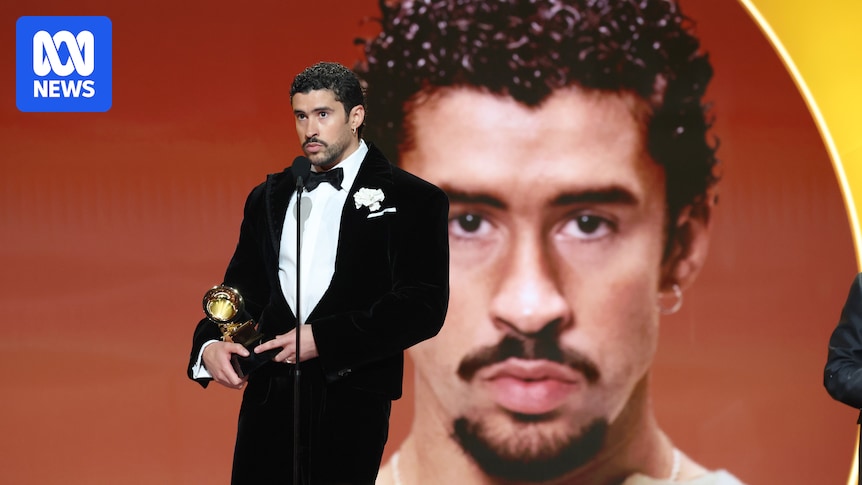
Puerto Rican singer Bad Bunny, whose real name is Benito Ocasio, made a bold statement while accepting his award for Best Música Urbana Album. “Before I say thanks to God, I’m gonna say ‘ICE out’,” he declared, receiving a rapturous ovation from the audience. Bad Bunny used his platform to advocate for love over hate, emphasizing the need for compassion even in the face of adversity. “The only thing that is more powerful than hate is love,” he urged.
The announcement comes just days before Bad Bunny’s historic performance at the Super Bowl, where he will be the first Latino and Spanish-speaking solo headliner. This milestone has not been without controversy, as U.S. President Donald Trump criticized the choice, stating, “I’m anti-them,” in reference to Bad Bunny and punk band Green Day, who are also set to perform.
Artists Unite in Protest
Bad Bunny’s remarks were echoed by other artists throughout the night. Billie Eilish, who won Song of the Year for her track “Wildflower,” dedicated her speech to highlighting the plight of immigrants in the United States. “No-one is illegal on stolen land,” she proclaimed, adding, “Our voices really do matter, and people matter.”
Olivia Dean, fresh off her Hottest 100 victory, accepted her Best New Artist award by celebrating her immigrant heritage. “I’m up here as the granddaughter of an immigrant,” she stated, underscoring the bravery and resilience of immigrant communities. Meanwhile, SZA, accepting the Record of the Year award for her collaboration with Kendrick Lamar, called for hope and unity, urging viewers to trust in each other and themselves.
A Historic Night for Non-Western Music
The Grammy Awards also marked a significant shift in the music industry’s landscape, with Bad Bunny’s “Debí Tirar Más Fotos” becoming the first Spanish-language album to win Album of the Year in the event’s 68-year history. This win comes at a time when Spanish-speaking Americans are feeling increasingly marginalized, and it represents a profound moment in the Grammys’ history, challenging the traditional dominance of Western music.
The success of artists like Bad Bunny, K-Pop group Demon Hunters, and former Blackpink singer Rosé throughout 2025 set the stage for a diverse winners’ podium. While Billie Eilish’s “Wildflower” received its deserved accolades, the presence of international acts highlighted a broader acceptance of non-Western pop music.
Bad Bunny’s win feels especially significant as it comes on a night that could have shaken US pop dominance in the most profound way in recent history.
Australian Artists at the Grammys
In a year of mixed results for Australian artists, Kevin Parker of Tame Impala added to his accolades by winning Best Dance/Electronic Recording for “End Of Summer.” This win marks the first Grammy for Tame Impala alone, following Parker’s previous success as a guest on Justice’s “Neverender.”
However, not all Australian acts found success. Melbourne punk band Amyl & The Sniffers missed out on Best Rock Performance, losing to Yungblud’s rendition of Black Sabbath’s “Changes.” Similarly, RUFUS DU SOL was edged out for Best Dance/Electronic Album by British singer FKA twigs’ “EUSEXUA,” rounding out a night of ups and downs for Australian representation.
The Road Ahead
The 2026 Grammy Awards highlighted the evolving landscape of the music industry, with artists using their platforms to address pressing social issues. As the conversation around immigration and representation continues, the Grammys serve as a reminder of music’s enduring power to inspire change and foster unity.
As the world looks ahead, the voices of artists like Bad Bunny, Billie Eilish, and others will undoubtedly continue to resonate, challenging the status quo and advocating for a more inclusive future.