

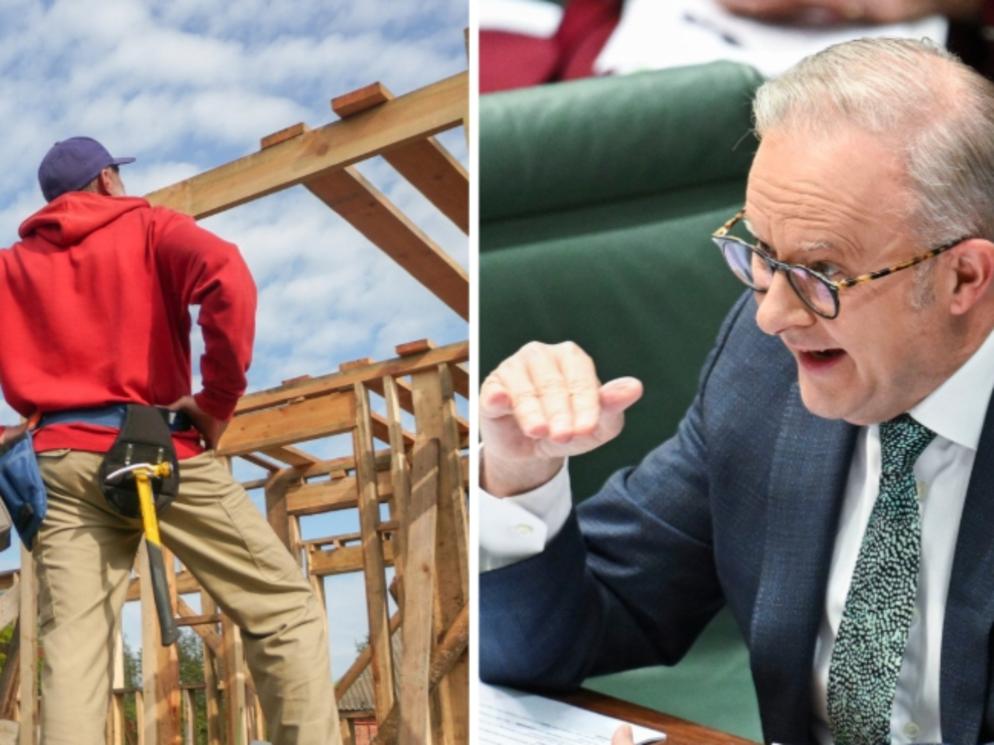
A recent report has pointed the finger at Australian government policies as a significant contributor to the nation’s ongoing housing crisis. The report highlights how these policies have fueled an “artificial” demand for land, leading to skyrocketing prices. In September, the average land price in Australia reached a record high of $391,420, a figure six times greater than at the start of the millennium, with even steeper increases in major cities.
The Housing Industry Association (HIA), which supported the report, argues that the surge in land prices is exacerbated by a combination of rising taxes and the burden placed on developers to cover infrastructure costs. This financial strain was not as prevalent in the early 1990s, according to the association.
Government-Induced Market Failure
The HIA’s Residential Land Report, released today, describes Australia’s housing crisis as a “government policy induced market failure.” The report claims that the consistent rise in land prices is due to a limited supply of new land, which in turn makes home construction more expensive.
“Land scarcity in Australian cities is largely artificial, created by planning systems, infrastructure funding models, and regulatory processes that ration supply and load costs onto new housing supply, rather than consolidated (state government) revenue,” the report notes.
Over the past decade, land prices have approximately doubled in Melbourne, Brisbane, Adelaide, and Hobart, while Sydney has seen a 67 percent increase. Despite these rising costs, the size of a typical block of land has decreased, with Sydney’s average plot shrinking from 450 square meters to 388 square meters, and Melbourne’s from 419 square meters to 391 square meters. Brisbane is the only capital city where land sizes have increased, now averaging about 506 square meters.
Impact on Homebuyers
The increase in land prices has had a direct impact on homebuyers. In Sydney, the cost per square meter has increased by $1,000, while buyers in Melbourne, Adelaide, and Brisbane are paying an additional $500 on average. According to HIA chief economist Tim Reardon, the cost of land reflects the expenses associated with making it available for development, which includes essential infrastructure such as sewerage, plumbing, and electricity.
While developers initially bear these costs, they are often passed on to the end consumer. Mr. Reardon suggests that governments could alleviate these costs by assuming responsibility for infrastructure installation, rather than requiring developers to pay upfront fees.
“The best way for governments to raise more revenue is to build more homes,” Mr. Reardon said. “They raise $200,000 in direct taxation per home. And so paying for the upfront infrastructure will be a revenue positive.”
Historical and Current Policy Impacts
The report traces the origins of the current pricing issues back to the 1990s, noting that the process of shifting costs to developers has progressively worsened since 2000. Despite some recognition from governments of their role in inflating prices, Mr. Reardon warns that reversing these policies could take a decade to impact the market.
Prominent property developer and Villawood Properties boss Rory Costelloe concurs with the report’s findings, citing government actions as a major factor in inflating land prices. He points to historical policy decisions such as the Howard government’s home grants in 2001, a land shortage in 2017, and the Morrison government’s Homebuilder scheme in 2020 and 2021 as key contributors to price spikes.
“The greed of the industry is a factor as well, they do push prices up,” Mr. Costelloe said. “But they couldn’t do that if there was more supply.”
Mr. Costelloe also highlights the impact of government-led large-scale construction projects, which have increased competition for trades and materials, further driving up costs. Additionally, policies that delay land development can lead to higher prices for homebuyers, as developers face increased land tax and holding costs over time.
Looking Ahead
As the debate over the causes of Australia’s housing crisis continues, the report underscores the need for a reevaluation of government policies that contribute to artificial land scarcity. The potential for policy reform offers a glimmer of hope for future homebuyers, but the path to more affordable housing will require significant changes and a long-term commitment from both government and industry stakeholders.
For now, the focus remains on understanding the complex interplay of factors driving the crisis and exploring viable solutions to ensure a more accessible housing market for all Australians.