
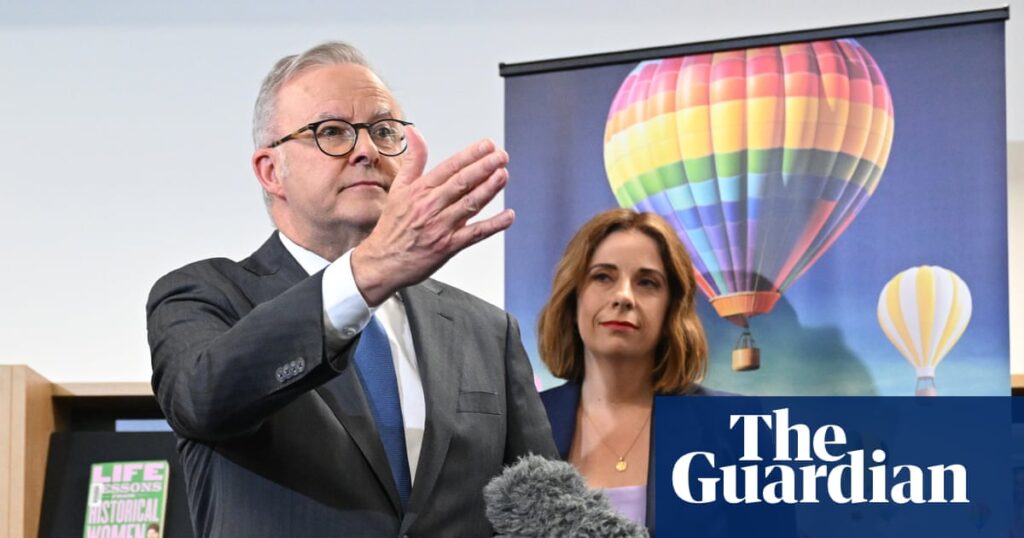
Anthony Albanese has emphasized the importance of federal bureaucrats seeking “value for money at all times,” despite the government’s decision to reject expert recommendations to tighten rules on expensing business-class flights for short-haul travel. This decision comes amid a growing expenses saga that has put the Labor party under scrutiny.
The Department of Finance recently opted against a proposal to allow public servants to book business-class fares only for flights lasting three hours or more, up from the current two-hour threshold. This recommendation was part of a broader effort to cut costs from the nearly $1 billion travel bill incurred by government departments and agencies.
Background and Financial Implications
The recommendation to alter the business-class travel policy was included in a review commissioned by Labor prior to the federal election. The review highlighted that although business-class travel constitutes just 4% of domestic bookings by public servants, it accounts for 8% of domestic travel spending. For international travel, business class represents 25% of bookings but 45% of total costs.
“Flights between Canberra, Sydney, Melbourne, Brisbane, and Adelaide, in both economy and business, account for about 60% of all government flight bookings.”
The proposed policy change was estimated to save around $5 million annually. In the fiscal year 2024-25, the government spent $953 million on travel through the centralised public service system, a figure that excludes federal politicians and their staff, as well as government-owned businesses.
Government’s Stance and Political Reactions
In its response to the review, the government stated that it would not mandate the use of economy class for flights under three hours, asserting that “the current settings are appropriate.” Albanese, speaking at an event promoting a social media ban for children under 16, reiterated the need for prudent spending, saying, “I haven’t seen the review, but certainly people should look for value for money at all times.”
This decision comes as scrutiny intensifies over travel expenses for federal MPs, particularly following Communications Minister Anika Wells’ costly trip to New York for a UN event. The controversy has also highlighted the broad expense rules that allow ministers and senior politicians “unlimited” travel entitlements for their spouses.
“An explanatory document about the regulations states spousal travel for senior office holders is ‘relevantly unlimited in respect of total expenses claimable each year.’”
Calls for Transparency and Future Steps
The white paper review recommended that data on public service travel costs be routinely published, akin to the data released by the Independent Parliamentary Expenses Authority, which tracks politicians’ travel. In response, the Department of Finance has agreed to start publishing this data from early 2026 after further consultation. The published data could include annual figures on travel routes, airline choices, and associated costs, as well as accommodation and ground transport expenses.
As the government navigates the growing expenses scandal, the decision not to tighten business-class travel rules has sparked debate about fiscal responsibility and transparency. Moving forward, the publication of detailed travel expense data may provide greater accountability and insight into public spending.
The ongoing discussion around travel expenses underscores the broader challenge of balancing cost-saving measures with the operational needs of government officials. As the situation develops, stakeholders will be closely monitoring how these financial policies evolve and impact public perception.