

The Albanese Government is under fire after rejecting a family’s plea to send their critically ill toddler overseas for life-saving cancer treatment. This decision highlights Australia’s lag in providing advanced medical therapies compared to other nations. Layla Davis, a two-year-old battling a rare form of cancer, has been denied funding for proton beam radiation therapy abroad, despite medical endorsements.
Layla’s mother, Katherine Irvine, expressed her devastation and anger over the government’s refusal to support their request through the overseas treatment program. In response, the family has launched a GoFundMe campaign to cover the costs of the treatment.
Layla’s Struggle with Cancer
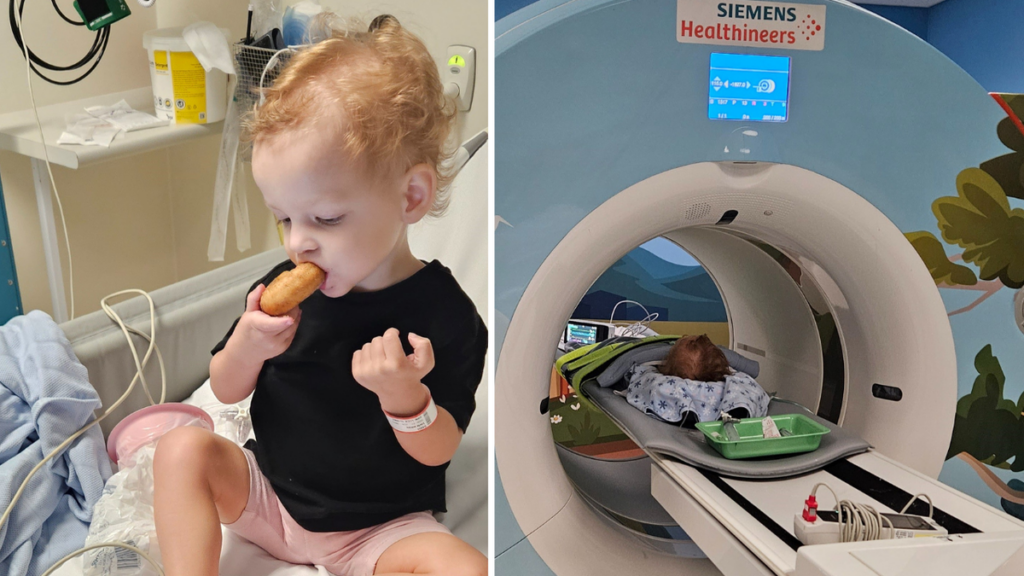
Layla’s fight began late last year with a diagnosis of Alveolar Rhabdomyosarcoma in her left thigh, which has since metastasized to her pelvis and upper thigh. The young girl has undergone 17 rounds of chemotherapy and 18 rounds of radiation, with five more radiation sessions pending.
Doctors have recommended proton beam radiation therapy, a treatment known for its precision in targeting tumors while minimizing damage to surrounding healthy tissue. This therapy is a standard practice for certain childhood cancers in many countries but remains unavailable in Australia.
“Unfortunately, the government decided that Layla does not fit the criteria for the travel program,” Irvine said. “They basically said that because Layla has a poor prognosis, she doesn’t deserve to go overseas for treatment.”
Despite the challenges, Layla continues to display remarkable resilience. “She shouldn’t have to be like this, but she’s been amazing,” Irvine added. “She’s more courageous and brave than we are.”
The Proton Therapy Shortfall
Australia’s failure to provide proton therapy is not for lack of trying. Over $100 million was invested in a planned facility in Adelaide, but the project collapsed following a contractual dispute in 2024. No alternative solution has been proposed, leaving families like Layla’s in limbo.
The issue has reached the federal parliament, with Shadow Health Minister Anne Ruston tabling a petition demanding immediate action. The petition has garnered over 27,000 signatures from Australians who urge the government to fulfill its promise of providing proton beam therapy.
“It is really distressing that years after a promise was made, we are still waiting for that treatment to be available in Australia,” Ruston said. “Children are forced to go overseas, risking their lives because the government has not delivered on its promise.”
Families Forced to Seek Treatment Abroad
While some families manage to secure funding for treatment abroad, the process is often daunting. In Florida, Shannon Kelly supports her one-year-old son Cruz through proton radiation for stage four brain cancer. The journey was overwhelming, requiring a 26-hour trip with a vulnerable child.
“We were devastated to know that Australia had an empty building meant to house the proton radiation machine,” Kelly said. “It’s heartbreaking to uproot our lives without community support during such a difficult time.”
The lack of progress in Australia is hard to comprehend, especially when other countries have long-established proton therapy centers. The absence of this critical treatment option forces families into difficult decisions and immense financial burdens.
Government’s Response and Future Outlook
Inquiries to Prime Minister Anthony Albanese’s office resulted in a statement acknowledging the distress faced by affected families. “Easier and quicker treatment is important, which is why the Health Minister is working with states to resolve this issue,” a spokesperson said.
However, this assurance offers little solace to families currently grappling with the harsh realities of childhood cancer. The failure to deliver proton therapy in Australia leaves families reliant on donations or international travel for treatment, or worse, missing out entirely.
As Layla continues her battle, her mother hopes that by speaking out, she can instigate change for future families. “I want the Australian government to get proton therapy. I want someone to be held accountable. I want the government to make this a priority for our children in Australia,” Irvine stated.