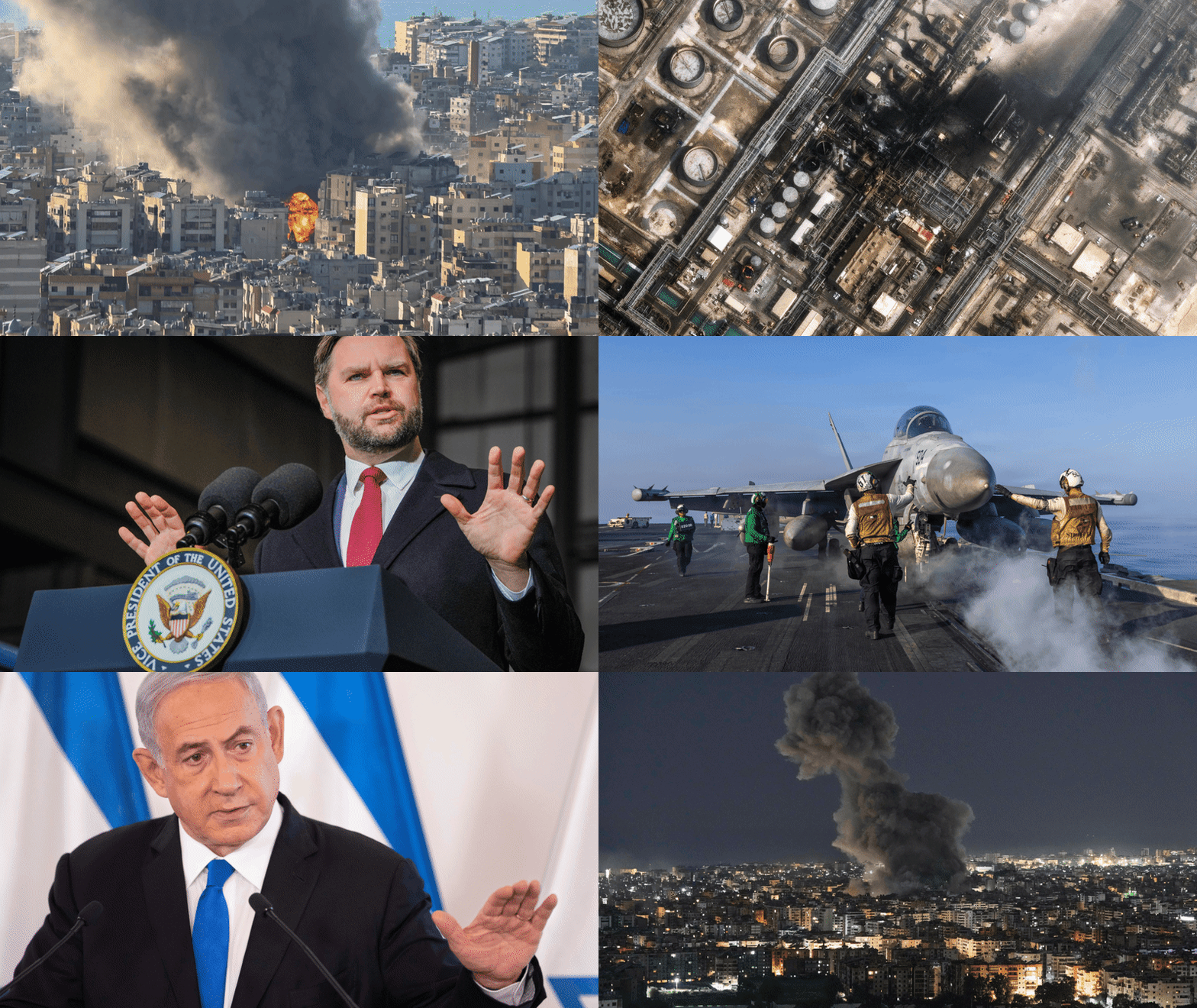


Western governments, including Australia and New Zealand, have thrown their support behind US and Israeli military strikes on Iran, a decision that could have far-reaching consequences for the global economy and international stability. The military action, which began over the weekend, has sparked fears of economic turmoil, regional escalation, and further erosion of international law.
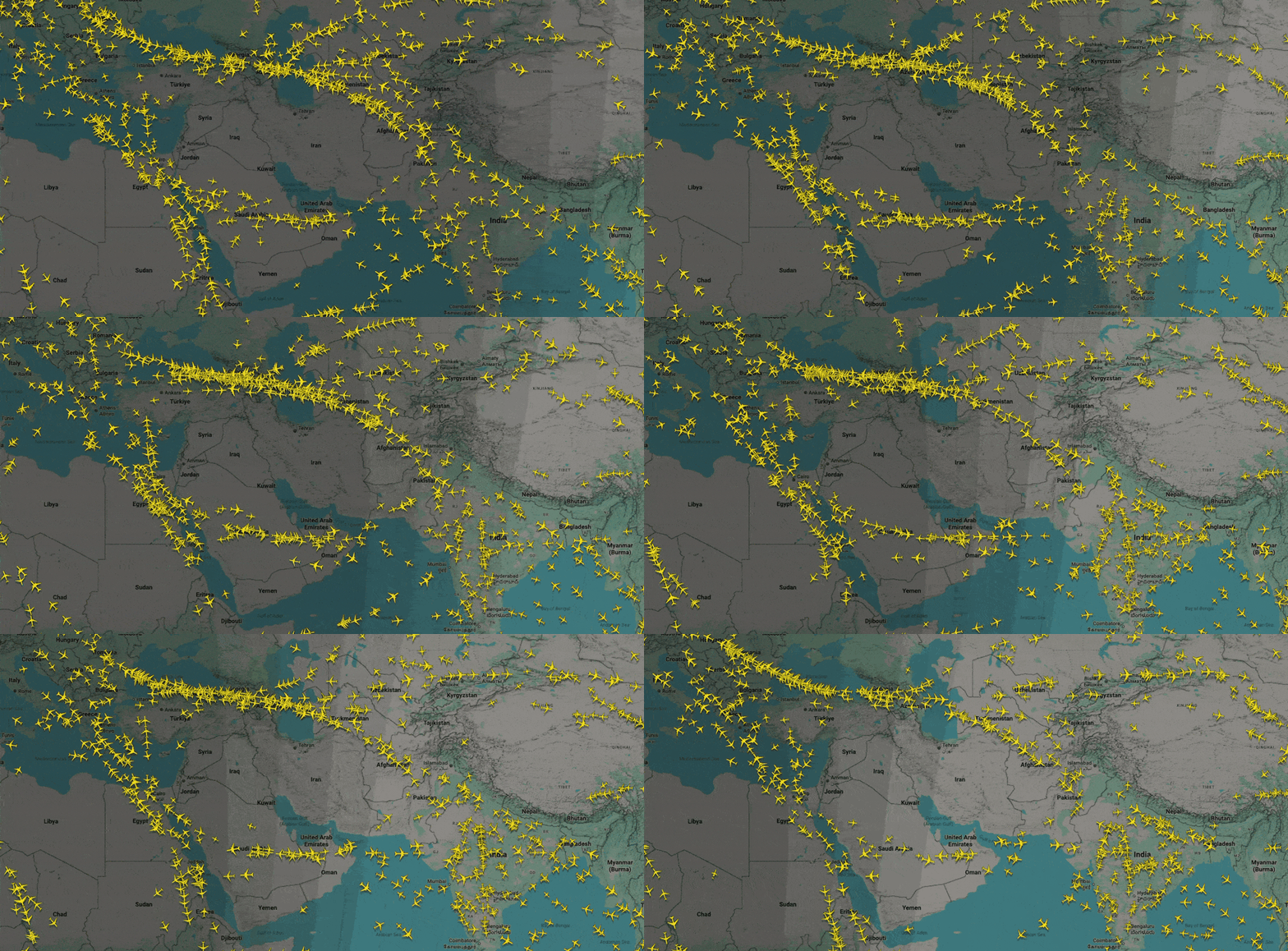
The swift alignment of Western nations with the US-Israeli offensive against Iran signals a significant geopolitical shift. However, the repercussions could be severe, as Iran has vowed to retaliate in ways that could disrupt the global economy. The closure of civilian airports in the Gulf and the effective blockade of the Strait of Hormuz by Iran are early indicators of potential economic fallout. These actions threaten the daily movement of half a million international passengers and cut off the shipment of 21 million barrels of oil and gas per day, representing 20% of global daily requirements.
Economic and Strategic Implications
The closure of the Strait of Hormuz could lead to a bidding war for oil, LNG, and agricultural petrochemicals, affecting countries like Australia and New Zealand. Iran’s arsenal of short-range missiles and mines along its coastline poses a formidable challenge to any military intervention aimed at reopening the strait. The assassination of Iran’s Supreme Leader has been met with mixed reactions in Western capitals, but experts warn that it could provoke a desperate response from Iran, potentially targeting US military assets or critical energy infrastructure in the region.
There is also a looming threat of nuclear escalation. The US and Israel have not ruled out the use of nuclear weapons if the conflict spirals out of control. The US president’s recent remarks on social media, calling Ayatollah Khamenei “one of the most evil people in history,” highlight the heightened tensions. However, Khamenei had issued a fatwa against nuclear weapons in 2003, contradicting claims about Iran’s nuclear ambitions.
International Reactions and Historical Context
The international community is divided over the strikes. Spanish Prime Minister Pedro Sánchez condemned the unilateral military action, stating it contributes to a more uncertain and hostile international order. Cuba’s President Miguel Díaz-Canel also criticized the attacks, labeling them a violation of international law and the UN Charter. The Cuban Ministry of Foreign Affairs emphasized the need for strict adherence to international law principles, including the sovereign equality of states and the peaceful settlement of disputes.
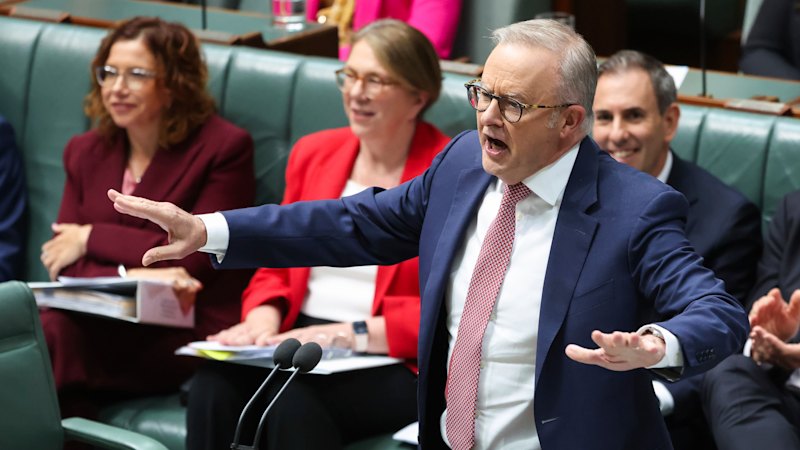
Meanwhile, Australia and New Zealand have faced criticism for their support of the strikes. The New York Times noted Australia’s unexpected stance, with Prime Minister Anthony Albanese backing the US actions to prevent Iran from obtaining nuclear weapons. New Zealand’s Prime Minister Christopher Luxon echoed similar sentiments, despite concerns over the implications for international peace and security.
Potential for Escalation and Future Outlook
The current conflict could escalate into a broader regional war, with significant implications for global stability. Arab leaders have expressed concerns over the potential for territorial expansion by Israel, following comments by US Ambassador to Israel Mike Huckabee about fulfilling biblical promises of land acquisition. Such statements have fueled fears of further conflict in the Middle East.
The situation underscores the complex geopolitical dynamics at play, with Western powers facing accusations of acting as aggressors. The strikes on Iran are seen by some as part of a “forever war” against a sovereign nation that could serve as a counterbalance to US and Israeli influence in the region. The actions have drawn parallels to historical conflicts where might has overshadowed diplomacy and international law.
As the situation unfolds, the international community must navigate a delicate balance between supporting allies and upholding principles of international law. The potential for economic disruption and further conflict highlights the urgent need for diplomatic solutions to prevent a catastrophic escalation.