



In a dramatic reshuffling of military leadership, Chinese President Xi Jinping has purged Zhang Youxia, China’s highest-ranked general, raising questions about the country’s military readiness and its ambitions regarding Taiwan. The removal of Zhang, along with another general, Liu Zhenli, was announced by China’s defense ministry last Saturday, citing “discipline and law violations” without specifying corruption, a common charge in previous purges.
This development follows a series of purges within the Central Military Commission, leaving it with only two members: Xi and another general. Zhang, a veteran of China’s 1979 invasion of Vietnam, had been closely aligned with Xi, who had promoted him multiple times. The ousting of Zhang, who is 75, is seen as one of Xi’s most significant purges, with speculation ranging from leaked nuclear secrets to corruption or even a potential coup.
China’s Military Readiness and Taiwan
China watcher James Palmer, writing in Foreign Policy, suggests that Xi’s actions reflect concerns about the military’s readiness, particularly following corruption scandals within the PLA Rocket Force. Palmer notes, “The good news is that these developments make Chinese military adventurism less likely, including an invasion of Taiwan.”
“For Xi to trust the PLA, it would require not only a complete change of personnel but confidence that corruption-induced logistical issues had truly been resolved,” Palmer added.
The announcement comes as tensions between China and Taiwan continue to simmer, with Xi having previously ordered the military to be capable of seizing Taiwan by 2027. The purges may signal Xi’s intent to consolidate power and ensure loyalty within the ranks, potentially affecting China’s strategic posture in the region.
Timor-Leste and Australia’s Energy Cooperation
Meanwhile, in Southeast Asia, Australian Prime Minister Anthony Albanese made his first official visit to Timor-Leste, pledging to expedite the development of the Greater Sunrise gas fields. This move is seen as a strategic effort to counter potential Chinese influence in the region.
During his visit, Albanese announced a new cooperation agreement, stating that Australia would allocate over 30% of its revenue from the project to an infrastructure fund for Timor-Leste. “Sharing opportunities for economic growth is fundamental to strengthening the stability and prosperity of our region,” Albanese said in a parliamentary address.
Timor-Leste Prime Minister Xanana Gusmão emphasized the importance of processing gas onshore, calling it “essential for our national development and for the long-term strength of our family.” The project, operated by Woodside Energy, marks a significant shift from previous plans to develop the gas in Darwin, Australia.
Myanmar’s Controversial Election
In Myanmar, a pro-regime party has reportedly won the country’s first election since the military coup in 2021. However, the election has been widely criticized and rejected by international observers, including the United Nations and the European Union.
The Union Solidarity and Development Party, backed by the military, claimed a majority after three rounds of voting. The election was seen as an attempt by the military to legitimize its rule, with key opposition parties excluded from participation.
UN expert Tom Andrews warned, “International acceptance of this fraudulent exercise would set back the clock on genuine resolution to this crisis.”
The coup has led to a brutal civil war, with an estimated 92,000 deaths and significant areas under rebel control. The political landscape remains volatile, with the military holding a quarter of parliamentary seats and a new president set to be elected by MPs in March.
Trump’s De-escalation in Minnesota
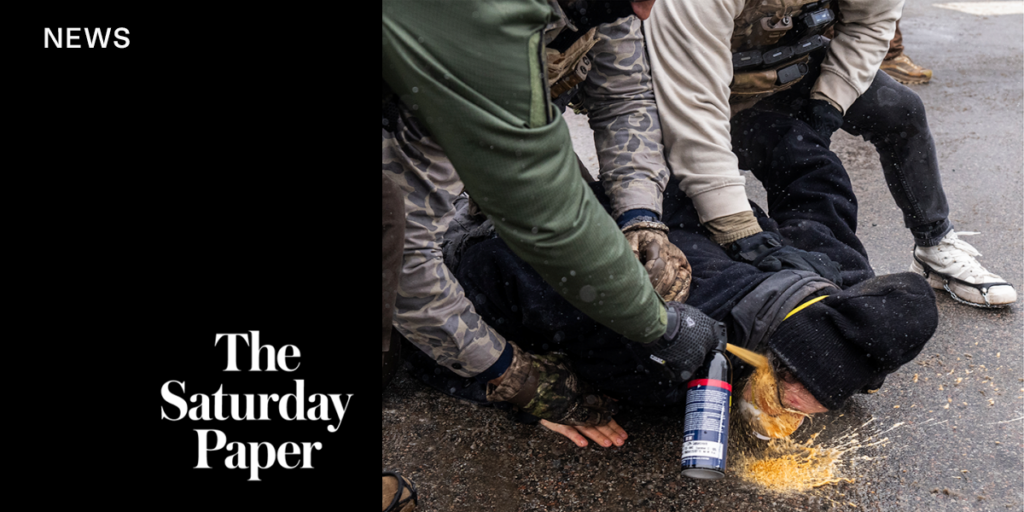
In the United States, President Donald Trump has signaled a shift in strategy following the fatal shooting of Alex Pretti, an intensive care nurse, by Immigration and Customs Enforcement (ICE) agents in Minnesota. The incident, which followed the shooting of Renee Good, has sparked public outrage and calls for de-escalation.
Video footage contradicted claims by White House officials that Pretti was a “domestic terrorist,” leading to widespread criticism of ICE’s aggressive tactics. A Reuters/Ipsos poll found that 58% of Americans believe ICE’s operations have gone “too far,” with 53% disapproving of Trump’s handling of immigration.
In response, the White House has begun to change its tone, withdrawing Gregory Bovino, the head of the migration crackdown in Minnesota, and replacing him with Tom Homan, a seasoned law enforcement official. Trump told Fox News, “Both of them were terrible,” referring to the deaths of Good and Pretti, and expressed a desire to “de-escalate a little bit” in Minnesota.
The move represents a significant shift in the administration’s approach, as training for new ICE agents has been reduced, and the age limit for recruits lowered.
As the situation unfolds, the implications for U.S. immigration policy and public sentiment remain uncertain, with potential impacts on the upcoming elections and broader political landscape.