

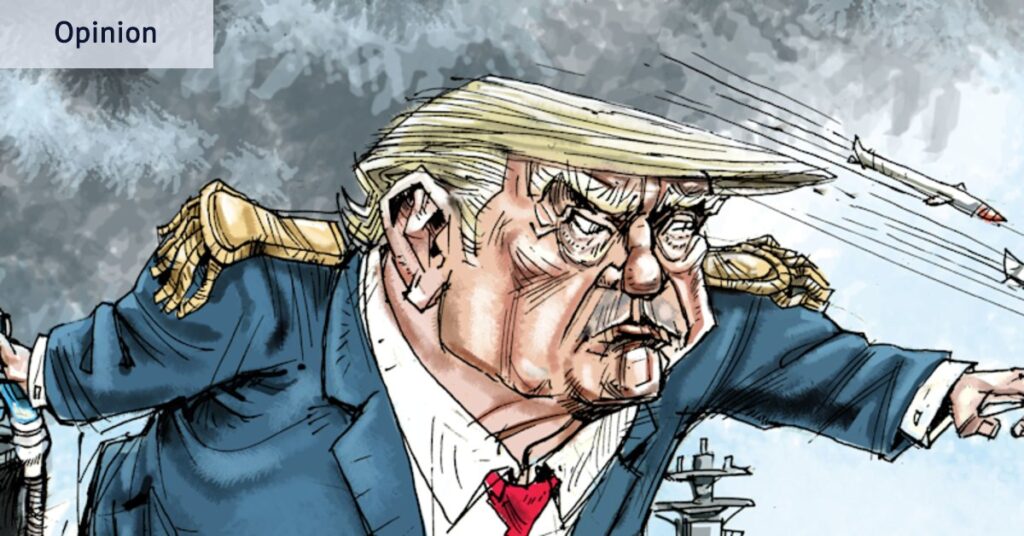
In a bold and controversial move, the United States, under the leadership of President Donald Trump, has launched an aggressive intervention in Venezuela. This action, which has drawn stark parallels to Russian President Vladimir Putin’s invasion of Ukraine, has been met with widespread condemnation. Both acts are seen as violations of international law, specifically the UN Charter of 1945, which prohibits member states from using force against the territorial integrity or political independence of any state.
The situation in Venezuela has escalated rapidly, with the US military’s involvement being justified by the Trump administration as a necessary step to “run the country” and reorganize its economy. This has raised significant concerns about the legality and morality of such actions, especially given that Venezuela posed no immediate threat to the United States.
International Law and the UN Charter
The UN Charter, established in 1945, was designed to prevent the scourge of war and maintain international peace and security. Article 2(4) explicitly prohibits the use of force by member states except in cases of self-defense. The US intervention in Venezuela, lacking any legitimate self-defense claim, stands in stark contrast to these principles.
Legal experts have pointed out that the actions of the US mirror those of Russia in Ukraine, where both nations have bypassed international law to achieve their geopolitical objectives. The lack of a UN mandate or international court approval further underscores the unilateral nature of the US’s actions in Venezuela.
Economic Motives and Regime Change
At the heart of the US intervention lies a significant economic motive: the control of Venezuela’s vast oil reserves. The Trump administration has openly admitted its intention to change the Venezuelan government regime, a move that would allow US oil companies to seize infrastructure and profits previously nationalized under former President Hugo Chavez.
This economic agenda raises ethical questions about the exploitation of a nation’s resources and the impact on its populace. The invasion has already resulted in civilian casualties and destruction, with reports indicating that approximately 40 civilians have been killed. The US is yet to address the need for compensation for these losses.
Global Repercussions and Historical Parallels
The US’s actions in Venezuela have set a dangerous precedent on the global stage. If such interventions go unchecked, they could embolden other nations to pursue similar aggressive policies. Chinese President Xi Jinping, for instance, might view this as an opportunity to assert claims over Taiwan, drawing from the precedent set by Trump.
Historically, the targeting of world leaders has been avoided due to fears of retaliation. However, Trump’s aggressive stance, including threats against Iranian Supreme Leader Ayatollah Khomeini, signals a shift in this unwritten rule. This development serves as a warning to world leaders who might oppose US interests.
The Role of International Criminal Justice
Despite the US not being a party to the International Criminal Court (ICC), Venezuela is, which opens the door for potential prosecution of war crimes committed on its territory. This could include charges against Trump for the unlawful arrest of Venezuelan President Nicolas Maduro and his wife, or for civilian casualties resulting from the bombing of Caracas.
Ironically, Maduro had previously announced intentions to withdraw Venezuela from the ICC, a move he never completed. This decision now represents one of the few legal avenues available to challenge the US’s actions on an international platform.
Geoffrey Robertson KC, a former president of the UN War Crimes Court in Sierra Leone, highlights the significance of international law in holding leaders accountable. His insights, published in his latest book “World of War Crimes,” emphasize the importance of maintaining legal standards to prevent the unchecked use of force by powerful nations.
The unfolding situation in Venezuela serves as a critical reminder of the fragile nature of international law and the potential consequences of its violation. As the global community watches, the actions of the US under Trump could redefine the balance of power and the future of international relations.