



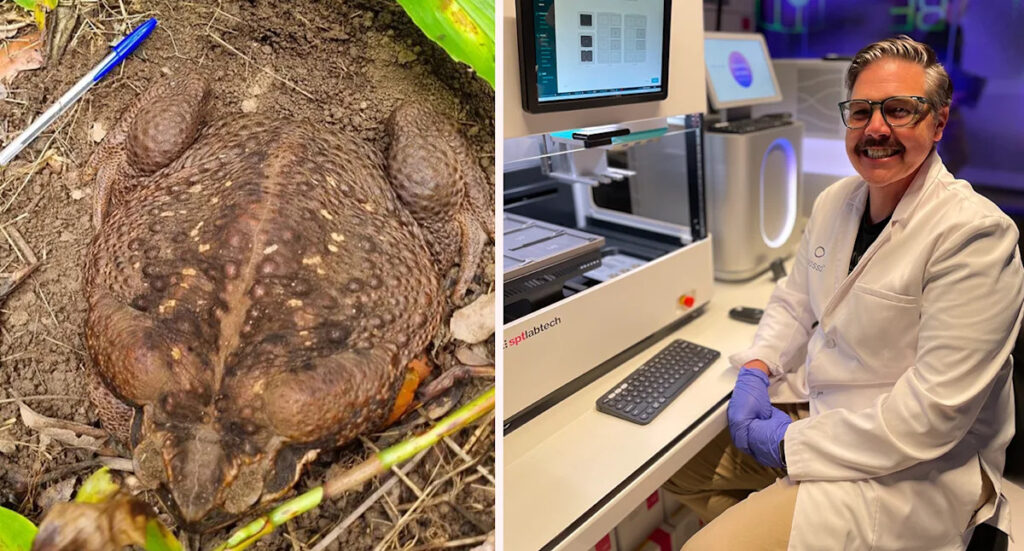
Scientists have announced a breakthrough in a plan to turn Australia’s native predators against invasive cane toads. Gene-technology company Colossal Biosciences is on the verge of birthing a northern quoll engineered to resist the poison contained in the toad’s toxic glands. Professor Andrew Pask, the company’s chief biology officer, explained that his team in Australia now has a definite pathway to achieving this incredible goal.
The announcement comes as the invasive cane toads continue their westward spread, posing a lethal threat to the northern quolls that have inhabited the Australian outback for millions of years. “The quicker we can get there, the better,” Professor Pask told Yahoo News. “This isn’t a 10-year plan; in 2, 3, 4 years, we should have the birth of a cane toad-resistant quoll.”
The Urgent Threat to Northern Quolls
Experts predict that the northern quoll could face extinction in the wild within just 10 years if the cane toad continues to expand its territory. Australia’s native animals evolved over 13,000 kilometers away from the toad’s Central American homeland, and they mistakenly perceive the invaders as an easy meal. However, the toad’s poisonous glands release a deadly milky liquid when agitated, to which Australia’s wildlife has no natural immunity.
Since their introduction in the 1930s, cane toads have decimated local populations. Colossal Biosciences’ plan to re-engineer species like the Tasmanian tiger, moa, dodo, and mammoth is time-consuming and costly. However, the company emphasizes that it is not making dramatic changes to the northern quoll. Instead, it aims to “speed up evolution” to prevent the species from being wiped out before it can naturally build resistance to the cane toad’s poison.
Gene Editing: A New Hope for Conservation
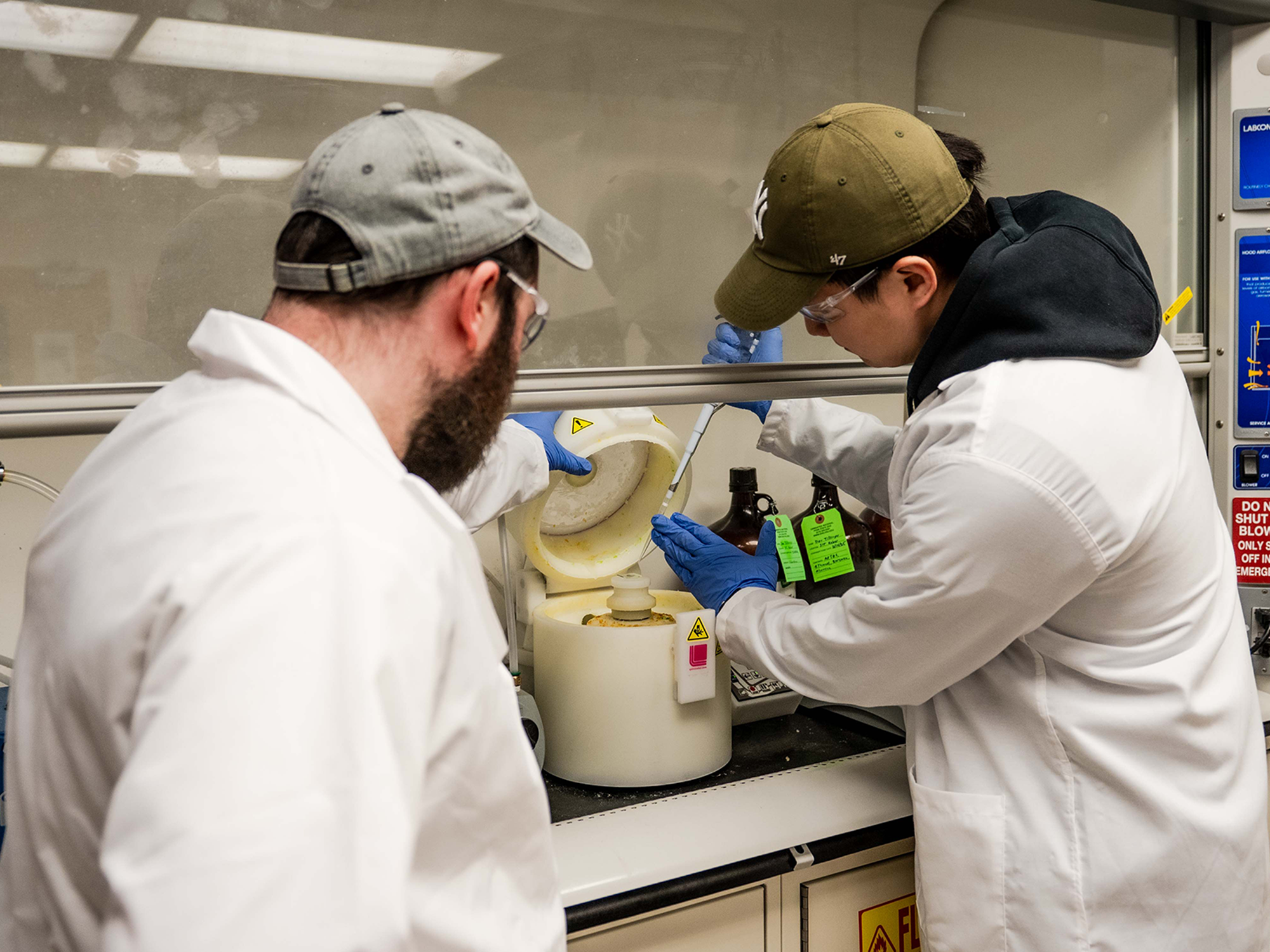
Colossal Biosciences has made significant strides in rapidly growing and introducing mutations into quoll stem cells, crucial steps toward creating embryos. The company has successfully introduced poison resistance edits into a gene of the fat-tailed dunnart, a process that could soon be applied to its close relatives, including the quoll.
“We’ve developed tools to really efficiently gene edit marsupials, and a lot of the pipelines that we need to turn those cells back into a full living animal,” Professor Pask explained. The ideal outcome would see the northern quoll becoming a super-predator capable of turning the tide against cane toads, thereby protecting other animals in the ecosystem from encountering them.
Implications for the Future
If successful, Colossal’s plan will mark the first instance of genetic engineering for conservation purposes. Original versions of the quolls will be kept in captivity, as they are not threatened by the toads. Because marsupials with the gene mutation will have an advantage in the wild, it is expected that their resistance will spread quickly.
Before the edited quolls are released into the environment, Colossal plans to negotiate with First Nations people and government authorities. The company does not anticipate complicated negotiations, as the genetic change to the animal is minimal. “Ultimately, it would be great to think that at some point in the future, all cane toads are gone from Australia,” Professor Pask stated. “Then the [mutation] would revert back naturally, because… there’s no need to retain it.”
Looking Ahead: A Radical Plan for the Outback
The move represents a radical 20-year plan to reclaim the Australian outback from invasive predators. As part of broader conservation efforts, Australia has been hailed as a ‘model for the world’ following a $20 million coastline transformation. However, challenges remain, such as the threat to rare Antarctic fields of moss as temperatures reach 30 degrees Celsius.
Meanwhile, the scientific community watches closely as Colossal Biosciences attempts to alter the course of evolution to save the northern quoll. This groundbreaking initiative could set a precedent for future conservation strategies worldwide, offering a glimmer of hope in the fight against invasive species.