



As the global population approaches 10 billion and climate change increasingly pressures agricultural systems, scientists are exploring innovative solutions to feed the world. A group of researchers from Cornell University suggests that the answer may lie not in traditional agriculture but in the transformative power of fungi. These organisms are capable of converting agricultural waste into nutritious food, offering a sustainable alternative to conventional farming.
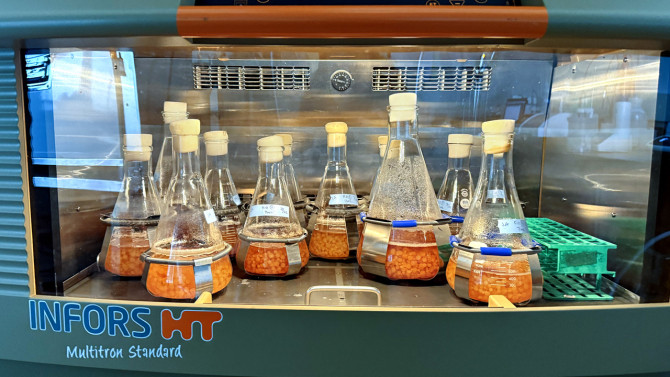
In a comprehensive review published on February 11 in Trends in Food Science & Technology, a team led by Ke Wang, an assistant research professor of food science at Cornell AgriTech, outlines the concept of an “emerging circular fungal biorefinery.” This system utilizes fungal fermentation to convert low-value agricultural byproducts into high-protein, nutrient-rich foods.
The Promise of Fungal Fermentation
“The main driver of this type of research is identifying new and sustainable food sources,” Wang explained. “We looked at all the possible perspectives and tried to understand the technologies and the research gaps.” The team aimed to pinpoint value-added products that could be derived from waste streams in agriculture, food processing, and even household waste, according to Krishna Kalyani Sahoo, the study’s first author and a postdoctoral researcher.
The review highlights the potential of fungal fermentation to upcycle low-value agricultural and food wastes into nutritious, sustainable foods. However, its success hinges on integrating advanced processing technologies and enhancing yield, functionality, and product quality.
Fungi: An Ancient Solution with Modern Applications
Fungi have long been used in traditional foods such as tempeh, miso, and cheese. With modern biotechnology, it is now possible to fine-tune their growth and nutritional output. Certain strains have been used for years to produce products like Quorn, a popular meat substitute.
The Cornell-led review posits that the field is entering a new phase, treating fungi not just as alternative protein sources but as biological engines capable of transforming food waste into next-generation meat analogues and functional foods. Agricultural residues and food-processing byproducts, often discarded or underutilized, are rich in carbohydrates and other nutrients. With proper pre-treatment, such as mechanical, thermal, or biological methods, these materials could serve as feedstock for fungal growth.
“Fungi are remarkably efficient at converting complex biomass into structured proteins,” Wang noted. “And they are the most promising substitute for animal-based protein. Beyond their high protein content, they are rich in minerals and other bioactive compounds beneficial to human health.”
A Circular Bioeconomy
The concept aligns with the broader push toward a circular bioeconomy, where waste from one system becomes input for another. Instead of growing crops solely for protein extraction, fungal systems could “upcycle” side-streams that do not compete with human food supplies. However, scaling up edible fungi production is complex and costly. The review found that fungal fermentation is a multifactorial process influenced by variables such as carbon-to-nitrogen ratios, temperature, aeration, and bioreactor design.
Advanced techniques like co-cultivation and genetic engineering may enhance productivity or tailor fungi to produce specific amino acids or bioactive compounds. Fungal mycelium, the fibrous root-like network of the organism, naturally mimics the texture of muscle fibers, offering a structural advantage over many plant-based proteins that require extensive processing to approximate meat.
Challenges and Consumer Perception
Despite the potential, consumer perception remains a challenge. While younger consumers and “reducetarians” are interested in sustainability and the idea of upcycling waste, some people associate fungi with mold or decay. Food technology neophobia, or skepticism toward novel production methods, can hinder acceptance. Overcoming these barriers requires careful storytelling, Sahoo emphasized.
If successful, these efforts could yield not just a meat substitute but a distributed biorefinery model capable of converting regional waste streams into locally produced, high-value foods. This development represents a significant step toward sustainable food production in a world facing increasing environmental and population pressures.