


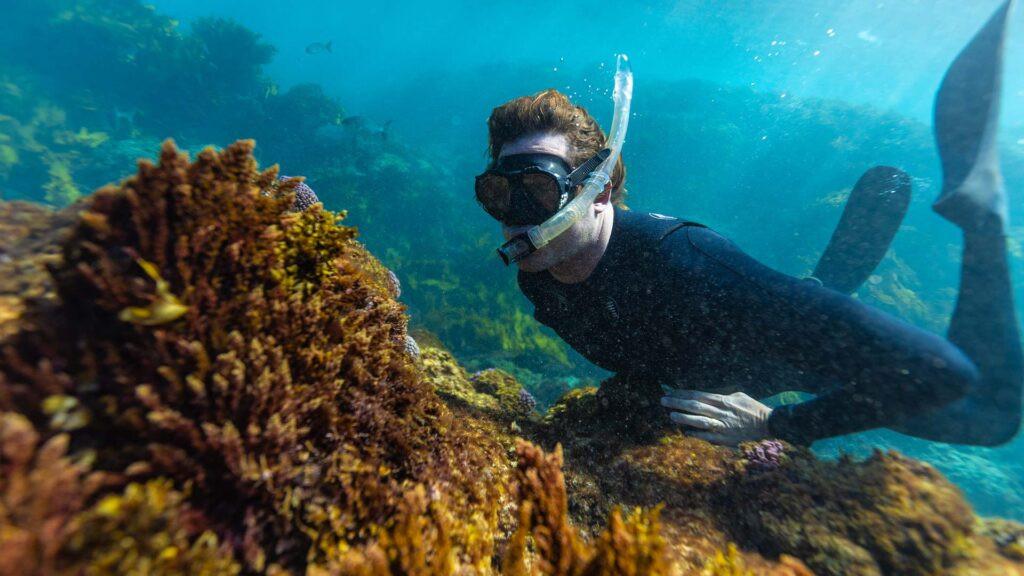
Fremantle Seaweed is developing a hub in WA's north-west for the production of seaweed.
A pioneering company, Fremantle Seaweed, is on the brink of transforming the agriculture industry with its innovative approach to reducing methane emissions. Originating from a small team trialing longlines in Cockburn Sound, the company is now nearing commercial-scale production of asparagopsis seaweed, a native red seaweed known for its potential to significantly cut methane emissions from cattle.
Research conducted by the Commonwealth Scientific and Industrial Research Organisation (CSIRO) has demonstrated that asparagopsis can reduce methane emissions by up to 80% when incorporated into cattle feed. This breakthrough offers a promising climate solution for the beef and dairy sectors, which are responsible for approximately half of Australia’s methane emissions.
Investment and Expansion
Fremantle Seaweed has received substantial backing, including $4 million from the State Government’s Investment Attraction Fund and an additional $2.3 million in seed funding. This financial support is pivotal as the company transitions from pilot operations to full-scale commercial manufacturing. Over the past four years, Fremantle Seaweed has focused on developing the necessary technology, engineering systems, and ocean-based infrastructure to produce asparagopsis at scale.
The company has successfully designed and deployed high-density longline cultivation systems, secured modular containerized hatcheries, and developed a purpose-built harvesting vessel. These advancements are crucial as Fremantle Seaweed accelerates the development of its 3000-hectare North West hub, the centerpiece of its commercial rollout.
Environmental and Economic Impact
According to managing director and co-founder Chris De Cuyper, the North West hub has the potential to significantly reduce carbon emissions.
“Analysis shows the North West hub could cut close to one million tonnes of carbon dioxide-equivalent emissions each year — roughly the same as offsetting a small LNG facility,”
he stated. The company’s technology is designed to integrate seamlessly into existing systems, providing practical, natural solutions that benefit farmers and the environment alike.
Fremantle Seaweed is also preparing for a 400-day Wagyu feedlot trial involving 60 head of cattle and more than 1500 kilograms of dried asparagopsis. This trial aims to demonstrate the performance and productivity benefits of asparagopsis under real commercial feeding conditions, potentially encouraging widespread market adoption.
Industry Collaboration and Future Prospects
Grant Rockman, CEO of Pardoo Wagyu, expressed enthusiasm for the trial, highlighting the importance of understanding the impact of asparagopsis on meat quality and consistency.
“For a premium Wagyu producer like Pardoo, the quality of our beef is everything — flavour, marbling, and fat distribution define our product and reputation. We’re excited to be part of the upcoming feedlot trial to see how this supplement performs in a commercial setting,”
he said.
Fremantle Seaweed’s innovative approach has attracted investors, including public relations and marketing agency Third Hemisphere. Jeremy Liddle, managing director, remarked,
“Fremantle Seaweed stood out because they aren’t just farming seaweed; they’re developing the hardware, systems, processes, and operational IP needed to scale a completely new industry from the water up.”
With an additional $4.32 million now open to sophisticated investors, Fremantle Seaweed aims to raise a total of up to $6.5 million. This funding will further support the company’s ambitious plans to revolutionize the agriculture industry and contribute to global efforts in reducing methane emissions.
Implications for the Future
The development of asparagopsis as a methane-reducing feed supplement represents a significant step forward in addressing climate change. As the world seeks sustainable solutions to reduce greenhouse gases, Fremantle Seaweed’s efforts could pave the way for similar initiatives globally. The company’s success could inspire other industries to explore innovative approaches to sustainability, ultimately contributing to a greener, more sustainable future.
As Fremantle Seaweed continues its journey towards commercial-scale production, the agricultural sector and environmental advocates alike will be watching closely. The potential to significantly reduce methane emissions while enhancing agricultural productivity presents a compelling case for the widespread adoption of asparagopsis in cattle feed.