

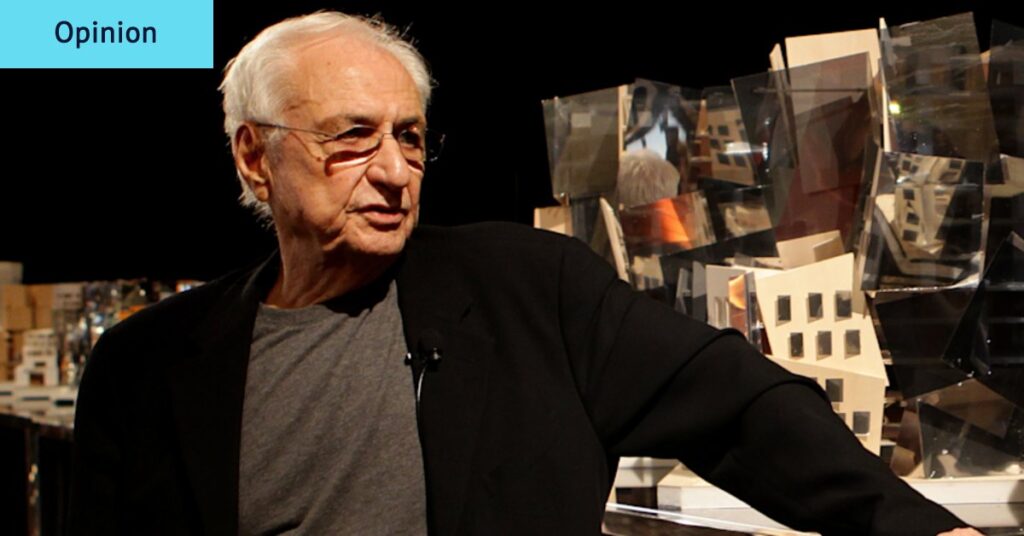
“I’m up for it,” was the enthusiastic response from Frank Gehry, one of the world’s most renowned architects, when approached about designing a new building for the University of Technology Sydney (UTS). With Gehry’s recent passing at the age of 96, his legacy in Sydney is immortalized in the form of the UTS Business School, affectionately known as the “paper bag building.”
The journey to bring Gehry’s vision to life began in 2009 when Roy Green was appointed dean of the UTS Business School. Tasked with reimagining the faculty’s future, Green sought to create an environment that prepared students for the evolving job market, emphasizing skills such as creative problem-solving and entrepreneurial thinking. The existing facilities were inadequate, prompting the decision to construct a new building on the site of the old Dairy Farmers warehouse in Ultimo.
Securing Gehry’s Involvement
Finding the right architect to embody this vision was crucial. Gehry was the obvious choice, but reaching him seemed daunting. Fortunately, a consultant from the design thinking group Second Road, who had past connections with Gehry, facilitated the introduction. Gehry was intrigued by the prospect of working with a client who shared his transformative vision for education.
Upon receiving the strategic plans from UTS, Gehry was captivated. He was eager to move beyond the superficial appreciation of his buildings’ aesthetics and engage with a project that aligned with his design philosophy. Within weeks, Gehry was in Sydney, exploring the city and assessing the potential for his first and only project in the southern hemisphere.
Designing from the Inside Out
Gehry’s approach to design was unique. Rather than focusing solely on external appearances, he prioritized the functionality of internal spaces, engaging with faculty and students to understand their needs. This process involved sketches, block models, and advanced design software, allowing the concept to evolve organically.
“It’s a gnarly project, a business school, not sexy like a museum or concert hall. We love the prospect. Thinking of it as a treehouse came tripping out of my head on the spur of the moment in your presence and was not contrived. But on reflection, the metaphor may be apt. A growing, learning organism with many branches of thought, some robust and some ephemeral and delicate.”
Gehry envisioned the building as a “treehouse,” with social spaces branching into areas for collaborative research and teaching. This metaphor resonated with the faculty’s aspirations, emphasizing growth and learning.
Overcoming Challenges and Criticisms
Despite Gehry’s illustrious reputation, his approach was sometimes misunderstood as whimsical or lacking rigor. However, the completion of the UTS Business School building on time and within budget proved otherwise. The structure has since become a source of inspiration for both Sydney’s architectural landscape and future generations of students.
Reflecting on the project, Roy Green noted the significance of Gehry’s contribution: “This building is not just an architectural marvel; it’s a testament to the power of visionary thinking in education.”
A Lasting Legacy
Gehry’s work at UTS exemplifies his ability to blend innovative design with practical functionality. The “paper bag building” stands as a symbol of Sydney’s potential to embrace bold architectural statements, challenging the city’s traditional skyline.
As Sydney continues to evolve, Gehry’s influence will remain a guiding force, encouraging architects and educators alike to push boundaries and reimagine the possibilities of urban design.
Emeritus Professor Roy Green, who played a pivotal role in bringing Gehry’s vision to UTS, continues to advocate for innovation in education and architecture, ensuring that Gehry’s legacy endures.