



With less than three weeks until the season-opening Australian Grand Prix, Formula 1 is grappling with a significant regulatory overhaul that has left teams and drivers on edge. The 2026 season marks a seismic shift in both chassis and power unit rules, with no carry-over between seasons. This has made pre-season testing a cautious exploration into the unknown, and not all findings have been favorable.
Max Verstappen has been vocal in his criticism of the new regulations, particularly the need for drivers to manage their battery charge, likening it to “Formula E on steroids.” While some drivers share his concerns, they have been less willing to voice them publicly. The primary issue lies with the power unit, as drivers have generally welcomed the return to more conventional car models over the ground-effect designs.
McLaren team principal Andrea Stella has highlighted three critical flaws in the new regulations, emphasizing the need for urgent fixes before the first race. He pointed to issues with starts, overtaking, and the need to avoid excessive lift and cost. These concerns will be discussed at the upcoming F1 Commission meeting, just 16 days before the Melbourne practice sessions.
The Complexity of Race Starts
The complexity of race starts has been a growing concern, exacerbated by recent engine changes. The removal of the MGU-H, aimed at simplifying the system to attract new brands, has inadvertently complicated starts. The MGU-H previously converted wasted heat energy into electrical power, maintaining turbocharger efficiency and reducing turbo lag—a delay between throttle application and power delivery.
In 2026, the increased reliance on electrical power, which cannot be used until the car reaches 50 km/h, means drivers start with significantly less power. This results in an unpredictable sequence where electrical energy and turbo power kick in at different times, complicating race starts.
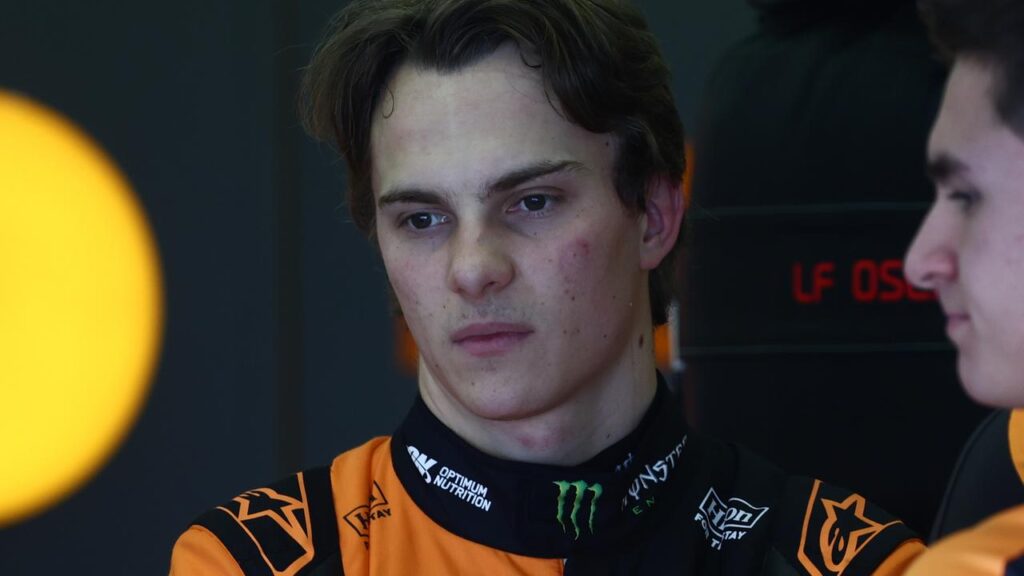
“The difference between a good and bad start last year was you got a bit of wheel spin or you had a bad reaction time,” said Oscar Piastri. “This year it could be effectively like an F2 race where you almost go into anti-stall.”
Drivers must rev their engines to around 12,000 rpm to prepare the turbo before launching, a delicate maneuver that can easily go awry. The concern is that poor starts could lead to significant position losses, especially without adequate preparation time for those at the back of the grid.
Overtaking Challenges
Stella also raised concerns about overtaking, which he believes will be more challenging under the new regulations. The previous DRS system, which allowed for speed boosts when within a second of another car, has been replaced by an overtake mode. This new system allows for full electrical power up to 355 km/h, but only if drivers have extra power available.
“Our drivers have been racing with other drivers during these three days of testing in Bahrain and they found it extremely difficult to overtake,” Stella noted.
Options to address this include reducing the amount of electrical energy deployable around the lap or tapering electrical power more aggressively down the straights. However, these solutions could slow the cars or prove ineffective if drivers lack sufficient power.
Safety Concerns and Political Underpinnings
Stella’s third concern involves safety, particularly the risk of significant speed differences at the end of straights due to battery charging needs. Drivers are lifting and coasting to regenerate power, a practice that could become more aggressive at tracks with fewer braking zones, like Melbourne.
“This may not be an ideal situation when you follow closely,” Stella warned, recalling past incidents like Mark Webber’s airborne crash in Valencia.
One potential fix is increasing the power that can be directed from the combustion engine to the electric motor, reducing the need for aggressive regeneration techniques. However, this too could become politicized, as teams like Red Bull Powertrains have reportedly optimized their systems better than others, such as Mercedes.
The political landscape of Formula 1 is as complex as ever, with teams like Ferrari and Mercedes embroiled in disputes over engine designs and regulatory interpretations. As the countdown to the Australian Grand Prix continues, the sport faces a delicate balance between innovation, safety, and competitive fairness.