


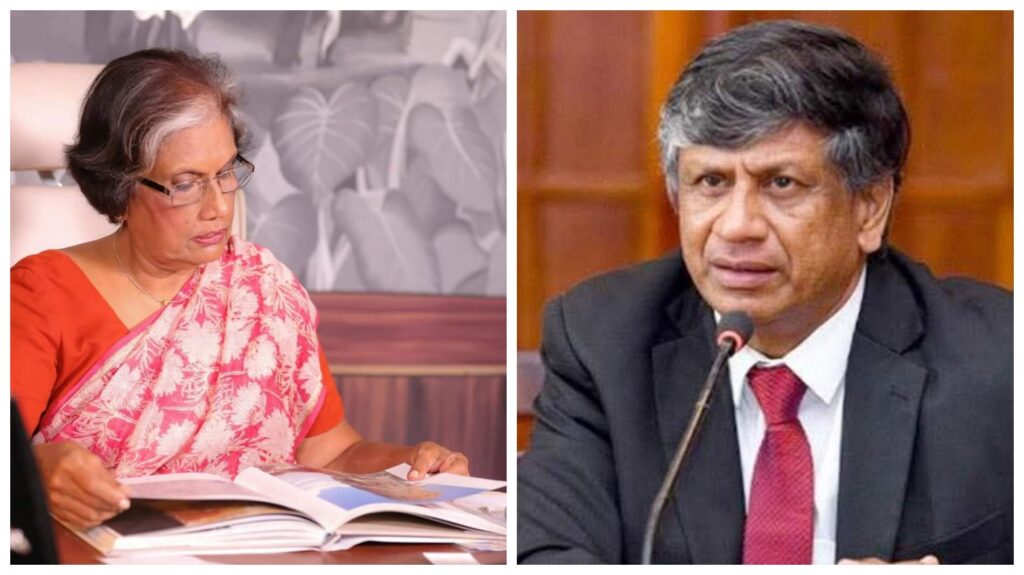
Former President Chandrika Bandaranaike Kumaratunga has issued a stark warning about the erosion of Sri Lanka’s professional public service. In a statement, she highlighted the dangers posed by selective justice and politically driven governance, which she believes threaten the very foundations of the State.
Kumaratunga’s concerns were shared via her Facebook page, where she referenced an article titled “When Justice Becomes Selective.” She emphasized that the issues discussed in the article have significant implications for the country’s governance system. Kumaratunga endorsed the article’s views, praising its thoughtful analysis of integrity within the public service.
The Case of Saman Ekanayake
Central to Kumaratunga’s statement was the case of former Presidential Secretary Saman Ekanayake. Ekanayake is currently in remand custody over the approval of funds for a foreign visit by then-President Ranil Wickremesinghe in 2023. Kumaratunga, who knows Ekanayake personally, described him as a “scrupulously honest and highly professional public servant.”
“A government cannot function without a professional, efficient, and honest public service,” Kumaratunga asserted. She stressed that while political leaders may not need extensive administrative experience, they must demonstrate unshakeable integrity and rely on career public servants for effective governance.
Political Influence and Public Service Integrity
According to Kumaratunga, the current government appears to be dismantling the remnants of the country’s public service, replacing seasoned professionals with party loyalists who lack the necessary qualifications and experience. This trend, she warned, could further weaken democratic governance.
She linked the 2022 Aragalaya protest movement to a growing public awareness of governance failures, stating that citizens rose up only after recognizing the severe decline in governance standards. Kumaratunga noted that Sri Lanka continues to suffer from nearly two decades of poor governance and cautioned that the country could descend into further chaos unless there is a change in the current approach.
Historical Context and Future Implications
The concerns raised by Kumaratunga echo historical challenges faced by Sri Lanka. The country has a long history of political interference in public service, which has often led to inefficiencies and corruption. Experts suggest that maintaining a non-partisan public service is crucial for sustainable governance and economic stability.
Professor Rohan Samarajiva, a governance expert, notes, “A professional public service acts as a stabilizing force in any democracy. When political interests override professional integrity, it leads to a breakdown in public trust and institutional effectiveness.”
“The responsibility for reversing this decline ultimately lies with the people,” Kumaratunga stated, urging citizens to question decisions, understand long-term consequences, and make democratic choices to rebuild the nation.
Looking Ahead
Kumaratunga’s statement serves as a call to action for both the government and the public. She emphasized the need for citizens to remain vigilant and proactive in demanding accountability and transparency from their leaders. The former president’s comments have sparked a renewed debate on the role of public service in Sri Lanka’s democratic framework.
As the nation grapples with these challenges, the path forward will require a collective effort to restore integrity and professionalism in public service. The implications of failing to do so could be profound, affecting not only governance but also the socio-economic fabric of the country.
In conclusion, Kumaratunga’s warning is a reminder of the critical role that a professional public service plays in maintaining the health of a democracy. Her call for action underscores the importance of citizen engagement in the democratic process, urging Sri Lankans to take an active role in shaping their future governance.