




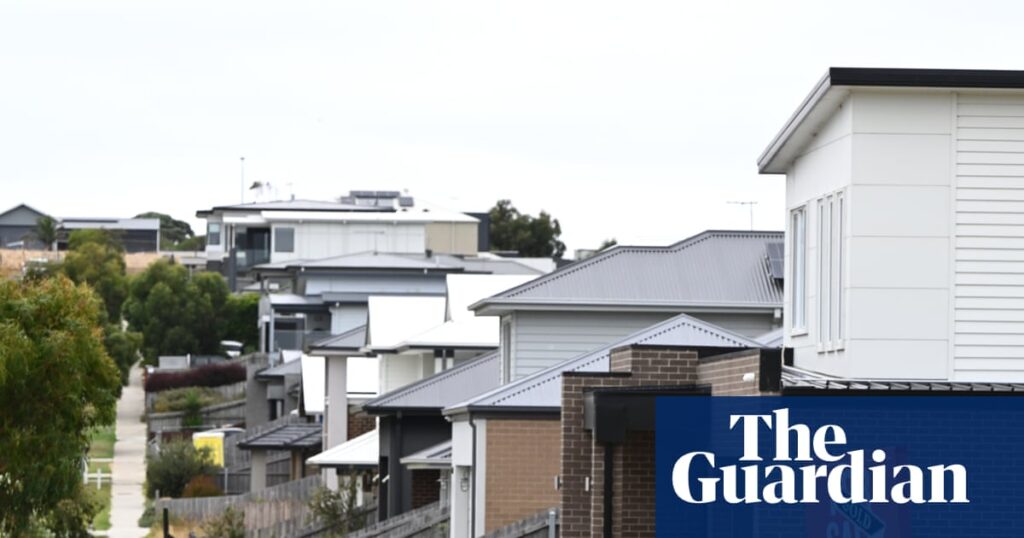
The former federal Liberal MP Keith Wolahan has proposed a significant change to negative gearing policies, suggesting a cap on claims to one established property and up to five new builds. This proposal, he argues, would increase housing supply and provide much-needed support for first home buyers.
In an essay titled Liberal Foundations, published on Monday in Inflection Points, Wolahan contends that the Liberal Party has lost more electoral ground to Labor than to the teal independents in multicultural and outer suburban areas. He highlights that out of the 44 metropolitan seats held by the Coalition in 2013, only seven were lost to the teals, while 28 were lost to Labor.
Changing Demographics and Political Strategy
Wolahan points out that the party’s messaging, which once resonated with archetypal swing voters like “Phil and Jenny” during John Howard’s tenure, is failing to connect with today’s equivalent voter. He describes this voter as a 32-year-old, university-educated woman renting in suburban Melbourne, whose small business-owning parents migrated from China three decades ago.
“She works hard. She pays her taxes. She wants to buy a home, start a family, and build a life. She believes in aspiration. She should be a Liberal voter, yet she is not,” Wolahan said, emphasizing the party’s failure to address the needs of modern Australia.
Proposed Policy Changes
To become the “party for first home buyers,” Wolahan suggests refocusing negative gearing—a tax concession allowing investors to deduct rental property losses from their other income—toward newly built properties. Under his proposal, investors would be limited to claiming negative gearing on one established dwelling but could claim deductions on up to five new builds.
According to 2025 data, 82% of investor loans were directed towards established dwellings, highlighting the potential impact of Wolahan’s proposal on freeing up homes for young people.
Wolahan further recommends that his policy be “fully grandfathered,” ensuring that investment properties purchased before the policy’s implementation remain unaffected. This approach, he argues, would provide certainty and mitigate the risk of a scare campaign.
Reactions and Expert Opinions
Jonathan O’Brien, editor-in-chief of Inflection Points and lead organiser for Yimby Melbourne, welcomed Wolahan’s proposal, stating it aims to “refocus our tax settings to spur productive behaviour within our economy.”
However, Martin Duck, a post-doctoral research associate at the University of Sydney, described the proposal as “a very minor tweak.” He noted that about 70% of the 1.12 million Australians who use negative gearing do so on just one property, suggesting the change might not significantly impact the majority of investors.
Brendan Coates from the Grattan Institute viewed the proposal as a “step in the right direction,” acknowledging Australia’s “very generous” negative gearing concession as a “global outlier.” He noted, “Channelling more of that investment into new builds would boost supply. But by how much? That’s hard to judge.”
Political Implications and Future Considerations
In response, shadow treasurer Tim Wilson expressed concerns that the proposed changes would result in “taxing losses which will lead to less investment.” He emphasized that the real challenges lie in the availability of skills and labor, as well as the cost implications of CFMEU-Labor cartel kickbacks on new home prices.
Meanwhile, the Coalition’s housing spokesperson, Andrew Bragg, was contacted for comment but has yet to respond.
Labor, having experienced a setback with a similar policy in the 2019 election under Bill Shorten, has repeatedly ruled out changing negative gearing. However, the party faces ongoing pressure to reform the capital gains tax concession.
As the debate over housing affordability continues, Wolahan’s proposal adds a new dimension to the discussion, challenging traditional party lines and urging a reevaluation of tax policies to better serve first home buyers.