


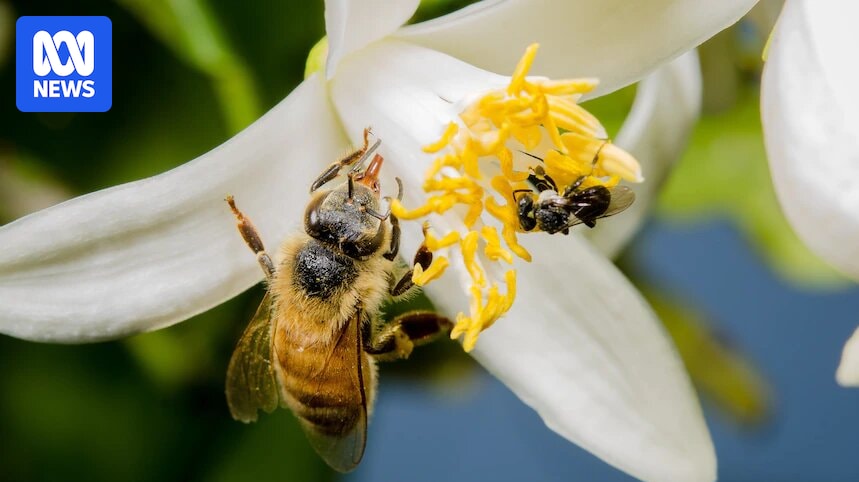
Toxic “forever chemicals” have been found to accumulate in honey bees and transfer into their honey, presenting a significant threat to bee colonies, according to a recent study from the University of New England (UNE). The research highlights that prolonged exposure to environmental levels of perfluorooctane sulphonate (PFOS) adversely affects cell production in European honey bees.
Published in the journal Environmental Science & Technology, the study also demonstrated that PFOS could be transferred to honey in a controlled laboratory setting. However, lead researcher Dr. Carolyn Sonter emphasized the need for further investigation to understand how these chemicals are distributed in real-world environments, particularly through plant uptake and translocation to flower nectar.
“Our next steps are to understand exposure pathways for bees in the field because if PFAS is taken up and translocated to flower nectar by plants, this poses implications for all pollinators and honey consumers,” Dr. Sonter said.
The Impact on Future Generations
Dr. Sonter noted that the most significant impacts of PFOS were observed in the next generation of bees. As PFOS concentrations increased, fewer bees developed and emerged, and those that did were smaller and weighed less. This finding raises concerns about the long-term health and sustainability of bee colonies.
Royal jelly, a critical substance used to feed larvae, could also be compromised, potentially affecting the health and longevity of future colonies. On a broader scale, this could lead to declining bee populations and, consequently, reduced crop pollination.
“Any threat to bees threatens food security,” Dr. Sonter warned. “Most agricultural crops rely on bees for pollination, and without them, production of foods like berries, fruit, and most vegetables would be severely reduced.”
Understanding “Forever Chemicals”
PFOS is just one of thousands of per and poly-fluoroalkyl substances (PFAS), collectively known as “forever chemicals” due to their persistence in the environment. Bees can encounter PFOS through contaminated dust, water, paint on beehives, crop protection products, and pollen from plants in contaminated soil and water.
Although PFOS is no longer used in Australia, Dr. Sonter pointed out that legacy contamination continues to pose risks. “The legacy of PFOS is permanent, at least in our lifetime,” she stated.
University of Adelaide native bee researcher Katja Hogendoorn underscored the importance of the UNE study. She noted that similar effects of PFOS have been observed in other insects, including bumblebees and mosquitoes, highlighting a broader ecological concern.
“The PFOS they are talking about is part of a conglomerate of nearly 40,000 chemical compounds that are all forever chemicals,” Dr. Hogendoorn said. “It’s important for politicians and regulators to listen to these scientists who say that this is a serious threat.”
Looking Ahead: Research and Regulation
While Dr. Sonter’s experiments were conducted in a controlled environment, there is evidence from other countries indicating that bees are exposed to PFOS in the wild. Recent research from Austria has shown that foraging bees from managed hives in countryside areas are accumulating various PFAS in their bodies.
Researchers hope that these findings will lead to the development of protective guidelines for bees. Dr. Sonter is now seeking funding to further investigate PFOS uptake in flower nectar, aiming to better understand and mitigate the risks posed by these persistent chemicals.
The implications of this research extend beyond bee health, touching upon broader environmental and agricultural concerns. As the scientific community continues to unravel the complexities of PFAS exposure, the call for regulatory action grows louder, emphasizing the need to protect not only bees but the ecosystems and food systems that depend on them.