

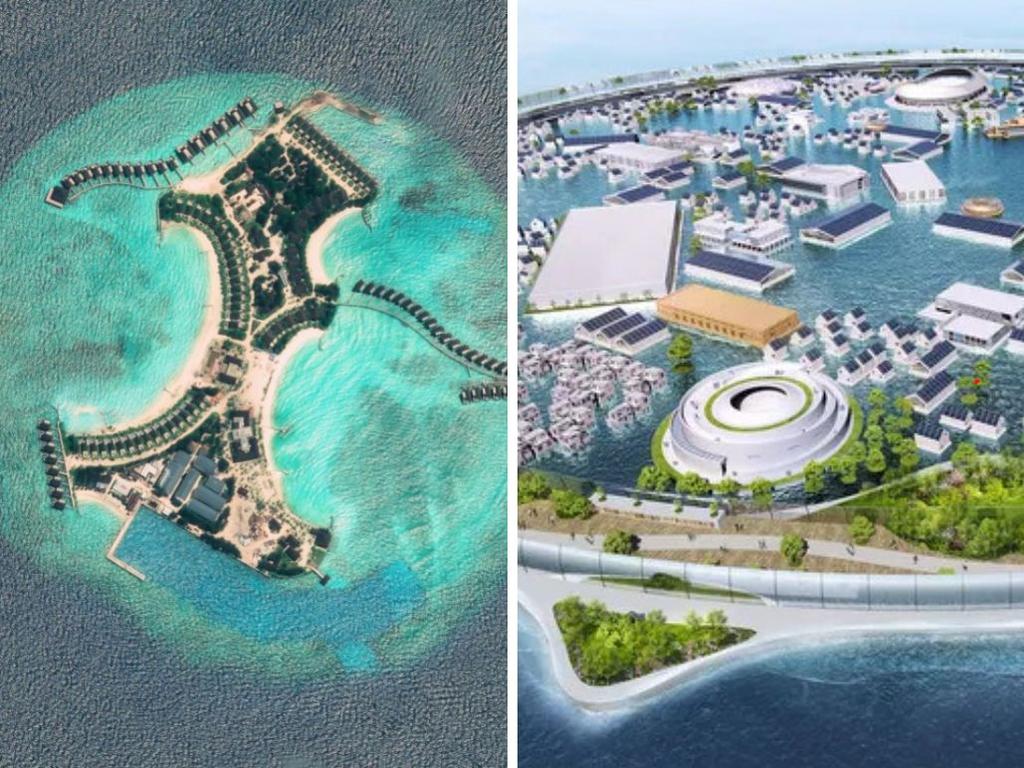
Forget battling for a patch of dirt in the suburbs – the future of Australian real estate might just be floating on the ocean. As urban sprawl pushes cities to their limits and housing affordability becomes a distant dream for many, one Australian professor proposes a solution so audacious, it sounds like something straight out of a sci-fi blockbuster: entire cities built on the sea.
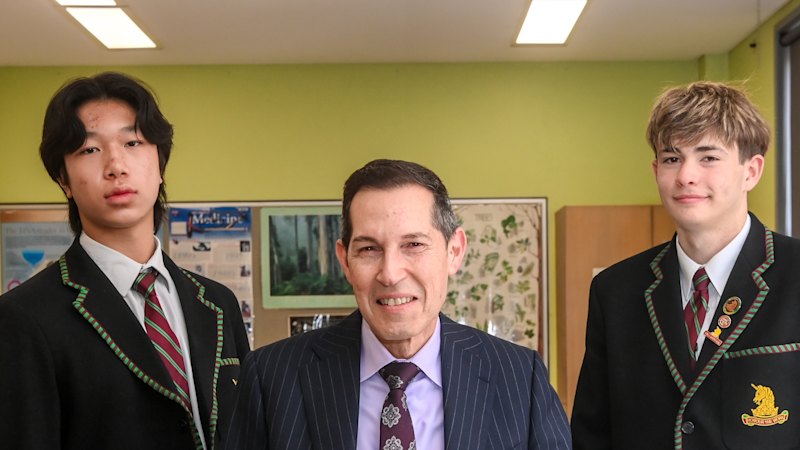
Meet Professor Chien Ming Wang from the University of Queensland, the world’s leading authority on Very Large Floating Structures (VLFS). For 25 years, Professor Wang has been captivated by the idea of massive, stable platforms capable of supporting urban populations, complete with all the industry and infrastructure we’ve come to expect on land.
From Sci-Fi to Reality: The Vision for Oceanic Habitats
His passion ignited after witnessing Japan’s groundbreaking Mega Float project in the late 90s. This ambitious undertaking saw a one-kilometre-long structure built in Tokyo Bay, proving that even sensitive navigation equipment was barely affected by ocean movement due to the sheer mass. The verdict? Not only viable, but potentially liveable.
With an estimated 4.9 billion people set to call cities home by 2030, and our planet’s landmass a finite resource, Professor Wang argues that the ocean is the logical next frontier for human habitation. “We have created entire civilisations on land, but we have not utilised the ocean anywhere close to our capability,” Professor Wang stated.
“Right now, scientists say only five per cent of the ocean has been explored. It’s just a speck.”
And it’s not just about space. Our oceans hold the key to our survival, offering abundant energy from waves, wind, and tidal currents, not to mention vast solar energy. We can treat seawater for drinking and develop advanced fishing methods.
“We’re even developing optimised commercial fishing methods that would allow us to not just survive on the sea, but thrive,” he added.
Global Collaboration and Technological Advancements
Before these interchangeable ocean cities can take shape, the ‘land’ itself needs to be engineered. Professor Wang and his multidisciplinary team are collaborating globally with institutions in Norway, Japan, and Singapore, exploring everything from cost-efficient manufacturing to new concrete composites built for harsh marine environments.
The good news? Technology is finally catching up to the dream. “Not only are the materials and technical innovations catching up to our dreaming, we now also understand how to do sophisticated hydrodynamic analysis, even for very complex structures,” Professor Wang explained.
The $250,000 Ocean Dream: Maldives Sets a Precedent
And this isn’t just theory. The world’s first true floating city is already taking shape in the turquoise waters of the Maldives. The Maldives Floating City (MFC), a collaboration between Netherlands-based Dutch Docklands and the Maldivian Government, is set to revolutionise sustainable living.
Just 10 minutes by boat from the capital, Male, this 200-hectare lagoon will host thousands of waterfront residences, hotels, restaurants, boutiques, and a world-class marina – with the project expected to be completed by 2028. What makes MFC a game-changer for prospective homeowners? It offers government-issued titles and deeds, providing the security of a premium real estate asset.
Even more enticing, MFC homeowners may qualify for Maldivian residency permits, offering a permanent or semipermanent eco-focused lifestyle.
With individual units starting from 100 square metres (plus a 40 sqm roof terrace) and priced from a surprisingly approachable $250,000, this isn’t just for the ultra-rich. The project also champions sustainability.
Mohamed Nasheed, former President of the Maldives, highlighted its minimal environmental impact: “This Maldives Floating City does not require any land reclamation, therefore has a minimal impact on the coral reefs. What’s more, giant, new reefs will be grown to act as water breakers. Our adaptation to climate change mustn’t destroy nature but work with it, as the Maldives Floating City proposes. In the Maldives we cannot stop the waves, but we can rise with them.”
Japan’s Ambitious Plans and Global Implications
A Japanese company is also looking to combat the effects of climate change, with design firm N-Ark proposing the creation of Dogen City, a hugely ambitious smart healthcare floating city with a two-layer design. The top will house a self-sufficient maritime city, while the undersea layer will feature a sea-cooled data centre for city management, healthcare, and drug discovery.
The project is still in the conceptual stage but according to N-Ark’s homepage, Dogen City will measure approximately 1 mile (1.58 kilometres) in diameter and about 2.5 miles (4 kilometres) in circumference. It will be able to accommodate around 10,000 residents, plus around 30,000 visitors at a time. There will be schools, hospitals, offices, sports areas, parks, and food production facilities.
A circular structure, N-Ark says it will be designed to withstand extreme weather conditions and even tsunamis.
It has also proposed building a spacecraft launch site. There has yet to be any announcement regarding a potential location or the likely cost of the project. The company is aiming to have it completed by 2030.
Could Floating Cities Solve Australia’s Housing Crisis?
So, could this futuristic vision become a reality on Australia’s shores? Professor Wang believes so, but with a caveat. Floating cities here would need to be built near our major coastal capitals – Brisbane, Sydney, Melbourne, and Perth – where land values are skyrocketing.
“A lot of people flock to these cities…so the land (value) goes up and it comes a point where the land cost is so high that it makes sense to expand the construction of housing onto adjacent space…in this case the ocean,” he explained.
However, these projects wouldn’t be cheap, potentially costing upwards of $1 billion, and would require separate floating breakwaters for protection from waves and wind. Initial concepts suggest homes no higher than six storeys, potentially coming with their own berths or marina – a dream for boat enthusiasts.
While the idea of living on a floating city might still seem like science fiction, Professor Wang’s work, and the tangible progress in the Maldives, proves it’s rapidly becoming a viable, and perhaps necessary, solution to our planet’s most pressing challenges. Could your next property purchase be a waterfront home that literally floats? The tide, it seems, is turning.