



Courtesy of Universal
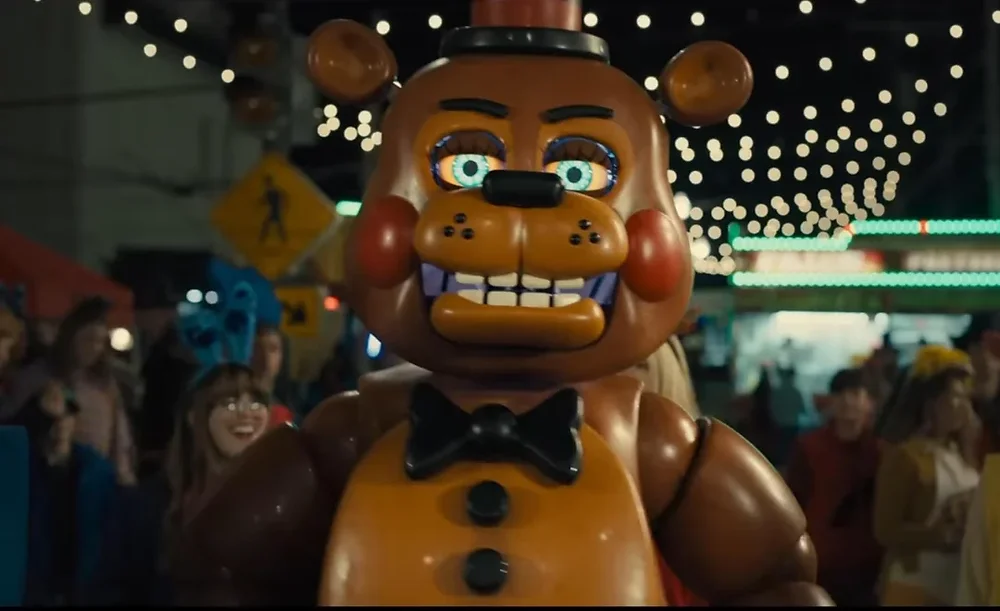
In a bid to revive the chilling essence of its video game origins, “Five Nights at Freddy’s 2” returns with a slightly improved narrative over its predecessor. Released two years after the lukewarm reception of the original 2023 film, this sequel attempts to capture the eerie atmosphere that made the games a cult hit. While the animatronics are indeed more terrifying this time around, the film struggles with a convoluted plot that undermines its potential.
The sequel leans heavily into the mechanics that fans of the game series cherish, building suspense through confinement and limited visibility. It dangles just enough lore and easter eggs to keep the fanbase engaged, and shamelessly sets up multiple sequel hooks by the time the credits roll. A pseudo “Scream” reunion with brief appearances by Skeet Ulrich and Matthew Lillard adds a touch of nostalgia, though they never share a scene, which feels like a missed opportunity.
Plot and Logic: A Troubling Combination
Despite its attempts to course-correct, “Five Nights at Freddy’s 2” falls into the trap of illogical storytelling. The film operates on a dream logic that feels more like storytelling negligence than intentional surrealism. Characters make baffling decisions, existing merely to deliver exposition or become victims to the animatronics. The film never explains how these massive machines move freely without detection, leaving audiences with more questions than answers.
By PG-13 horror standards, the film delivers passable scares. Director Emma Tammi, in collaboration with series creator Scott Cawthon, occasionally finds real tension by letting the animatronics simply exist in a space. When they are stalking or lurking, the film briefly becomes what it should have been all along. The core idea of a haunted Chuck E. Cheese remains compelling, but the execution falters under the weight of its own lore.
Struggling with Storytelling
Whenever the characters begin to speak, the film collapses under its convoluted mythology. Cawthon appears caught between catering to diehard fans and welcoming newcomers, resulting in a narrative that gestures toward a larger mythology without grounding itself in coherent storytelling. The opening prologue set in 1982 introduces new mythology while delving into Vanessa’s backstory, played by Elizabeth Lail, the daughter of the franchise’s boogeyman William Afton, portrayed by Matthew Lillard. The film then jumps twenty years ahead, where Mike, played by Josh Hutcherson, is caring for his younger sister Abby, played by Piper Rubio, who inexplicably misses the murderous animatronics.
Characters behave in ways that defy logic. A cartoonishly snobbish science teacher, amusingly portrayed by Wayne Knight, is obsessed with winning a robotics competition scheduled for the same night as a massive carnival. This kind of plotting feels more like narrative laziness than heightened reality.
When It Works, It Works
Despite its flaws, when “Five Nights at Freddy’s 2” works, it truly delivers. The moments when the animatronics break free from the confines of the pizzeria and invade the outside world are genuinely effective. These scenes allow Tammi to craft real suspense and sustained dread. However, these moments are fleeting and surrounded by clunky dialogue and lifeless human interactions. Cawthon’s struggle to write believable characters continues, and the film remains more interested in fan service than in making audiences care about the characters’ fates.
The film constantly bends around fan service, deviating from established lore in ways that may thrill some fans while enraging others. Yet, the franchise’s financial success cannot be ignored. These films are inexpensive to produce and consistently perform well at the box office, often grossing hundreds of millions of dollars.
A Gateway to Horror
On a broader level, the “Five Nights at Freddy’s” franchise has carved out a niche as a gateway horror series for a new generation. Like the “Saw” and “Paranormal Activity” franchises before it, it introduces teenagers to the thrill of communal fear in a theater setting.
Grade: C
While the franchise may not be for everyone, its ability to draw audiences and maintain a dedicated fanbase is undeniable. As the series continues to evolve, it remains to be seen whether future installments will refine their storytelling or continue to rely on their established formula.