


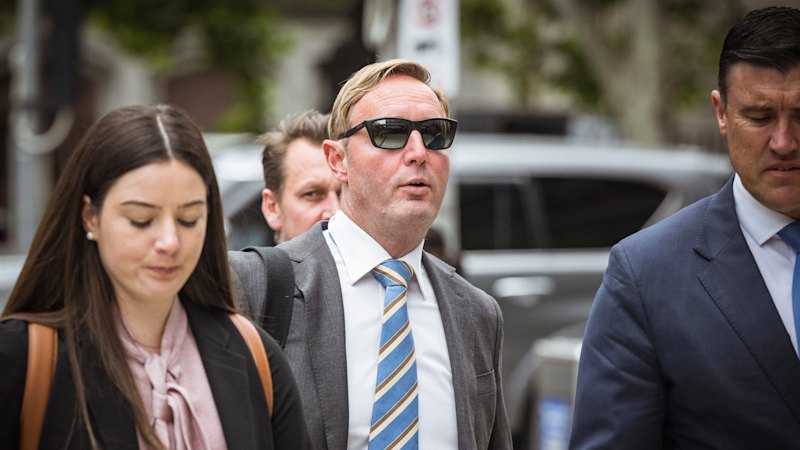
The founder of the defunct First Guardian superannuation fund, David Anderson, appeared in the Federal Court on Monday, facing allegations of inadequate record-keeping that led to the collapse of the fund. The failure of the fund in April resulted in the loss of $500 million in savings for nearly 6,000 individuals. Anderson’s court appearance marks his first public engagement since the fund’s demise.
Anderson, who was seen calmly sipping a Dare Iced Coffee and conversing with his lawyer before giving evidence, was questioned about the fund’s financial practices. Liquidators presented evidence of millions being transferred from First Guardian without proper records, including entries that read,
“DA [David Anderson] says it doesn’t matter, you can just do what you want with it – LOL.”
The Allegations and Anderson’s Defense
The liquidators’ barrister, Stephanie Hooper, highlighted numerous instances where payments were inadequately documented. Anderson conceded that the descriptions were insufficient, stating, “I would agree that this description is not adequate, not by a long shot. It is simply a function that could have been done better.”
When questioned about First Guardian’s policies to ensure accurate accounts, Anderson claimed that there was an ongoing effort to improve record-keeping from 2022 until the fund’s collapse. However, the crash coincided with an investigation by the Australian Securities and Investments Commission (ASIC) into both First Guardian and Anderson’s business, Falcon Capital.
Management Practices Under Scrutiny
The court proceedings revealed that First Guardian did not have formal agreements with Falcon Capital regarding management fees. Anderson admitted that fees were charged on an ad hoc basis rather than through structured agreements. Additionally, he disclosed that his compensation came from “residuals” from investment profits rather than a fixed salary.
When asked about the documentation of bonus payments, Anderson responded, “It was an informal agreement. It was always a residual figure based on what was available for distribution to directors or stakeholders.”
Connections with Other Funds
Anderson’s relationship with Paul Chiodo, manager of the Shield Master Fund, also came under examination. Like First Guardian, the Shield Master Fund is in liquidation and is being investigated by ASIC for mismanagement. Anderson confirmed a long-standing business relationship with Chiodo, which included helping to establish a property fund into which First Guardian invested nearly $100 million.
Reflecting on his partnership with Chiodo, Anderson described it as “a relatively long-standing one – on a business basis… It is a long-standing relationship, which has taken a number of turns over the years. I would describe it as a relatively challenging one.”
Implications and Future Proceedings
The revelations in court underscore the broader issues of governance and accountability within financial institutions. The case of First Guardian highlights the potential risks of inadequate financial oversight and the importance of stringent regulatory compliance.
As the court proceedings continue, the focus will likely remain on unraveling the financial practices that led to the fund’s collapse and determining accountability. The outcome may set a precedent for how similar cases are handled in the future, potentially influencing regulatory policies and practices within the superannuation industry.
The next steps in the legal process will involve further examination of the evidence presented by the liquidators and ASIC, as well as Anderson’s defense against the allegations. The case continues to draw significant attention, given its impact on thousands of affected individuals and the broader financial sector.