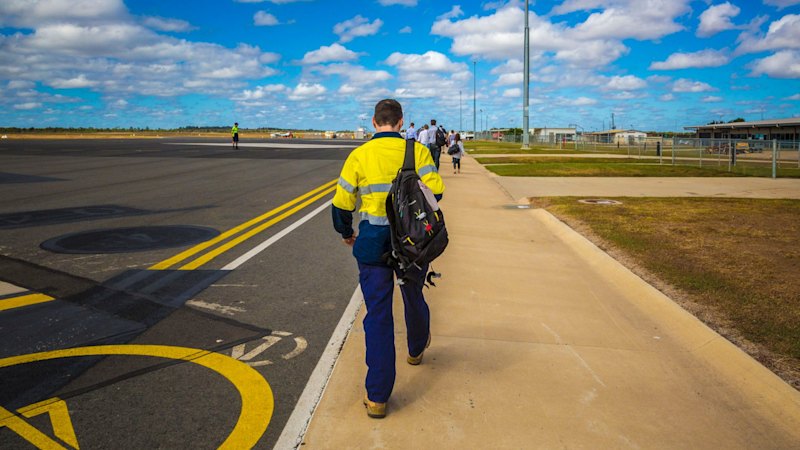



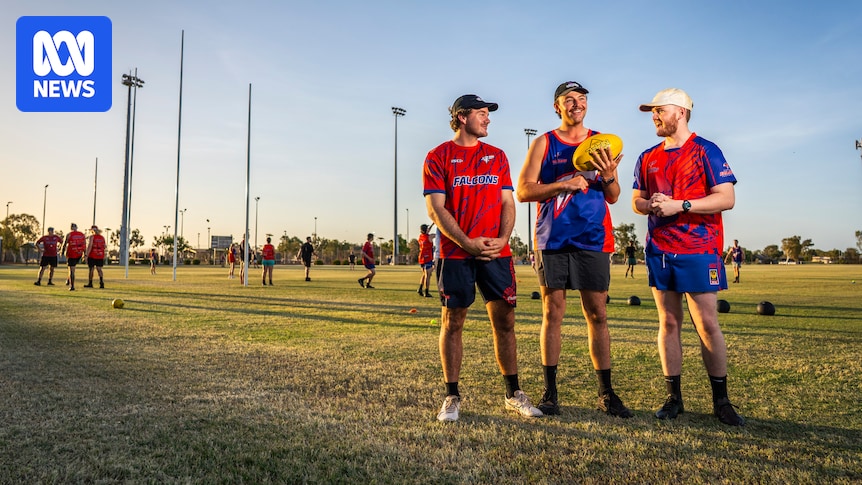
Local football leagues in Western Australia’s Pilbara region are experiencing a resurgence, thanks largely to the participation of fly-in, fly-out (FIFO) workers. These transient employees are not only boosting team numbers but also enjoying the physical and mental health benefits that come from engaging in team sports in this remote part of the country.
In towns like Karratha and Newman, located approximately 1,200 kilometers north of Perth, local leagues have introduced a FIFO permit. This permit allows players, such as Cody Rodgers of the Karratha Falcons, to participate in local competitions while on their work shifts. Rodgers, who also plays for the Augusta-Margaret River Hawks back home, remarked, “I thought it would make being away from home doing FIFO a bit more enjoyable … play some footy and make some new mates.”
Regular training sessions offer FIFO workers a much-needed respite from long working hours under the harsh sun, providing them with an opportunity to become part of the local community and maintain their physical fitness. The North Pilbara Football League estimates that 60 to 70 men and women will take advantage of the FIFO permit across its six teams.
Two Leagues, One Season
The story of Jesse Mason, a construction manager who recently began working in the remote iron ore town of Newman, highlights the impact of FIFO workers on local sports. “One of the fellas there caught wind that I’ve played a bit of footy in Perth, so he was pretty quick in putting a Tigers polo shirt on my desk and getting me down to training,” Mason shared. Joining the Newman Tigers has allowed him to stay fit for his home team, the Roleystone Football Club, when he returns to Perth.
Mason noted that the local teams are accommodating to FIFO players, often reducing fees to encourage more participation. “They’re pretty good with cutting the fees down for FIFO players because they want more and more players to actually join the community and play in Newman as well,” he said.
Propping Up Local Leagues
The Pilbara Development Commission estimates that around 25,000 FIFO workers are present in the region at any given time, though exact numbers are hard to pin down. Brent Hedley, Football WA’s executive manager of country football, emphasized the importance of the FIFO permit, particularly in mining regions like the Pilbara and Goldfields.
“We know that participation from a mental health and wellbeing perspective is enormous in terms of what it provides for those participants,” Hedley stated. “Obviously it’s great for the community, it’s great for the individuals involved and we really want to support regional leagues.”
In Newman, the local football league comprises four senior men’s teams, a number that would be unsustainable without the involvement of FIFO workers. According to Newman National Football League president Kallan Hutchinson, “I think at each football club, you probably just about turn over half your list every year just because it’s just the way the community is.”
The Social Fabric of Remote Communities
For many FIFO workers, joining a local football team offers more than just physical activity; it provides a vital social outlet. “It’s the camaraderie and the friendship that people make while they’re in the community in a town like this, especially in a remote town,” Hutchinson explained. “It gives everyone a bit of an outlet to go out and have fun and be around their mates.”
This development follows a broader trend of using sports as a tool to integrate transient workers into local communities, fostering a sense of belonging and improving mental health outcomes. As the Pilbara continues to rely on FIFO workers to sustain its economy, the role of sports in these communities is likely to grow.
Looking ahead, the success of the FIFO permit system in the Pilbara could serve as a model for other remote regions facing similar challenges. By leveraging the power of sports, these areas can not only sustain their local leagues but also enhance the quality of life for transient and permanent residents alike.