


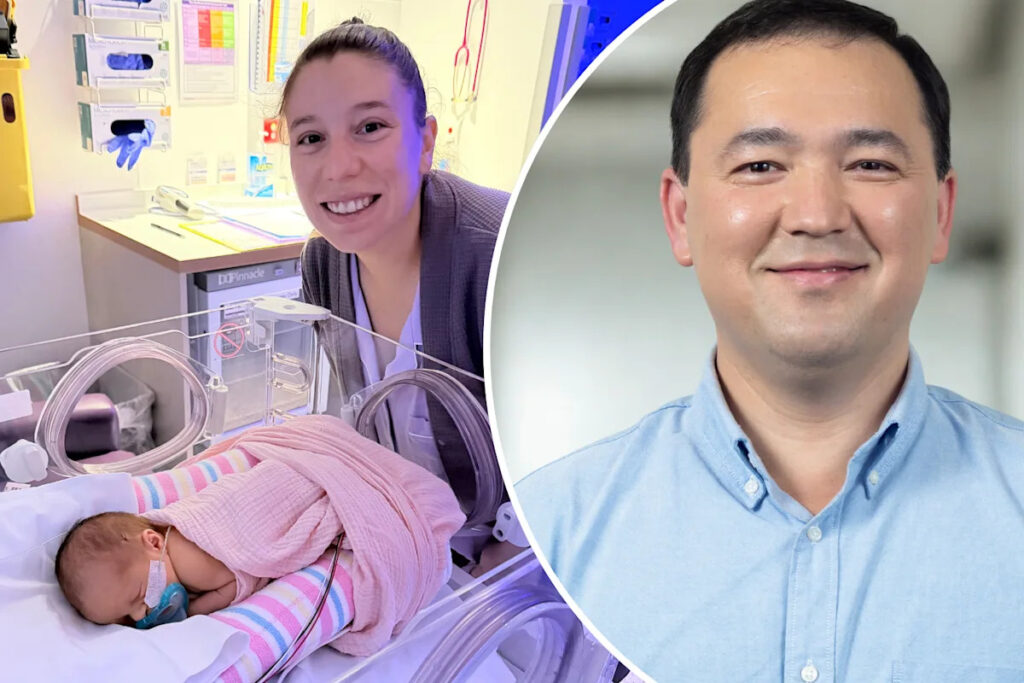
For many couples, the journey to parenthood is fraught with unexpected challenges. Despite the common belief that conceiving is straightforward, reality often tells a different story. As Australia’s birth rate is projected to hit a record low of 1.42 by 2025–26, Sydney fertility expert Dr. Oybek Rustamov has shared some lesser-known insights to aid those struggling to conceive.
Dr. Rustamov, speaking to Yahoo Lifestyle, emphasized that even for healthy couples in their 20s, conceiving can take six to 12 months of regular, unprotected intercourse. He noted,
“You may be surprised to learn that, for a healthy couple in their 20s, it typically takes around six to 12 months to conceive with regular, unprotected intercourse.”
This revelation comes as a wake-up call for many who assume that conception is immediate.
Understanding Fertility Challenges
Belinda Harbach, 29, shared her personal fertility journey, highlighting the emotional toll of struggling to conceive. “I think when we first started trying to have a baby we thought it would be quite easy because we were both young,” she recounted. After four years of trying naturally, Belinda and her husband turned to IVF, successfully welcoming their daughter, Cleo, in December 2025. “There are many couples who struggle with infertility and we should talk about it more and not be embarrassed,” she added.
Dr. Rustamov explained that while fertility is at its peak in a woman’s 20s, it declines significantly with age.
“A healthy couple in their early 30s has a 15 to 20 per cent chance of conceiving naturally each cycle. Chances reduce significantly once the female partner reaches 35,”
he stated, underscoring the impact of age on fertility.
The Impact of Age on Fertility
As age increases, the likelihood of natural conception decreases. Dr. Rustamov highlighted that for couples aged 40 to 44, the chances of conceiving naturally each month drop to less than 5 per cent. He explained,
“Egg quality and quantity decrease with age which affects your chances of conception. For men, sperm quality starts to decline in your late 30s, with a noticeable decline in sperm quality in men over 40.”
Exploring Fertility Treatment Options
For those considering fertility treatments, Dr. Rustamov advised against delaying seeking help. Egg freezing, he noted, is a viable option for those planning ahead.
“Egg freezing offers no guarantee… however, freezing a sufficient amount of eggs at an earlier age can give you a significantly higher chance of falling pregnant when ready,”
he said, recommending the ages of 30 to 35 as ideal for this procedure.
Success Rates and Considerations
There is ongoing debate about the effectiveness of egg freezing. Dr. Rustamov clarified that success depends on various factors, including age, health at the time of freezing, and the number of eggs retrieved.
“Older women need more frozen eggs than younger women to have a similar chance of a live birth. For example, a 32-year-old woman freezing five eggs has a 55 per cent chance of a live birth. A 38-year-old woman must freeze around 15 eggs to have a similar chance,”
he explained.
Proactive Steps for Fertility Health
Dr. Rustamov encouraged individuals to be proactive about their fertility health, regardless of age. Simple tests such as hormone blood tests and semen analysis can provide valuable insights.
“For women, [there’s a] hormone blood test and an anti-mullerian hormone (AMH) test, which provides an estimate of the number of eggs remaining in the ovaries. For men, a semen analysis can evaluate the quality, concentration, motility and morphology of the sperm,”
he advised.
Lifestyle and Nutrition’s Role
Beyond age, lifestyle factors such as diet and exercise play crucial roles in fertility. Dr. Rustamov highlighted that obesity can significantly impact both male and female fertility.
“In men, obesity can lower sperm count by up to 50 per cent. Women who are overweight or underweight can face difficulties conceiving as weight can affect your ovulatory cycle,”
he said. A Mediterranean-style diet, rich in good fats, fish, and vegetables, alongside regular exercise, is recommended to boost fertility.
In conclusion, Dr. Rustamov emphasized the importance of seeking help if conception proves challenging.
“We generally recommend if you are aged 35 years or under and have been trying to conceive for 12 months or more, then it may be time to seek help. Or if you are over 35 and have been trying for six months or more, without success,”
he advised, highlighting the resources available for those on the path to parenthood.