
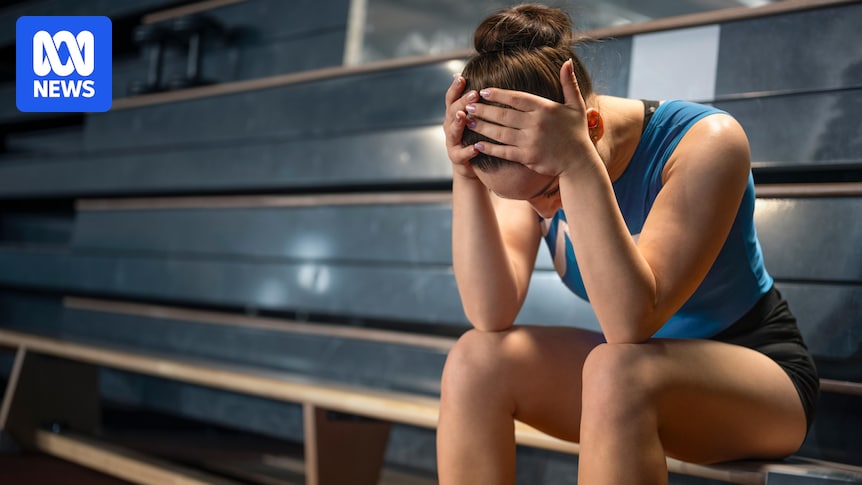
Kareema Wakim was just a teenager when she first joined a national senior team for moguls skiing, an achievement that took her overseas. “I was so excited to be on that camp. I was over the moon,” Wakim shared with ABC Sport. However, her enthusiasm was soon overshadowed by a distressing experience.
Now 19, Wakim recounts being sexually harassed by an older male teammate. “[He was] being inappropriate and making myself feel quite small and not confident in my body,” she said. Despite her initial attempts to dismiss the incident, Wakim decided to report it upon returning home. “I broke down and cried and just felt like I had to tell my coach,” she said. However, the process left her with mixed emotions and a sense of regret. “I kind of felt guilty and I was like, ‘Should I have said something?'” she reflected. “I feel like, in that moment, I just regretted reporting it. And I don’t think that’s really how it should be.”
Wakim’s experience is not an isolated case. A survey conducted by ABC’s Elite Athletes in Australian Women’s Sport revealed similar stories from other athletes. A young elite swimmer reported being emotionally abused and harassed by a male teammate for years. “There were multiple times I thought he was going to hurt me or worse,” she wrote. “I reported it to my coach who claimed he saw everything that went on in the squad and this wasn’t happening.”
Systemic Issues in Reporting
These incidents highlight a broader issue within the sports community: the fear that nothing will be done when athletes speak out. A study by La Trobe University, the University of Sydney, and Victoria University explored gender-based violence in sports, interviewing 27 women and gender-diverse individuals. Associate Professor Kirsty Forsdike from La Trobe Rural Health School noted that many athletes felt disillusioned by the opaque and ineffective reporting processes.
“When people did speak up, they didn’t know where to go to. The policies were very opaque, very unclear,” Dr. Forsdike said. “People might start to do something and then nothing happens, or they get told, ‘There’s nothing we can do.'”
This lack of support often leads to athletes leaving the sport altogether. “This is, I think, quite a dire thing that’s happening. And sport isn’t listening enough to it, or at least not listening enough to do something,” Forsdike added.
Voices from Within
The study gathered testimonies from athletes, volunteers, and administrators, revealing common complaints of being dismissed, losing opportunities, and facing intimidating legal processes. One anonymous participant expressed frustration, “We had about 20 people put in a case to the sports organisation. The first time it was ignored. The second time we were told it wasn’t in their remit. And the third time it was just, ‘It’s not our job.'”
Another participant highlighted the lack of understanding from male counterparts, “You try explaining to men in a sporting environment that they shouldn’t turn the oval lights off until every single female participant has left safely.”
Need for Cultural Change
Current reporting systems vary across sports and organizations. Sport Integrity Australia (SIA) oversees issues like anti-doping and discrimination but lacks a specific remit for gender-based violence. Lisa Purves, Director of Safeguarding at SIA, emphasized the need for sports to build their capability in managing such issues. “Whilst we don’t directly deal with the investigation for some matters, we absolutely build the capability of sports and support them in managing it where we can as well,” she stated.
The La Trobe research identified several areas for improvement, including updating policies and adopting a trauma-informed approach. Dr. Forsdike’s team developed a toolkit, “Safe to Speak, Bound to Act,” to guide sports leaders in responding to gender-based violence reports.
“It’s a starter — raising the issue, understanding it, what is gender-based violence? What does it look like? And what are the things we can do?” Dr. Forsdike explained.
Empowering Women in Sports
Creating cultural change within sports is crucial. Ms. Purves cited an example from the Box Hill North Football Club, where offensive behavior was dismissed as trivial. “Even just those small behaviors of accepting that and thinking that’s funny, and making light of the fact that a woman was assaulted, they’re the types of attitudes that have got to change,” she said.
Lilee Lunee, a national-level rowing cox, echoed these sentiments. She believes that more women in leadership positions would help foster a respectful and supportive environment. “It needs to be a space where everyone feels that they’re respected and that they can trust who they’re reporting to,” Lunee said. “As more women feel empowered, or that they’re able to speak up and take action themselves, it will just become the norm.”
The journey towards a safer and more inclusive sports environment is ongoing. Addressing gendered violence requires not only reactive measures but a proactive cultural shift led by sports organizations themselves.