



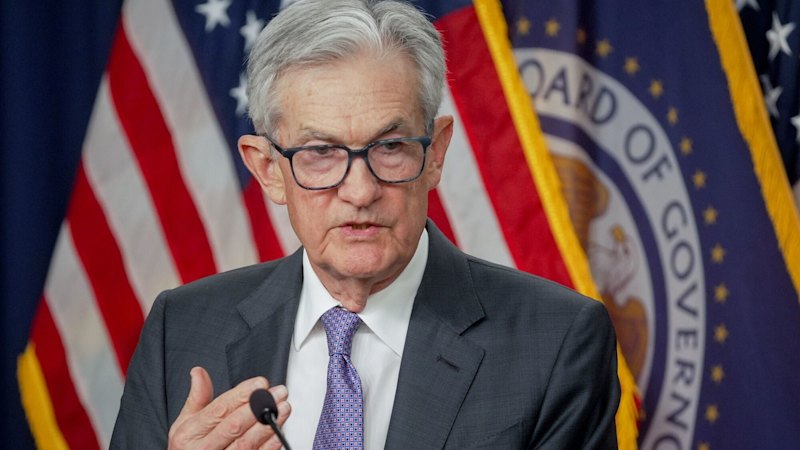
The Federal Reserve decided to maintain its current interest rate at approximately 3.6% on Wednesday, resisting pressure from President Donald Trump to implement further cuts. This decision follows three rate reductions last year, as the central bank assesses the economic landscape.
In its statement, the Fed highlighted signs of stabilization in the job market and described economic growth as “solid,” an upgrade from the previous month’s “modest” characterization. With the economy performing well and no immediate threats to employment, Fed officials see little urgency for additional rate cuts. However, they remain vigilant about inflation, which was reported at 2.8% in November, above the Fed’s 2% target.
Internal Dissent and Political Pressure
Despite the decision to hold rates steady, dissent was evident within the Fed. Governors Stephen Miran and Christopher Waller voted for a quarter-point reduction. Miran, a Trump appointee, has consistently advocated for deeper cuts, while Waller is under consideration to succeed Fed Chair Jerome Powell when his term concludes in May.
The Fed’s decision is likely to provoke further criticism from President Trump, who has been vocal in his demand for lower rates to stimulate borrowing and economic activity. Typically, a reduction in the Fed’s key rate leads to lower borrowing costs for mortgages, car loans, and business investments, although these are also influenced by market conditions.
Economic Outlook and Future Rate Decisions
A key question for the Fed is the duration of its current pause on rate changes. The rate-setting committee remains divided between those advocating for patience until inflation decreases and those pushing for cuts to bolster employment. In December, only 12 of the 19 committee members supported at least one additional cut this year. Economists predict the Fed may reduce rates twice more, possibly starting in June.
Trade policies and tariffs continue to loom over the Fed’s policy decisions. Powell noted that while tariffs have impacted inflation, they are seen as a one-time price increase. “The expectation is that we will see the effects of tariffs flowing through goods prices peaking and then starting to come down,” Powell stated, assuming no new major tariff hikes occur.
Legal and Political Challenges
The Fed’s latest meeting occurred under the shadow of intense political pressure from the Trump administration. Powell recently disclosed that the Fed received subpoenas from the Justice Department, linked to an investigation into his congressional testimony regarding a $2.5 billion building renovation. Powell described the subpoenas as a tactic to pressure the Fed into faster rate cuts.
Additionally, the Supreme Court is reviewing Trump’s attempt to dismiss Fed governor Lisa Cook over unproven mortgage fraud allegations. No president has ever removed a Fed governor in the institution’s 112-year history, and the justices appeared inclined to allow Cook to remain in her position pending the case’s resolution.
Implications for Fed Independence
Economists suggest that Trump’s efforts to influence the Fed may have backfired, as Senate Republicans have expressed support for Powell and hinted at blocking any Trump-appointed replacement. When asked about the Fed’s autonomy, Powell affirmed, “I’m strongly committed to that and so are my colleagues.”
As Trump’s search for a new Fed Chair continues, Powell has the option to remain as a Fed governor after his term ends in May. However, he has yet to decide on his future role. The Fed’s rate-setting committee, comprising 12 voting members, includes the board of governors, the New York Fed president, and a rotating group of regional Fed bank presidents.
This development underscores the ongoing tension between the Federal Reserve’s commitment to economic stability and the political pressures exerted by the current administration. As the year progresses, the Fed’s decisions will be closely watched for their impact on both domestic and global economic conditions.