




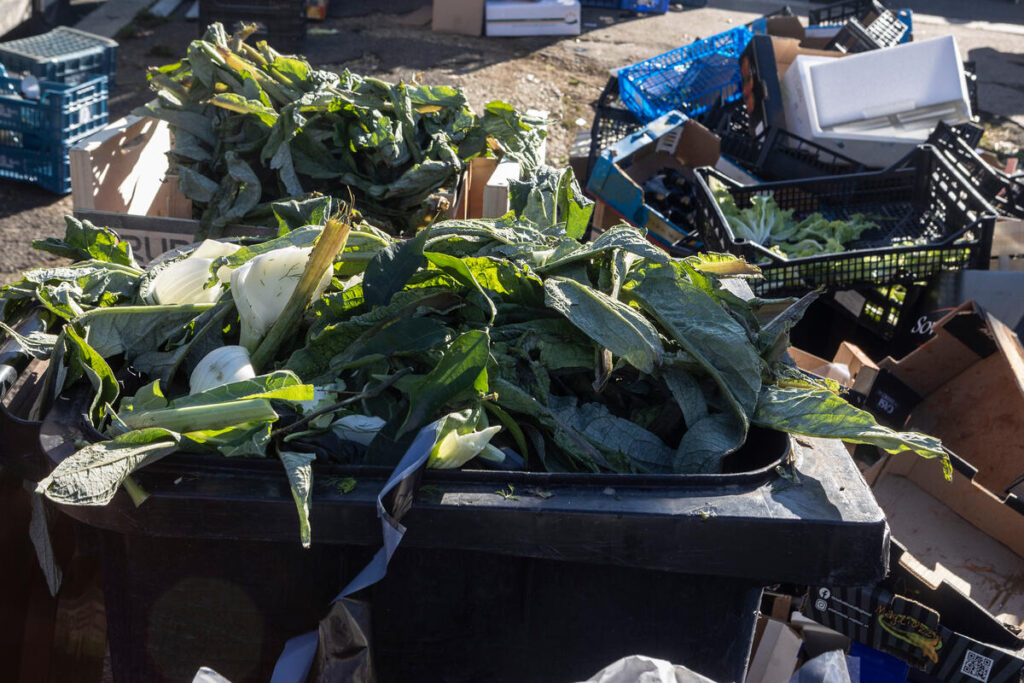
18 December 2021, Rome, Italy - Food waste at the market of Casal de' Pazzi.
ROME — Food loss and waste (FLW) might not only serve as a reservoir but also accelerate the spread of antimicrobial resistance (AMR), according to experts from the Food and Agriculture Organization of the United Nations (FAO). This revelation underscores the need to integrate FLW into AMR surveillance and management strategies.
The findings, published in the journal Infectious Diseases of Poverty, highlight that discarding FLW into landfills or open dumps can exacerbate AMR risks. Conversely, processes like composting, if executed correctly, may reduce antimicrobial resistance genes.
Junxia Song, a senior animal health officer and Chief of the One Health and Disease Control Branch at FAO, led the production of the scoping review. “Linking food loss and waste to AMR is both timely and strategic, as it creates an opportunity for coordinated action that reduces waste while strengthening global efforts to contain AMR,” Song stated.
The Agricultural Sector’s Role in AMR
The agricultural sector is a significant contributor to antimicrobial resistance, with animal production accounting for nearly three-fourths of global antibiotic sales. Drug residues and resistance genes have been detected in food at the retail and consumption stages, particularly in meat products, but also in plant foods such as carrots, lettuce, and tomatoes.
AMR diminishes the effectiveness of existing medicines and is linked to millions of human deaths annually. Consequently, FAO has been actively involved in global efforts to mitigate these risks by advocating for reduced drug usage throughout the food chain.
In 2025, FAO members resolved to enhance technical investments to help countries increase their investments, policy efforts, and research into AMR, adopting a holistic approach based on One Health principles. The paper offers a narrative review of research on the potential role of FLW in spreading AMR, a topic that has been relatively underexplored.
Food Waste as a Catalyst for AMR
FAO Assistant Director-General and Chief Veterinarian Thanawat Tiensin emphasized the shared responsibility of safeguarding food safety. “Reducing the spread of AMR through food loss and waste demands coordinated action across every sector,” he said.
Food waste is an ideal substrate for bacterial growth, potentially fostering the survival of microbes and genes resistant to existing antimicrobials. Studies on kitchen waste and food waste at schools and hospitals have shown high levels of genes resistant to a wide array of antibiotics, sometimes including new medicinal products.
Some studies have found higher abundance of resistant genes in food waste than in sewage sludge or swine manure, long identified as catalysts for AMR dissemination in the environment.
This is particularly significant as some countries pursue ambitious programs to channel FLW towards energy recovery or feedstock supplies. Resistant genes pose a more serious problem in animal-derived food waste, especially fish waste samples, highlighting the importance of rapid food waste collection and control.
Composting and Anaerobic Digestion
Composting, an environmentally friendly practice using FLW to produce organic fertilizers, may sometimes increase the prevalence of resistance genes. This underscores the need for optimization strategies and full-cycle processes, possibly including high-temperature treatments.
Anaerobic digestion, a process central to biogas production, may remove AMR using certain techniques that warrant further research.
In most countries, a significant portion of food waste ends up in landfills. Apart from standard AMR challenges, landfills pose additional risks due to the mixture of biological substances and chemical wastes from industrial, agricultural, and medical sources. They also exacerbate dissemination risks if open to scavenging animals or if they leach into surface or groundwater sources.
Call for More Data and Global Action
The report concludes that more data is needed from low and middle-income countries, where antimicrobial use is less regulated and projected to increase in the coming years. It also calls for more studies on antifungal resistance.
FAO’s InFARM System is a suitable platform for collecting and synthesizing data globally at a country level. The high road to tackling the AMR challenge and ensuring that life-saving drugs remain effective is to reduce the need for antimicrobials, which another FAO initiative, RENOFARM, supports countries in achieving.
As the world grapples with the growing threat of AMR, the integration of food waste management into broader AMR strategies could be a pivotal step in safeguarding public health and ensuring the efficacy of existing antimicrobial treatments.