



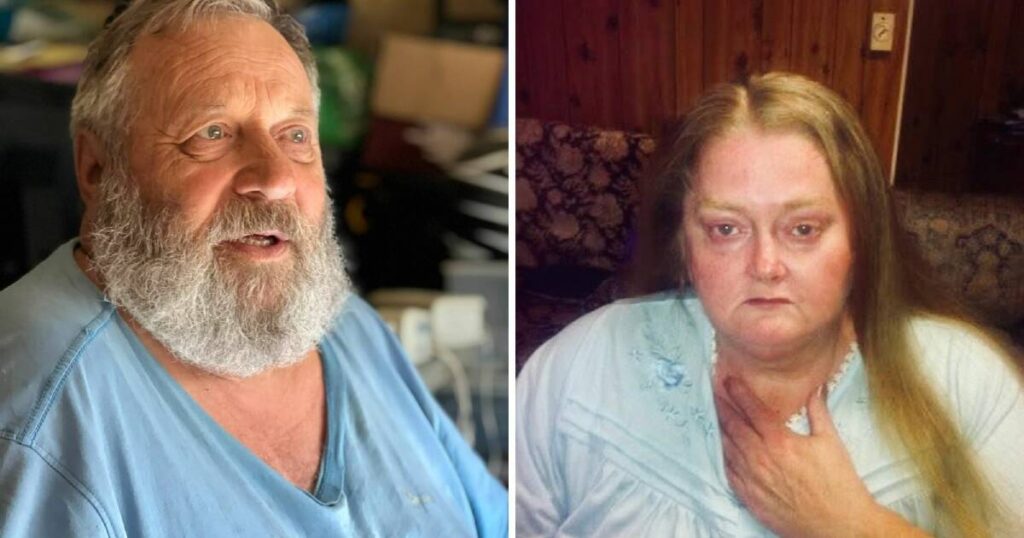
An Inverell family is grappling with an unimaginable loss after a tragic failure in healthcare access led to the deaths of two beloved grandparents. Amanda Wing’s trust in her local hospital was shattered when her son discovered the bodies of his grandparents, Steven Jackson, 76, and Margaret Wing, 64, who both succumbed to Influenza A.
The tragedy unfolded when the couple sought emergency treatment from Inverell Hospital on Friday, November 14, only to be informed that no doctor would be available until the following Monday. Despite their attempts to seek help, the family was left with limited options, a situation that ended in heartbreak when Ms. Wing’s 18-year-old son found his grandparents deceased on November 16.
A Family’s Heartbreak
Amanda Wing and her family are still reeling from the loss. The couple’s grandson, who lived with them, was the one to discover their bodies. “He found my dad in the recliner in the living room, and he had tried shaking him awake,” Ms. Wing recounted. “Then he rushed into my mum, and she was in her bed, and she had her eyes closed and her mouth open.”
The emotional toll on the family has been profound. Ms. Wing’s eight-year-old son, who is autistic, has been particularly affected. “He was very close to my dad, and he keeps going ‘Nan and Pop are dead, Nan and Pop are dead, Nan and Pop are dead’,” she shared.
Systemic Failures and Calls for Change
Ms. Wing expressed frustration over the lack of guidance from the hospital during their desperate calls for help. “They didn’t say I could go by ambulance to another hospital, either Armidale or Tamworth,” she said. “They could have told us that [her parents] could still present to triage and that there was a digital doctor there. They told us nothing.”
Following the incident, Ms. Wing lodged a complaint with the NSW Health Care Complaints Commission, urging for better communication and information dissemination about available healthcare services. “I don’t want anyone to go through the heartache of what we have,” she said. “I really want people to know they can get medical help, and what’s available, because we didn’t know.”
Hospital Response and Broader Implications
On January 8, the Hunter New England Local Health District (HNELHD) reached out to Ms. Wing, informing her of new measures at Inverell Hospital aimed at improving communication between callers and hospital staff. A meeting was arranged with the HNELHD’s rural and regional health services general manager to discuss her concerns.
In a statement, a spokesperson for HNELHD offered “sincere condolences” to Ms. Wing and confirmed that “there was not a doctor physically present” at the hospital on the critical day. The spokesperson emphasized that despite efforts to secure medical coverage, gaps can occur, often with little notice.
“NSW public hospitals will never turn people away needing urgent or emergency treatment,” the spokesperson stated. “If a doctor is not physically on site, patients are supported through on-demand virtual care.”
Challenges in Rural Healthcare
The tragedy highlights ongoing challenges in rural healthcare, particularly in attracting and retaining medical professionals. The community initiative, supported by Inverell Shire Council and chaired by local councillor and HNELHD board member Wendy Wilks, aims to address these issues.
“We’re really trying to improve the communications between the hospital and the community,” said Cr Dight. “Ultimately, it’s up to the state government – they run the hospital.”
Member for Northern Tablelands Brendan Moylan echoed these sentiments, stating, “At the end of the day, those of us who live in the bush deserve access to decent healthcare and the state government has a fundamental obligation to ensure our hospitals are adequately staffed.”
As the Wing family continues to mourn their loss, the incident serves as a stark reminder of the critical need for reliable healthcare access in rural areas. The hope is that through awareness and systemic changes, such tragedies can be prevented in the future.