



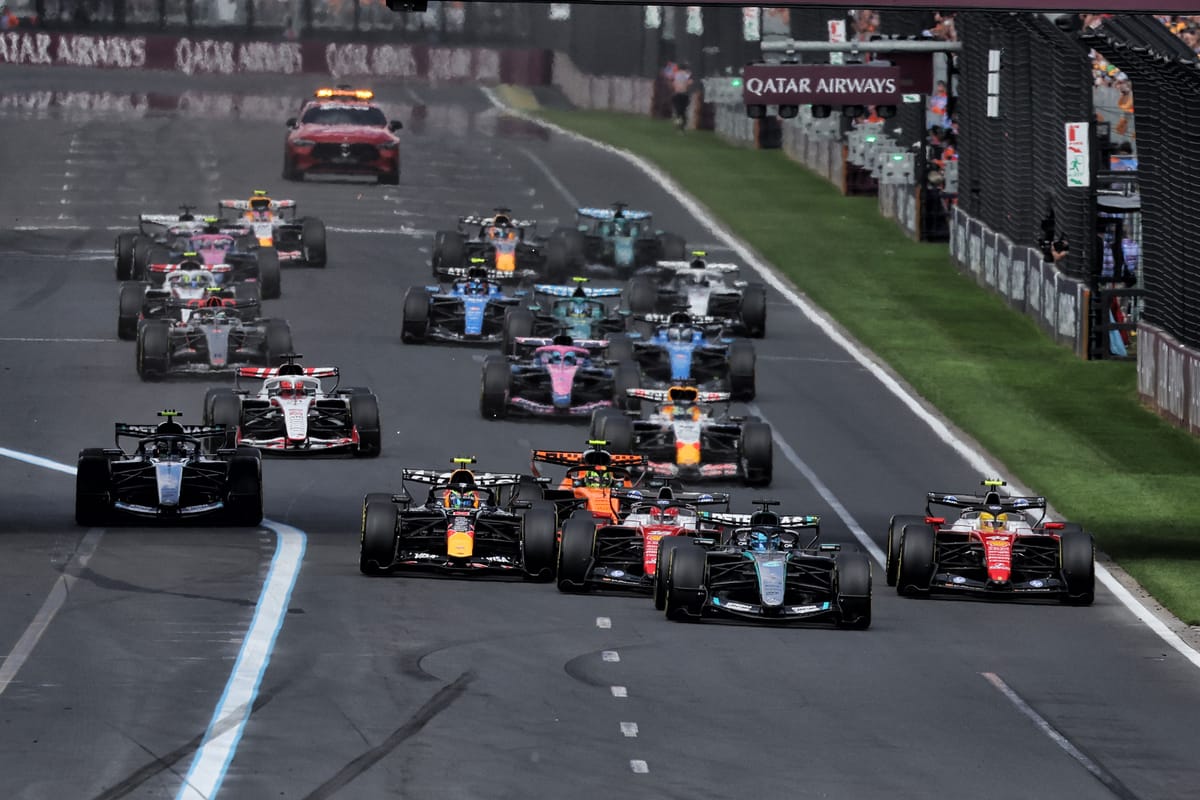
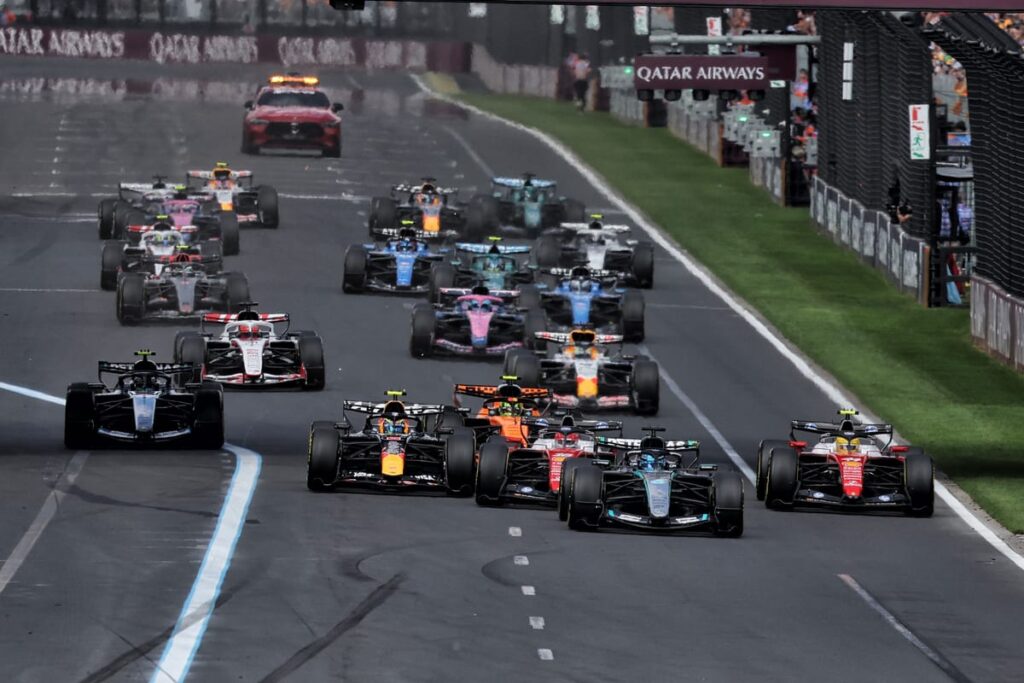
Some Formula 1 drivers have raised significant safety concerns following a series of near-misses during the Australian Grand Prix, highlighting issues that could have serious implications for the 2026 season. The race, held in Melbourne, exposed potential dangers at the start of the race, where disparities in vehicle performance and unexpected battery drains led to chaotic scenes on the track.
The pre-season testing had already flagged the possibility of large performance differences at race starts, which could lead to incidents. This concern was underscored during the Grand Prix, where the engines’ turbo systems, which require precise revving to prevent lag, proved challenging for drivers to manage. The new five-second pre-start procedure, combined with the unpredictable timing of the start lights, added to the complexity.
Technical Challenges at Race Start
The intricacies of managing engine revs to optimize turbo performance were evident, with Ferrari’s engine design giving it an edge. The smaller turbo on Ferrari’s cars allowed for quicker starts, as demonstrated by Charles Leclerc’s impressive launch from fourth position to the lead at Turn 1. However, Leclerc noted that the start lights operator’s brief hold before the lights went out caught many drivers off guard.
Compounding the issue, several drivers, including George Russell and Max Verstappen, reported unexpectedly low battery levels after the formation lap, affecting their electric power deployment. This anomaly resulted in not just varied initial launches but also differing performance in the subsequent phase of the start.
“At the start I almost had a massive shunt with Liam as he was stuck on the grid,” Franco Colapinto explained. “That was pretty lucky to be honest. Things like that happen but it was just very dangerous and quite sketchy. I’m glad I got through that.”
Safety Concerns Beyond the Start
While the start of the race drew immediate attention, other safety issues emerged during the event. Speed differentials on the straights between cars still deploying energy and those that had depleted their reserves posed additional risks. Lando Norris highlighted the potential for catastrophic accidents due to these speed differences.
“Depending what people do, you can have a 30, 40, 50km/h speed [differential] and when someone hits someone at that speed you’re going to fly and you’re going to go over the fence and you’re going to do a lot of damage to yourself and maybe to others, and that’s a pretty horrible thing to think about,” Norris warned.
Another concern involved the impact of following closely through the kinked section in the middle of the lap, where cars switch to a low-downforce mode. This led to the FIA briefly removing the zone before reinstating it due to team feedback. Carlos Sainz described the situation as “really dangerous,” particularly on the opening lap.
Calls for Action and Future Implications
McLaren team principal Andrea Stella emphasized the need for proactive measures to address these safety concerns. He suggested that while technical solutions are complex, attention must remain on reducing speed differentials at the start to prevent future incidents.
“I think the concern remains today, the start was a bit of a near miss,” Stella said. “There were huge speed differentials on the grid. We can hope for the best or we can just do something further to make sure that we reduce this speed differential.”
Meanwhile, race winner George Russell also expressed concerns about the current setup, particularly regarding the straight mode’s impact on front grip. He proposed adjustments to the front wing angle to enhance stability, though he acknowledged that more fundamental changes might be necessary to address the broader issues highlighted by the race.
As Formula 1 looks toward the 2026 season, these safety concerns underscore the need for ongoing evaluation and adaptation of regulations and technology. The near-misses at the Australian Grand Prix serve as a stark reminder of the potential risks inherent in the sport and the importance of continuous improvement to ensure driver safety.