




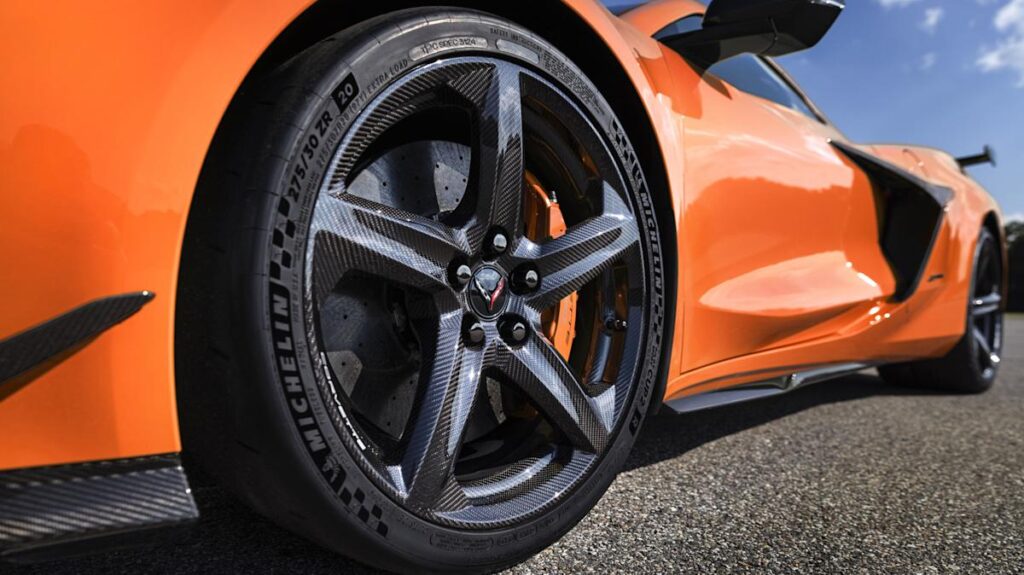
Chevrolet’s decision to incorporate Carbon Revolution wheels into the C8 Corvette lineup, particularly for the Z06 and E-Ray models, signifies a commitment to performance enhancement through advanced materials. While the aesthetic appeal of these wheels is undeniable, the primary focus is on the substantial performance gains they offer. A remarkable reduction of 41 pounds of unsprung, rotating mass is achieved with these wheels, significantly impacting the vehicle’s dynamics.
According to Corvette’s executive chief engineer, Tadge Juechter, the switch to Carbon Revolution wheels can reduce lap times by 1 to 1.5 seconds on a two-minute track circuit. This improvement is achieved without altering the engine or aerodynamics, highlighting the wheels’ transformative effect on the vehicle’s performance.
The Engineering Behind Carbon Revolution Wheels
The development of the Z06’s wheels was a five-year collaboration between Carbon Revolution and General Motors. Over 100 pre-production wheels were subjected to rigorous testing, including pothole impacts and racetrack conditions. GM established new acceptance standards to push the technology beyond conventional aluminum wheel benchmarks.
The wheels are constructed from a single molded piece of carbon fiber, comprising hundreds of individual components. Despite being termed a “hollow spoke” design, the spokes are filled with lightweight foam and chopped fiber. The two-piece aluminum hub is integrated into the carbon structure using clamping force, eschewing traditional bolts or adhesives.
To address the substantial brake heat generated by the Z06, the wheel’s interior features a white ceramic plasma-sprayed coating. This rough, porous texture helps dissipate heat, while the color reflects the radiated heat from the Brembo brakes. These engineering details are crucial for ensuring the wheels withstand rapid temperature fluctuations and high-speed impacts.
Advantages and Limitations of Carbon Fiber Wheels
The benefits of carbon fiber wheels are evident, with both the Z06 and E-Ray models exhibiting improved composure on the track and enhanced agility on the road. However, despite meeting or exceeding fatigue benchmarks, concerns about durability persist. Myths about their inability to handle extreme temperatures or be repaired are often fueled by failures of early aftermarket designs, which were not tested to OEM standards.
Nevertheless, Carbon Revolution’s wheels generally dispel these concerns. For those informed about repair options, carbon fiber wheels offer viable solutions. Cost remains a significant consideration, driven by the complex manufacturing processes involved. Prices range from $10,000 to $12,000 per set, depending on the finish, although Carbon Revolution anticipates cost reductions with increased production and automation.
Performance vs. Cost: Weighing the Tradeoffs
The tradeoff with carbon fiber wheels is clear: exceptional performance comes at a premium price. For Corvette enthusiasts who seek to maximize their vehicle’s capabilities or desire the sharpest version Chevrolet offers, the advantages far outweigh the drawbacks. For others, the forged aluminum wheels provide a robust alternative.
As the automotive industry continues to evolve, innovations like carbon fiber wheels will likely become more accessible. In the meantime, they represent a significant investment for those committed to high-performance driving.
For more insights into automotive advancements and industry trends, subscribe to our newsletter and stay updated with the latest news delivered directly to your inbox.