

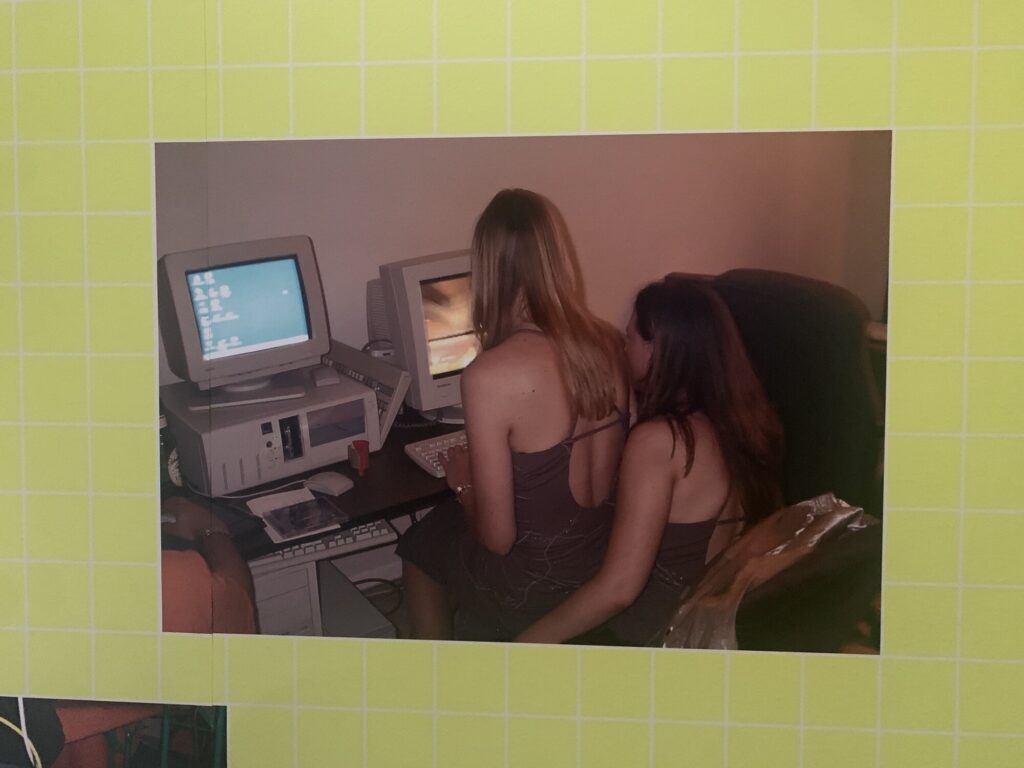
In an era where artificial intelligence increasingly automates standardized tasks, the value of human creativity and interpretation becomes more pronounced. As Jensen Huang, CEO of Nvidia, aptly noted, “When AI takes over all standardized work, the only value humans have left is to handle the poorly defined work.” This sentiment finds a unique expression in the Australian Centre for the Moving Image’s (ACMI) latest exhibition, “Game Worlds: Playable Exhibition,” which transforms the traditional art gallery into a playground of digital nostalgia and cultural exploration.
Located beneath Melbourne’s Federation Square, ACMI’s cavernous gallery spaces have been reimagined to host a celebration of video game culture. Curated by Bethan Johnson and Jini Maxwell, with consulting curator Marie Foulston, the exhibition invites visitors to engage with iconic games like “Doom,” “SimCity 2000,” and “Neopets,” alongside a host of other digital relics. This interactive environment challenges the conventional boundaries of art exhibitions, offering a space where play and culture intersect.
The Intersection of Play and Culture
The exhibition underscores the profound impact of video games on contemporary culture, tracing their evolution from tabletop games like “Dungeons & Dragons” to immersive digital worlds such as “Final Fantasy XIV.” This journey highlights the role of games as a medium for storytelling and cultural reflection, echoing Dutch theorist Johan Huizinga’s assertion that play is the foundation of civilization.
One of the exhibition’s standout features is a 3D-printed LEGO brick version of “Doom,” created by Wētā Workshop graphics engineer and YouTuber @ancientjames. This miniature marvel, the size of a popcorn kernel, exemplifies the remarkable advancements in micro-computing and integrated circuit miniaturization. It serves as a testament to Moore’s Law, which posits that the number of transistors on microchips doubles every two years, driving technological progress.
From Tabletop to Screen
The exhibition also explores the transition from physical to digital gaming, showcasing pivotal moments such as Infocom’s “Zork” and the rise of massively multiplayer online games. This evolution reflects broader societal shifts, as gaming becomes a lens through which we examine the “imaginary institution of society,” a concept introduced by philosopher Cornelius Castoriadis.
While the exhibition celebrates the creativity and cultural impact of video games, it also invites critical reflection on the medium’s darker aspects. The influence of first-person shooter games on public consciousness, particularly in the wake of violent events, prompts discussions about the role of games in shaping societal attitudes towards violence and conflict.
Art and Gaming: A Symbiotic Relationship
ACMI’s “Game Worlds” positions itself at the intersection of art and gaming, recognizing the potential for games to serve as both entertainment and artistic expression. This duality is embodied in installations like Jarra Karalinar Steel’s “love.exe,” a commissioned piece for the City of Melbourne that draws inspiration from the fantasy world of “Baldur’s Gate 3.” The installation offers a tactile experience, inviting visitors to engage with the digital protagonist Astarion in a manner reminiscent of classic art interactions.
The exhibition also highlights the growing prominence of the Australian gaming industry, with titles like “Hollow Knight” by Team Cherry taking center stage. This independent game, which has sold millions of copies worldwide, exemplifies the global reach and cultural significance of Australian game developers.
The Future of Playable Exhibitions
As public institutions grapple with the challenges of remaining relevant in a rapidly changing cultural landscape, exhibitions like “Game Worlds” offer a blueprint for the future. By transforming galleries into interactive spaces, ACMI demonstrates the potential for art and culture to engage new audiences, particularly younger generations raised on digital media.
However, the exhibition also raises important questions about the commercialization of play and the potential for games to perpetuate existing societal inequalities. As visitors navigate the digital landscapes of “Game Worlds,” they are encouraged to reflect on the broader implications of gaming culture and its role in shaping our collective future.
Conclusion: Play as Cultural Commentary
Ultimately, “Game Worlds: Playable Exhibition” invites visitors to reconsider the role of play in contemporary culture. By blurring the lines between art and entertainment, the exhibition challenges traditional notions of what constitutes cultural value. As we continue to navigate an increasingly digital world, exhibitions like this remind us of the enduring power of play as a tool for cultural commentary and creative expression.
As Friedrich Nietzsche once wrote, “Existence is justified only as an aesthetic phenomenon.” In the context of “Game Worlds,” this aesthetic justification is found in the playful exploration of digital culture, offering a space where art and gaming converge to illuminate the complexities of modern life.