


In the bustling food courts of Kolkata’s shopping malls, over cups of black coffee and Indian fast food, exiled members of Bangladesh’s Awami League are strategizing their political return. Fleeing charges ranging from crimes against humanity to embezzlement, these political figures are plotting their comeback from the safety of India.
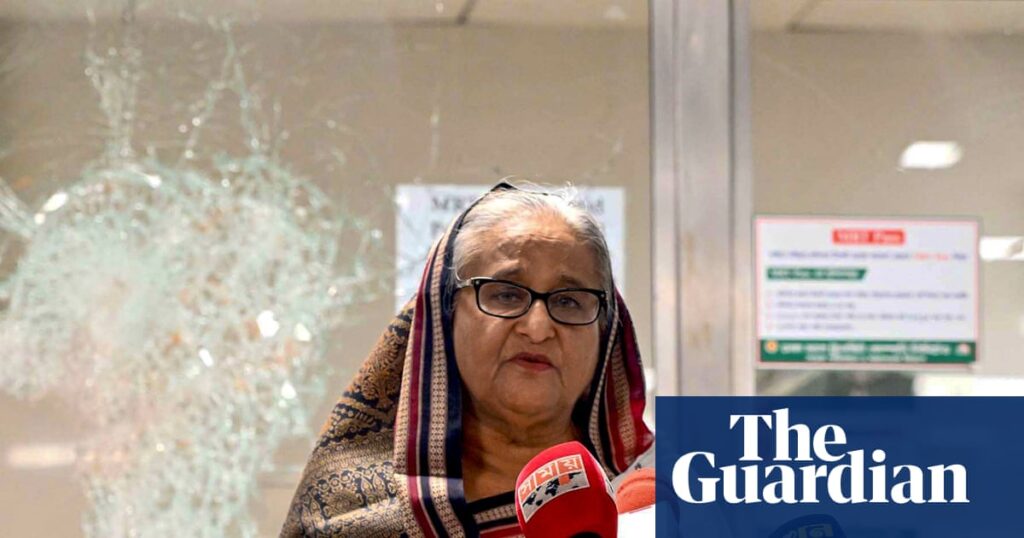
More than 16 months ago, Bangladesh’s political landscape was dramatically altered when Prime Minister Sheikh Hasina was forced to flee to India amid a revolutionary uprising. The streets of Bangladesh were left in turmoil, with a UN report citing up to 1,400 deaths following a government crackdown on protesters.
Exile and Political Strategy
Following Hasina’s departure, thousands of Awami League members sought refuge from mob violence and criminal charges. Over 600 party figures have since been residing in Kolkata, maintaining their political activities with India’s tacit support. The interim government in Bangladesh, responding to public pressure, suspended the Awami League and banned its activities pending investigations into its leadership.
Despite a tribunal sentencing Hasina to death for crimes against humanity, she remains undeterred. From a secure location in Delhi, Hasina is actively coordinating with her party members in Bangladesh, planning to disrupt the upcoming elections scheduled for February 12, the first since her ousting.
“Our leader Sheikh Hasina is in constant communication with our people in Bangladesh,” said Saddam Hussain, president of the Awami League’s student wing, Bangladesh Chhatra League. “She’s trying to make our party ready for the upcoming struggle.”
Controversies and Allegations
The past elections under Hasina were marred by allegations of vote rigging. The interim government, led by Nobel laureate Muhammad Yunus, has promised a free and fair election, but the Awami League argues that their exclusion undermines democratic legitimacy. They accuse Yunus of pursuing a personal vendetta against Hasina, a claim he denies.
Critics of Hasina’s regime point to its oppressive tactics, including the suppression of dissent, media censorship, and judicial manipulation. Human rights organizations have documented numerous abuses, including disappearances and extrajudicial killings.
“We are telling our workers to avoid all involvement in the election, boycott all campaigning and voting,” stated Jahangir Kabir Nanak, a former minister facing charges he denies.
Geopolitical Implications
The presence of Awami League leaders in India raises questions about India’s role in the political dynamics of the region. Relations between India and Bangladesh have been strained since Hasina’s fall, yet India continues to provide a safe haven for these political figures.
Recently, Hasina addressed a gathering in Delhi, condemning the upcoming elections and accusing Yunus of forcibly taking power. Bangladesh’s foreign ministry expressed outrage, viewing the event as an affront to their sovereignty.
“Allowing the event to take place in the Indian capital and letting mass murderer Hasina openly deliver her hate speech … constitutes a clear affront to the people and the government of Bangladesh,” stated the ministry.
The Road Ahead
Despite the challenges, the exiled Awami League leaders remain hopeful for a return to power. Their strategy hinges on the failure of the upcoming elections to bring stability, believing this will turn public support back in their favor.
Tanvir Shakil Joy, a former MP, acknowledges past mistakes but remains optimistic. “I can admit we were not saints,” Joy said, reflecting on the regime’s authoritarian nature. “Things are very dark for us now, but I don’t think they will remain so for long.”
As Bangladesh prepares for its pivotal election, the political future remains uncertain. The actions of the exiled Awami League and the response of the interim government will significantly shape the country’s path forward.