

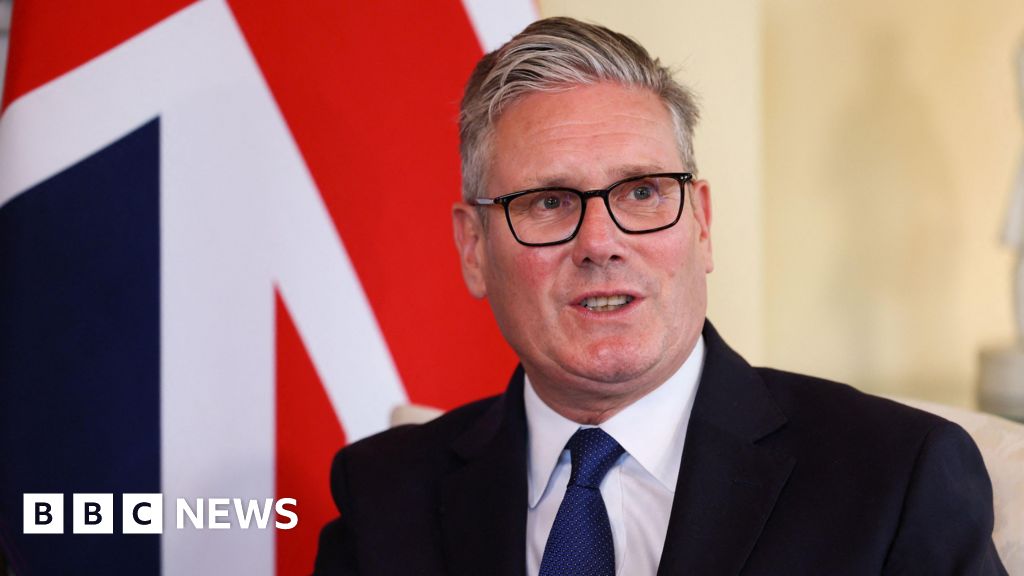
Politicians have relinquished too much power to lawyers, activists, and regulators, hindering their ability to fulfill promises, according to a former aide to the UK Prime Minister. Paul Ovenden, who previously served as Keir Starmer’s director of political strategy, expressed these concerns in an article for The Times. Ovenden, who resigned last September after offensive messages from 2017 surfaced, argued that the British state has grown “bigger and bigger while simultaneously and systematically emasculating itself.”
Ovenden’s remarks come amid a challenging period for the Prime Minister, with local elections looming in May and potential leadership challenges within the Labour Party. He highlighted the case of British-Egyptian activist Alaa Abd El Fattah as emblematic of the peculiar priorities within Whitehall, suggesting that politicians could “take back control” with a “stiffening resolve.”
Political Power and Accountability
Speaking to the BBC, Ovenden emphasized the need for politicians to reclaim the levers of democracy. He expressed confidence in Sir Keir Starmer, describing him as “exactly the right person” to implement necessary changes. Ovenden’s comments were echoed by Chris Powell, a seasoned Labour campaign strategist, who called for a “fundamental reset” to counter the electoral threat from Reform UK. Powell, writing in The Guardian, noted that voters are “fed up, think nothing works – and some are simply angry and feel ignored.”
The debate over political power and accountability is not new. Historically, governments have grappled with the balance between centralized authority and regulatory oversight. Ovenden’s critique highlights a broader concern about the efficacy of the British political system and its ability to respond swiftly to public needs.
The Alaa Abd El Fattah Case
Alaa Abd El Fattah, imprisoned in Egypt for over a decade on charges of “spreading fake news” about torture, was released in September following extensive lobbying by British governments. His arrival in the UK was initially celebrated by the Prime Minister, who described it as “a top priority for my government.” However, the situation became contentious when past social media posts by Abd El Fattah, calling for violence against Zionists and police officers, surfaced.
Sir Keir Starmer faced criticism for being unaware of these “absolutely abhorrent” posts, which Abd El Fattah has since apologized for. The government is now reviewing the “information failures in this case.” Ovenden reflected on the internal governmental focus on Abd El Fattah’s case, describing it as a “running joke” due to its perceived irrelevance to daily political operations.
Reclaiming Political Control
Ovenden argues that politicians have “handed away power” in an attempt to mitigate risk, delegating authority to “arm’s length bodies, quangos, activists, lawyers, and regulatory frameworks.” He cited issues like colonial reparations and vaping bans as distractions, suggesting that the public’s frustration stems from politicians’ inability to effect change.
To address these challenges, Ovenden advocates for scaling back legal obligations, such as environmental regulations for construction and judicial reviews of government policies. His perspective aligns with sentiments previously expressed by Sir Keir Starmer, who has lamented the slow pace of parliamentary action due to “checks and balances” and “arm’s length bodies.”
“My experience as prime minister is of frustration that every time I go to pull a lever, there are a whole bunch of regulations, consultations, and arm’s length bodies that mean the action from pulling the lever to delivery is longer than I think it ought to be,” Sir Keir stated.
Looking Ahead
As the UK navigates a politically turbulent year, the discourse on political power and governance is likely to intensify. Ovenden’s insights, coupled with calls for reform from within the Labour Party, underscore a growing demand for efficiency and accountability in government. The upcoming local elections and potential leadership challenges will test the resilience and adaptability of the current administration.
The conversation about reclaiming political control and streamlining governmental processes is set to continue, as leaders seek to balance the demands of modern governance with the need for decisive action.