




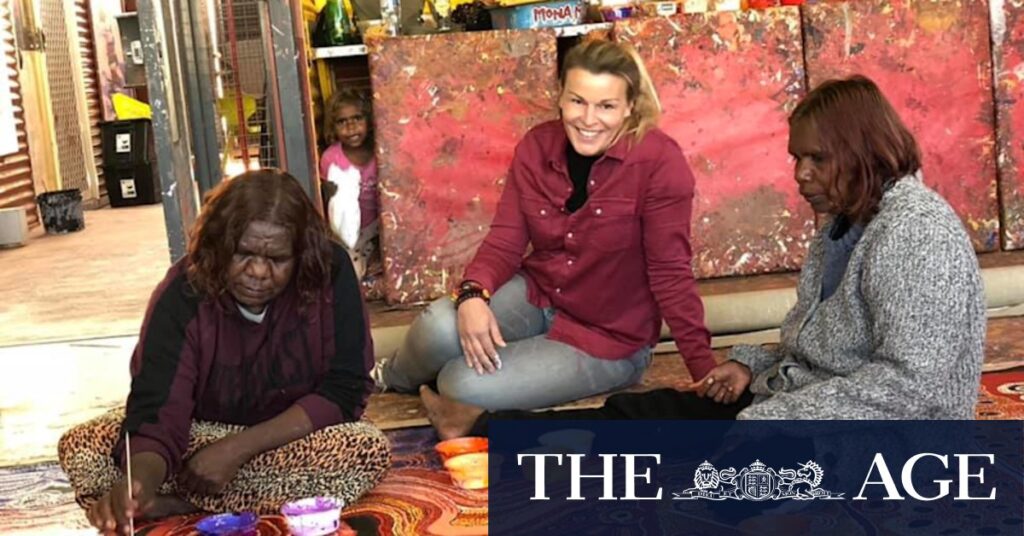
In the serene setting of Lens, Switzerland, a remarkable art collection is bridging continents and cultures. Nestled beside a shimmering artificial lake in the Swiss Alps, a gallery houses the mesmerizing works of renowned Aboriginal artists such as Emily Kam Kngwarray, Clifford Possum, and Sally Gabori. This gallery, however, is not just a display of artistic prowess; it is a testament to the passion and vision of French-born, Swiss-based collector Bérengère Primat.
Primat’s journey into the world of Aboriginal art began two decades ago in a Paris gallery. Captivated by the depth and energy of Indigenous Australian paintings, she embarked on a mission that would lead to one of the world’s largest private collections of contemporary Aboriginal art. “It was never a hobby,” Primat explains. “It is an obsession.”
A Cultural Bridge in the Alps
Located just a few hours from Geneva, the gallery has become a cultural bridge between Australia’s First Nations artists and European audiences. The Fondation Opale, as it is known, is a non-profit institution funded largely by Primat and a few donors. Its mission is simple yet profound: to present Aboriginal art as a living and evolving contemporary practice.
“What we do is contemporary art,” Primat asserts. “It’s not like ancient art, even though the roots are deep inside those ancient cultures and values. But it is contemporary.”
The foundation is not just a gallery; it is a haven for Aboriginal artists. It provides a space where they can express themselves freely and engage in cultural exchange. This ambition is reflected in the gallery’s exhibitions, which often pair Aboriginal artists with those from different traditions. This year’s show, “Beneath the Reflections of the World,” places the late Queensland artist Mirdidingkingathi Juwarnda Sally Gabori in conversation with American painter Forrest Bess.
Building a Legacy
Primat’s roots trace back to one of Europe’s most influential industrial families. She is the great-granddaughter of Marcel Schlumberger, co-founder of the global oil services firm Schlumberger, and the grandniece of Dominique de Ménil, a prominent art collector and patron. Her upbringing was steeped in art, science, and legacy, themes that have clearly influenced her path.
By 2017, Primat had amassed over 1,600 works, a number that has since grown to about 2,000. Her collection gained a sharper focus during a pivotal trip to the APY Lands in South Australia, where an artist’s comment about the lack of non-ethnographic venues in Europe for their art resonated deeply with her. This realization propelled her to take over the Pierre Arnaud Foundation in Lens, transforming it into the Fondation Opale.
Expert Guidance and Cultural Impact
Georges Petitjean, an expert in Indigenous Australian art, has been a key figure in Primat’s journey. He describes Primat’s collection as the “most interesting” on the continent. Petitjean, who holds a PhD in Indigenous Australian art, has been with Primat since their meeting nearly two decades ago. He now serves as the curator of Fondation Opale, guiding its artistic direction and ensuring its institutional credibility.
Primat’s dedication to ethical collecting practices and her focus on living artists have set her apart in the art world. Skye O’Meara, chief executive of the APY Art Centre Collective, highlights Primat’s commitment to artists’ care and support. “From the outset, she committed to building her collection in a way that prioritised artists’ care, support and best remuneration,” O’Meara says.
“Bérengère is determined to see First Nations artists celebrated on the world stage and she is making that happen.” – Skye O’Meara
Looking Forward
Primat remains modest about her achievements, focusing instead on the impact her work has on the artists and their communities. “What matters most is the reception the works receive – especially from those who know the stories behind them best,” she says. Her efforts have not gone unnoticed, with more global institutions and collectors, including celebrities like Steve Martin, taking Indigenous Australian art seriously.
As the Fondation Opale continues to grow, Primat reflects on her journey and the future. “I’m always looking to the next step. What should I do? And I’m always, you know, asking myself: Am I doing the right thing? Is it really what is needed?” she muses. Her dedication to listening to the artists ensures that her path remains aligned with their needs and aspirations.
“Beneath the Reflections of the World,” featuring Forrest Bess and Sally Gabori, is showing at Fondation Opale until November 16, offering a glimpse into the transformative power of art and cultural exchange.