

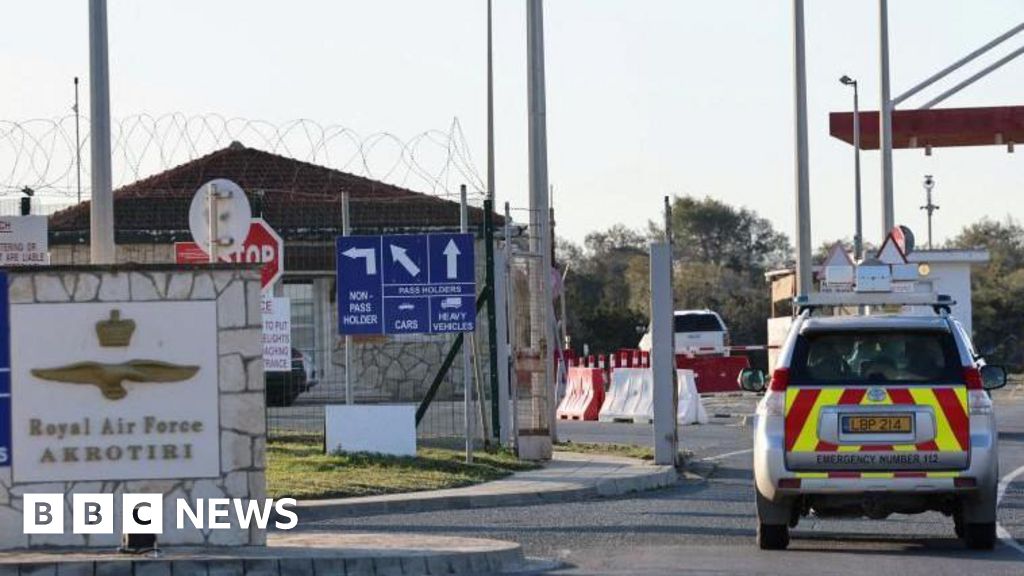
RAF Akrotiri, Cyprus – European allies are rapidly deploying military assets to Cyprus following a drone attack on a British air base over the weekend. The small Eastern Mediterranean nation has been unexpectedly drawn into the geopolitical tensions following US-Israeli strikes on Iran.
The United Kingdom has announced the deployment of helicopters equipped with counter-drone technology and the Type 45 Destroyer, HMS Dragon, to bolster defenses. French President Emmanuel Macron confirmed in a televised address that the French frigate Languedoc would arrive in Cyprus on Tuesday evening. Meanwhile, Greece has committed four F-16 fighter jets and two frigates, including the Psara, which is equipped with the Greek anti-drone system Centauros.
Building a Layered Defense System
The deployment of these military assets aims to prevent further drone incursions and mitigate the risk of casualties, which could potentially draw Britain and the European Union into a broader conflict they have so far sought to avoid. Former military strategist Mikey Kay emphasized the strategic importance of deploying the Type 45 air defense destroyer near Akrotiri to enhance the layered air defense system.
“The idea of sending a Type 45 [air defense destroyer] into the vicinity of Akrotiri is to build on a layered air defense system,” said Mikey Kay. “The very expensive equipment the UK is sending is highly capable.”
However, Kay raised concerns about the cost-effectiveness and the capability to handle multiple swarms of drones like the Shahed 136. The presence of these high-tech defenses underscores the seriousness with which the UK and its allies are treating the threat.
Local Impact and Reactions
The drone scare at RAF Akrotiri has led to the evacuation of British families and hundreds of local Cypriots residing nearby. The incident has sparked anxiety among British military families and local residents, with Cyprus criticizing the UK’s initial handling of the situation. A Cypriot government spokesman highlighted the lack of clarity regarding the use of British bases on the island.
“The British Bases in Cyprus would under no circumstances be used for anything other than humanitarian purposes,” stated the Cypriot government.
Cyprus, strategically located off the coasts of Turkey, Syria, and Lebanon, has reiterated its non-involvement in the Middle East conflict and stressed that it is not a target.
Historical Context and Military Presence
Britain’s military presence in Cyprus is a vestige of its colonial past. When Cyprus gained independence in 1960, the UK retained sovereignty over several sites, including those on the Akrotiri peninsula. These areas cover nearly 3% of the island’s land, extending beyond restricted military zones.
Despite not participating in the US-Israeli strikes on Iran, British planes are engaged in “defensive operations” to protect UK citizens and allies in the Middle East. On Tuesday night, the Ministry of Defence reported that RAF F-35 jets had shot down an Iranian drone over Jordan.
Future Implications and Strategic Considerations
The British government now faces scrutiny over its preparedness to defend its overseas bases. Foreign Secretary Yvette Cooper informed the House of Commons about the additional radar, air, and counter-drone capabilities already in place. The drone that struck RAF Akrotiri caused minimal damage and no casualties, with two further drones intercepted on Monday.
The UK has not disclosed the origin of the drone attack, but the Cypriot government suspects involvement by the Iran-backed group Hezbollah in Lebanon.
This development highlights the complex geopolitical dynamics in the region and the delicate balance European nations must maintain to avoid escalation. As the situation evolves, the strategic importance of Cyprus and its role in regional security will likely remain under close scrutiny.