
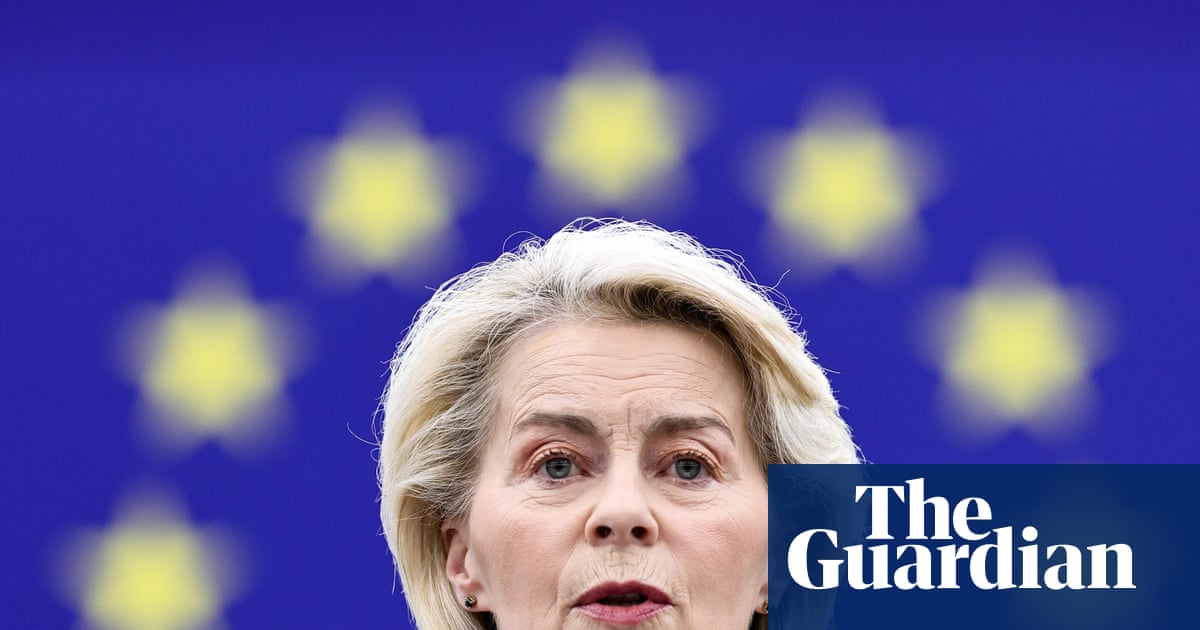
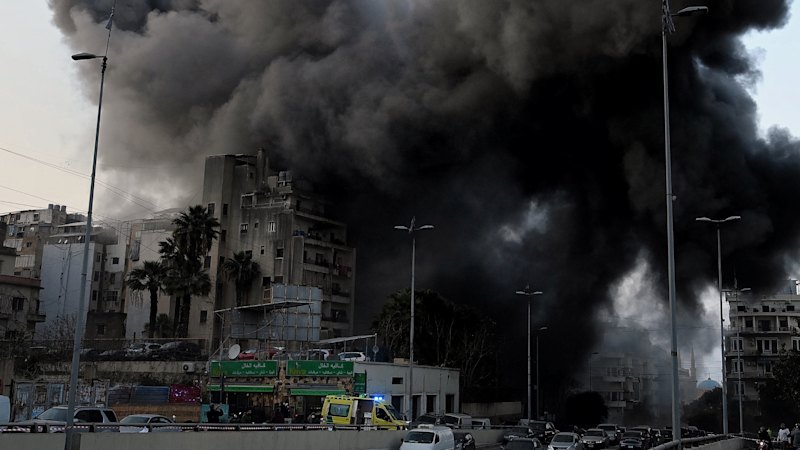
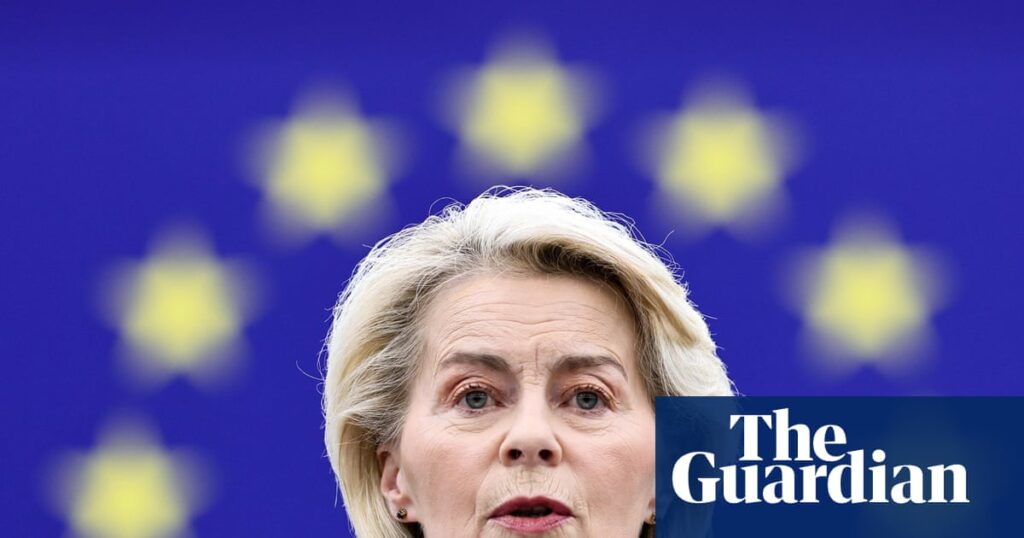
The message from Ursula von der Leyen was blunt and clear: “Europe can no longer be a custodian for the old-world order” and must adopt a “more realistic and interest-driven foreign policy.” In a significant foreign policy address this week, the European Commission president emphasized that while the EU remains committed to defending the rules-based system, the current chaotic global environment demands a shift in strategy. Her remarks coincided with escalating violence in the Middle East, as missiles struck Tehran and southern Iran, marking the conflict’s 10th day.
The reverberations of the Middle East conflict have been felt across Europe, prompting varied responses. France has dispatched a dozen naval vessels to the Mediterranean and the Red Sea, while EU officials organized an impromptu summit with Middle Eastern leaders to express solidarity. Humanitarian aid is being sent to Lebanon to assist 130,000 people affected by Israeli bombings and evacuation orders. Despite these efforts, Europe’s influence appears diminished, overshadowed by the unpredictability of U.S. President Donald Trump’s shifting war aims.
Disunity and Criticism Within the EU
The EU’s response has been hampered by internal divisions. Spanish Prime Minister Pedro Sánchez has taken a firm stance, refusing “to be complicit in something that is bad for the world and contrary to our values.” In contrast, German Chancellor Friedrich Merz has cautioned against lecturing allies on international law. This disunity has led to criticism from former EU officials who describe Brussels as “stunned, sidelined, and disunited” in its response to the conflict.
European officials have criticized Iran for its retaliatory actions without addressing the U.S. and Israel’s initial decision to engage in warfare. Analysts at the European Council on Foreign Relations have labeled Europe’s collective response as “a fiasco” and “strategic lunacy.”
“Europe’s collective response has been, at best, a fiasco – and at worst, strategic lunacy,” concluded analysts at the European Council on Foreign Relations.
Challenges to EU Leadership
The conflict has exposed long-standing issues regarding EU leadership on the global stage. France has accused the European Commission of overstepping its role, traditionally held by the EU’s foreign policy chief, Kaja Kallas. French Foreign Minister Jean-Noël Barrot has urged adherence to EU treaties, while Nathalie Loiseau, a senior French MEP, criticized von der Leyen’s outreach to Gulf leaders.
Despite the criticism, some EU sources argue that leadership from the commission president is crucial during global crises. However, von der Leyen’s apparent support for regime change in Iran has raised concerns, particularly as she seeks to maintain a close relationship with Trump. Kallas, meanwhile, has advocated for a democratic Iran but acknowledged the uncertainty of such an outcome.
Debate Over International Law
Von der Leyen’s comments have sparked a broader debate about the role of international law. While she called for “new ways of cooperating with partners,” Kallas emphasized the need to restore international law to prevent chaos. European Commission Vice-President Teresa Ribera publicly reprimanded von der Leyen, stressing the importance of defending international law as a cornerstone of the European project.
“If we accept that major powers can bomb whenever they want, then international law ceases to exist and we end up with the law of the jungle,” warned Socialist MEP leader Iratxe García Pérez.
Implications for Europe’s Strategic Interests
Von der Leyen’s call for realism is seen by some as an attempt to appease Trump, particularly concerning Ukraine. Julien Barnes-Dacey of the ECFR described it as “a tacit acknowledgment of the illegality of this war [on Iran] and Europe’s failure to call it out.” As Trump considers waiving oil sanctions to ensure supply, possibly involving Russia, this strategy appears increasingly untenable.
EU leaders are concerned about the conflict’s impact on Ukraine, given Russia’s potential gains from higher energy prices and diverted military resources. European Council President António Costa highlighted Russia as the primary beneficiary of the ongoing war.
“So far, there is only one winner in this war – Russia,” said the European Council president António Costa.
According to Barnes-Dacey, Europe’s reluctance to confront Trump over the Iran conflict represents “a disastrous strategic miscalculation.” He argues that by prioritizing the management of the Ukraine conflict, Europe risks compromising its broader interests.
As the EU grapples with these challenges, the need for a cohesive and assertive foreign policy becomes increasingly urgent. The coming weeks will test Europe’s ability to navigate complex geopolitical landscapes while maintaining its core values and strategic interests.