




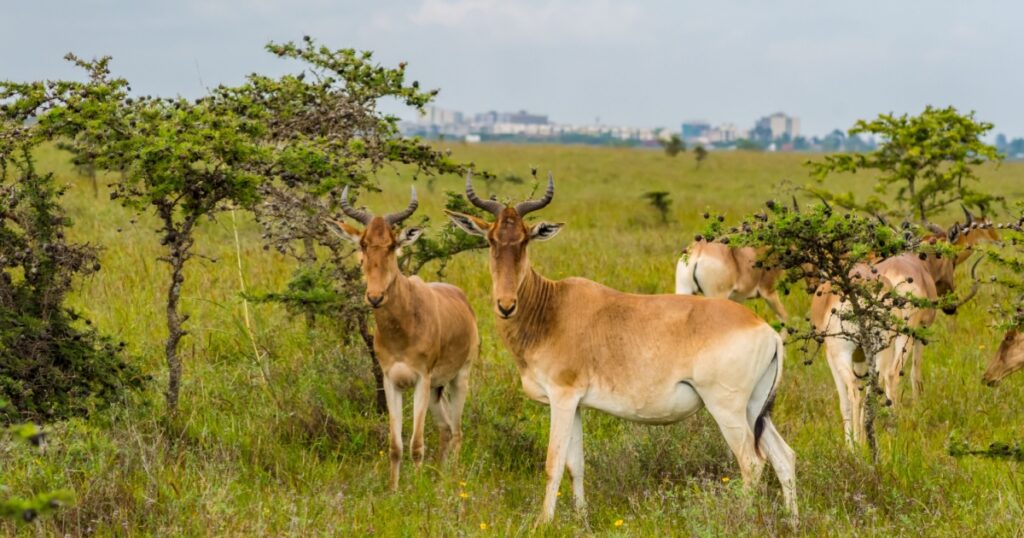
In the remote grasslands near the Kenya-Somalia border, the hirola antelope, often referred to as the “four-eyed” antelope, teeters on the brink of extinction. With fewer than 500 individuals remaining, the hirola is considered the most critically endangered antelope species in the world. Conservationists are racing against time to save this unique creature from disappearing forever.
The hirola’s distinctive appearance, characterized by what seems like an extra set of eyes, is a result of its prominent preorbital glands. These glands, appearing as dark patches, serve a crucial function in marking territory. The name hirola is derived from the Somali word “Arawla,” highlighting the animal’s tawny coat, which blends seamlessly with the arid landscape it inhabits.
Historical Decline and Current Challenges
Once thriving in vast numbers, the hirola population has plummeted dramatically over the past century. The most significant blow came in the 1980s when an outbreak of rinderpest, a devastating viral disease also known as cattle plague, swept through the region. This highly contagious disease, which affects various ungulates, decimated the hirola population.
According to the Hirola Conservation Program (HCP), rinderpest caused a mortality rate of 85 to 90% among the hirola, leading to a catastrophic decline in their numbers.
Rinderpest, characterized by symptoms such as fever, nasal and ocular discharge, diarrhea, and mouth lesions, often results in death within 10 to 15 days of infection. Fortunately, a concerted global effort led to the eradication of rinderpest, marking it as only the second viral disease to be completely eradicated, following smallpox.
Despite this victory, the hirola continues to face numerous threats, including predation, competition with livestock, and habitat loss due to the encroachment of agriculture and human settlements. These factors have compounded the challenges of recovery for this beleaguered species.
Conservation Efforts and Community Involvement
In response to these challenges, the Hirola Conservation Program has spearheaded efforts to secure the future of the hirola. Central to their strategy is the establishment of protected areas. The program aims to collaborate with local communities and governments to set aside over one million acres of habitat dedicated to the conservation of the hirola.
Restoring the grasslands is another critical component of the conservation strategy. By rehabilitating these vital ecosystems, conservationists hope to provide the hirola with a sustainable habitat that supports their dietary and territorial needs.
“The survival of the hirola is not just about saving a species; it’s about preserving an entire ecosystem,” said an HCP spokesperson. “Our efforts are focused on ensuring that the grasslands can support the diverse wildlife that depends on them.”
Looking Forward: A Race Against Time
The road to recovery for the hirola is fraught with challenges, but there is hope. Conservationists are optimistic that with continued efforts and a bit of luck, the hirola population can rebound. The involvement of local communities is seen as pivotal to the success of conservation initiatives, as their support can lead to more effective protection and management of the hirola’s habitat.
As the global community becomes increasingly aware of the plight of the hirola, there is a growing call for international support and funding to bolster conservation efforts. The hirola’s story serves as a poignant reminder of the delicate balance within ecosystems and the far-reaching impacts of human activity.
While the hirola’s future remains uncertain, the ongoing dedication of conservationists and local stakeholders offers a glimmer of hope that this extraordinary species may once again thrive in the wild.